6,430 yards, 144 slope from the White tees
There is no other golf course that projects the sense of its architect than Muirfield Village. Jack Nicklaus was a budding tour pro six years into his playing career when he delved into course design, partnering with Pete Dye on Harbour Town Golf Links. At the time, the course was an immense departure from the beefy RTJ designs with their runway tees and large features. Harbour Town was sinewy, confined at times that forced the player to shape their shots to the puny greens. The idea was to build something the complete opposite of the dominant RTJ trend and it was a success. Jack was involved in a few more projects before partnering with Desmond Muirhead to design Muirfield Village, which was to be a tribute to Augusta National. Muirfield opened in 1974. For the next five decades, Jack has been able to see the course grow into an institution, hosting the Ryder Cup, President’s Cup and Solheim Cup, the only course to host all three. Then there is the annual Memorial, which has been a staple on tour for as long as anyone can remember.
Jack purchased the land upon which Muirfield Village sits in the 1960’s. His intentions back then were to give back to his home town of Columbus in some way. The club was indeed a real estate project but also some where Jack envisioned establishing his legacy as well as enjoy complete freedom with the design. This second point is an important one. Striving for a stiff strategic placement challenge with a bevy of risk-reward options, Nicklaus and Muirhead designed a course that utilizes trees, creeks and an assortment of hills that was capable of hosting professional tournaments, The stadium considerations to facilitate a better spectator experience was used here just as it was at Glen Abbey, another Nicklaus design. The course was also renown early on for its superb conditioning, another ode to Augusta. The course was popular from the get go, reaching as high as number 17 on Golf Digest’s top 100 America’s greatest courses. During the decades of its existence, Jack has had the unfettered ability to mold the course as he deemed necessary. These were general small tweaks to ensure the course remained a fitting challenge. Without having to answer to a board, client or any kind of committee, Muirfield Village is a conclusive expression of Jack’s design philosophy and prowess. There have only been two extensive renovation projects; one in 2005 and another more comprehensive, two-stage project that spanned 2019 – 21. The 2005 project focused mostly on infrastructure upgrades but included extensive bunker work. The Sixteenth was re-designed in 2011 for the 2013 President’s Cup. In 2019 – 21, the first phase was adding tees to the Eighth, Eleventh and Fifteenth. The second phase focused on the greens, which were completely rebuilt and installed with sub-surface systems, bunkers were re-contoured and a re-working of the Fifth hole that ultimately changed par from 72 to 71.
Muirfield has a lot of the markings of what makes a golf course great. The focused intent of such purpose at inception, virtually limitless resources, as well as attention and adjustment to the design essentially over its lifespan are all steps in the right direction. The challenge extends beyond the structure of play, however. Is greatness achieved when the architect accomplishes his design vision extraordinarily well, even if that vision is somewhat archetypal? There is no doubt that Muirfield was intended to be a venue celebrating challenge. That it accomplishes rather well. There are several aspects to this challenge that further its depth of character. This includes an array of forced carries, sharp angles and multi dimensional use of hills. These conspire in challenging the golfer to maneuver about. A trove of penal elements abound throughout, off to the sides, in plain sight ahead, all over. The greens are the best feature, in my opinion. A great balance of imagination with restraint that handle speed well. They continue that great challenge but do not overly rely on wild boldness and slickness. I found them to be to most refined aspect of the course. All of this makes for a course with modern flashes of uniqueness at times. I played it just before the Memorial and heard that is when the rough is grown remarkably high to build up its density but from my time there, the course overly relies on rough for its challenge. It would actually be a much more interesting course without the rough if the slopes and contours were allowed to take the wayward shots in their direction and would retain much more intriguing challenging character as a wily sense of randomness all of a sudden had its way with misses. Yes, if one stays in the fairways and greens, they will have an engaging round and feel invigorated afterwards. But rather directly, the recovery character here is lacking and brings down the rest of it. Any old course can add a smattering of rough and call it challenging but here, the design is strong enough on its own to present a pretty good modern challenge. It could have been the timing of my stay, it could be the dictates of the PGA for the upcoming tournament but as a general proclamation, I’d love to see it at its best and that would be with a much different off fairway composition.
Beyond the rough, Muirfield is the embodiment of one man’s visions of this game, who happens to be one of the best ever to play it. Like that man, the course has evolved throughout the decades and with that time and experience, has changed and even refined in some ways. There is not a whole lot of let up and one must direct his tee shot with purpose for a much more manageable approach. It’s a battle of skill but wits come into it every now and then. There’s a good amount of plain old fashioned penalty for poorly executed or poorly calculated shots. One of the bemoans of Nicklaus is that he designs courses that fit his playing style and doesn’t consider everyone else. I’m ok with that. That is the allure and style of his designs, especially here, inviting the opportunity for richly unique character. Perhaps it’s the recency of my last review yet it’s apt nonetheless. The Tree Farm is another representation of a professional tour player’s vision of the game. For Zac Blair, that vision is much different than Muirfield yet is unique in its own right for the layers of fun it shows are within the game. Yet both courses were borne for the love of the game and the desire to eventuate that love so it could be shared by others. Here, the golfer should at least consider this perspective as he is moving through the holes. The razor edge difference between a good shot and disaster Jack encountered countless instances throughout his career. The stark reality of a bad shot and the true glory when the golf gods shine upon thee and it all works out. The angles and shot shaping that comes along with all of it. That is here as well. It is humbling, it is historical for its rendering of legacy and yes, it is a golden bear of a challenge.
Muirfield undeniably defines the legacy of Jack Nicklaus. It could even be the entire reason the club was created. Here, Jack has always been free to do as he pleases, to let his creativity and design prowess roam. It is his ideal iteration of course architecture, personified. It is worth playing to experience and determine what the course signifies of Jack’s legacy, as well as the embodiment of his monument to course architecture.
The First is a 400 yard par 4 (from the White tees). The course imposes itself early as the right side hides itself beyond a group of bunkers on that side. Those tat shirk away from the bunkers on the opening tee shot risk going into the tree line on the left, where a creek runs. Get as close to the bunker as you can and as we find in several Nicklaus devised conundrums, a tight fade off the tee does well. Of course I just call it a slice, aim at the left tree line and slice it back to the fairway. As is typical, those finding themselves off the fairway on the left will likely need a shot to recover to the fairway before going for the green. The fairway is rather narrow and slinks a little to the green, which is pushed up and runs from rear to front, right to left. Lots of room before the green to play with as needed. Another theme established early on is the importance of the tee shot. Here, it is the toughest and most critical shot.


The Second is a 391 yard par 4. Straight and downhill to the green but the fairway shaping and undulations are nicely crafted and add interest even when the course isn’t turning or twisting. The left side of the fairway off the tee will propel closer to the green if one gets their tee shot out far enough while the right side of the fairway is likely a better approach angle in. The creek is along the right side then moves behind the green. Stealthy creeks here no doubt.


The Third is a 370 yard par 4. Deer Run is the creek and here it starts by crossing the start of the fairway, then runs along the left side within the trees before ponding in front of the green. The elevated tee shot needs to hit the fairway and more importantly clear the trees on the left for the approach. This is one of those holes that the further out the tee shot, the better. There might be an inclination to hit a more accurate and shorter tee shot to ensure hitting the fairway but longer approaches are much more challenging. The green is shallow and slender and must carry the water and there really is no where to miss, as anything that lands past the green must then be played with the utmost of care to avoid the water on the come back. Decidedly tough.


The Fourth is a 170 yard par 3. If there is a let up of any kind it is here. The green rests on a terrace of the right to left hillside. Like the green prior, it’s sinewy, stretching back and to the left with a couple bunkers on either side. Better to miss on the lower left than higher right if you really don’t feel like hitting the green. I missed the green by 6 feet on the right and it took us almost the full amount of time to find it, the rough was that imposing.


The Fifth is a 497 yard par 5. Longer hitters might focus on hitting to the second fairway, which is actually a line off to the right, but this is likely around 300 yards of carry. For the rest of us, the first fairway is within reach in less than driver and needs to stay close to the tree line while moving around it. This then gives the golfer a decision on the second shot, does he move to the second fairway on the left for his longer approach from that side or does he go to the third fairway up the right side and hit his shorter approach from there? The left side is a better angle in but the right is advantageous for its shorter length. I’ll take shorter shots into these greens all day. The green moves from right to left, towards the water lurking on that side.


The Sixth is a 381 yard par 4. The bunkers mark where the fairway starts to narrow so one can opt for landing short of them or if one would like to go longer, they must stay relatively straight. Pulling this off is rewarded with a downhill fairway that pushes the ball closer to the green upon landing. Another sinewy green, dog legging left around a bunker. The approach needs to carry water separating fairway and green. Ironically, a draw off the tee works well here.


The Seventh is a 523 yard par 5. Yet another tough tee shot that needs to avoid the bunkers on either side while minding the movement to the left. Pulling that off invites the golfer to consider going for the green in two shots while everyone else can consider how far up they would like to move along the narrow fairway for the approach at that point. The green is off to the right and elevated from the fairway. A small apron at the front right makes it look like it’s closer than it is while those overly aggressive will hit the run off down the hill at the rear of the green. Anyone actually hitting the green needs to consider its multi tiered nature, the lower plateau at the front. Certainly a lot going on at the par 5’s.


The Eighth is a 155 yard par 3. The second par 3 is a bit shorter than the first yet requires a good deal of accuracy to avoid the surrounding trouble, all of it below the green. It’s fraught with nervy recovery shots, especially if above the pin. It’s best to hit the green, with as much facetiousness as I can muster.


The Ninth is a 370 yard par 4. The fairway runs downhill from the tee, which leaves it a blind shot. The green is down and to the slight right, enough so that favoring the left side off the tee is advised. A creek runs the entire width across the green so all approaches need to carry it. There is no good place to miss the green. I suppose off to the left of the green is best, much better than past the green on the high rear, that’s for sure. As with most holes here, it pays to be smart and do not over extend. If the tee shot is out of position, focusing on a recovery that provides a chance at up and down is much better than trying to go for the green. It’s a strong par 4.


If one looks to his left on the First tee, he will see the Ninth green and fairway beyond. The front nine makes a neat little loop. Accuracy, length, the nerves of a surgeon around the greens, the eyes of a hawk to find the ball in the rough, forearms of oak trees to actually get it out of the rough. All of that gives you a fighting chance. The challenge varies and is formidable but doesn’t really grate on you. It makes you want to rise up to it. I enjoyed the holes, the par 5’s especially. Water is on seven of the holes, ranging from clandestine to much more direct. I would rank them 9, 1, 5, 3, 7, 2, 4, 8, 6.
The halfway house is up there for me. Loved it. In my opinion, a halfway house should allow the members another option to lounge and socialize as opposed to a Kwik-E-Mart. That’s ideal. Some were near the clubhouse so that the members can walk there. Of course, there are plenty of my favorites with a much more abbreviated halfway house operation that I am fine with as well but if we are talking platitudes of appeal, it would look something like the below.


The back nine starts with the 403 yard par 4 Tenth. A forced carry tee shot to the fairway beyond that rises up at its start before moving much more gently uphill to the green. Bunkers on either side of the fairway force the golfer to focus and of he succeeds, the ball advances towards the green in rewarding fashion. The green moves around a prominent bunker that has situated itself at almost the center of the green, which forces the golfer to move either left, right, or over it depending on pin position. There’s a lot of short grass surrounds as well, yet that bunker seems to always find a way to insert itself into any shot near the green until the golfer finds himself putting near the hole.


The Eleventh is a 494 yard par 5. Shots like the one we find at the tee shot here remind me of the influence Harbour Town surely had on Nicklaus during the initial onset design here. While he is content to provide some what wide corridors on some of the par 4 tee shots, this is the second par 5 we come across where the golfer needs to consider shaping the shot or otherwise engaging in the risk reward exercise of whether to try and carry the trees a bit on the left, or lay up short of the turn and settle for a longer two shots in. In any case, the tee shot needs to move past the tree line on the left for a clear second shot. It’s a shorter par 5 and that may entice golfers to get there in two shots. The green is elevated from the fairway, fronted by both a creek and bunker. It’s wide, yet a bit shallow. Those wanting to set up a closer approach need to move their ball up the fairway short of the creek and need to keep their shot fairly straight. There are some strategic elements to the hole and the tee shot requires some horizontal consideration, the second shot scenarios are rather bleak, either requiring a relatively straight blast to the green or a relatively straight shot down the fairway to access the green on the next. The green moves from right to left, widening the most at the left rear.


The Twelfth is a 150 yard par 3. Inspired by Golden Bell at Augusta, this par 3 is all carry over water to a shallow yet wide green that is more angled that it appears. Pin positions on the left enjoy a clear path to the pin upon the carry yet need to worry about the bunker directly behind. It is the exact opposition for pin positions to the right; the golfer must not only carry the front bunker but negotiate the angle and wind that comes into play for the shot. Just as we have seen countless time at the Masters, shots to the right are liable to get frisky, either stalling in the air before landing in the water or careening further right than intended into the water. I’d likely settle on the line to the left or center before taking on the right side but to each his own. A rare bail out area of rough is to the left of the green as well.


The Thirteenth is a 370 yard par 4. A blind tee shot dog legging to the left with a bunker on the left, those that flirt with the bunker without going in it are rewarded with contours moving the ball towards the green. The green is downhill from the fairway, the entry point positioned a bit to the right. It’s a fun shot into that green with its invitation of some ground game considerations.


The Fourteenth is a 322 yard par 4. The short par 4 starts with the golfer needing to decide whether to try and carry the creek ahead or lay up short of it. Carrying it means a short wedge in, allowing the golfer advantage of getting close to the pin. Most should lay up short of the creek, as a short club will still be in order for the approach. Water runs up the entire right side of the green and bunkers are on the left. The green is thin but the apron before it is much wider. I flubbed this hole hole both times I played it but really liked it. It’s a challenging short par 4 but does provide options and a modicum of recovery opportunity.


The Fifteenth is a 493 yard par 5. The final par 5 features yet another vexing tee shot. Similar to the First, there are a group of bunkers on the right but the golfer is rewarded for staying close to them with a better angle and shorter distance into the green. There is some room to the left to use for a more conservative route but those moving too far left will be blocked out by the trees. Don’t worry, there’s a creek up near the green in case you missed some kind of water at the tee shot. It comes in from the left, crosses the fairway, then moves up the right side of the green complex. The green is above the fairway, all of it uphill from the tee. The green is on the small side, widening near the rear. It’s a shorter par 5 but its uphill sinewy wily character straddles the line nicely between fun, challenge and madness.


The Sixteenth is a 155 yard par 3. Water is on the left while everything tilts towards it. The front of the green is relatively open while pin positions creeping towards the rear or left will require more precision for those wanting to get close. It’s a bit of a reprieve if there ever was one at Muirfield, yet for those looking to score, maintains adequate formability.

The Seventeenth is a 383 yard par 4. All downhill, the tee shot must thread through bunkers on either side and once past all of them, the fairway narrows considerably. The fairway ultimately ends at a creek. The green is on the other side but rises some what dramatically. The green is on the larger side, moving towards the creek. Approach shots might keep long to avoid the creek but will then need to come back downhill to whatever pin position while those carrying closer to front edge will have much easier uphill putts.


The Eighteenth is a 403 yard par 4. The tee shot is set up in similar arrangement from some we have seen; flirt with the bunkers on the right without going in them and the approach will be in a more advantageous position. The more conservative option leads to a much longer and challenging approach. A dog leg right with a gradual turn taking place at the bunkers on the right. The green is above the fairway, asked amidst a smattering of bunkers. The green is relatively blind for the most part as well and has a subtle ridge through it that separates movement. It’s a tough approach, largely dependent on the tee shot. There is room before the green and at the neck before the entry point, however, which I took advantage of. Better to create my own recovery scenario than go for it on the approach and take what may from the last moments on the course.


The back nine mirrors the front well to achieves cohesiveness in its structure of play. The land is a little undulating on the back, which helps instill a little more interest. I would rank them 14, 15, 17, 12, 10, 18, 13, 16, 11.
There are courses and memberships married to professional tournaments they host and the design decisions are largely influenced in that context. Muirfield Village feels like a course intended to remain a formidable adversary for the annual Memorial that allows the amateur an opportunity to test himself on such extremes. Visuals are a substantial component to the playing experience, with the beautiful parkland surrounds and each hole determined to at least look distinct from the others. Beyond all this, stripped bare to its core is the most acute representation of Jack’s creed of a golf course and more to the point, his creed of the game. The challenge is very much execution based with lighter, occasional tones of strategy and an array of penal elements mostly on the rigid side. The greens, in my opinion, may shed the most light on Jack’s brilliance as a player. By far my favorite feature of the course, I found a lot more strategy, subtlety and some deception within. Typically a general undulating tilt sets the tone which is then furthered with broad shouldered suggestions and some outer reaches. A good amount of restraint and even aversion to boldness. They require poise, confidence and thought with an engaging combination of skill and nerves. They were the sweet spot. It is, however, entirely a matter of getting to them in the first place. Perhaps that was the design intent all along.
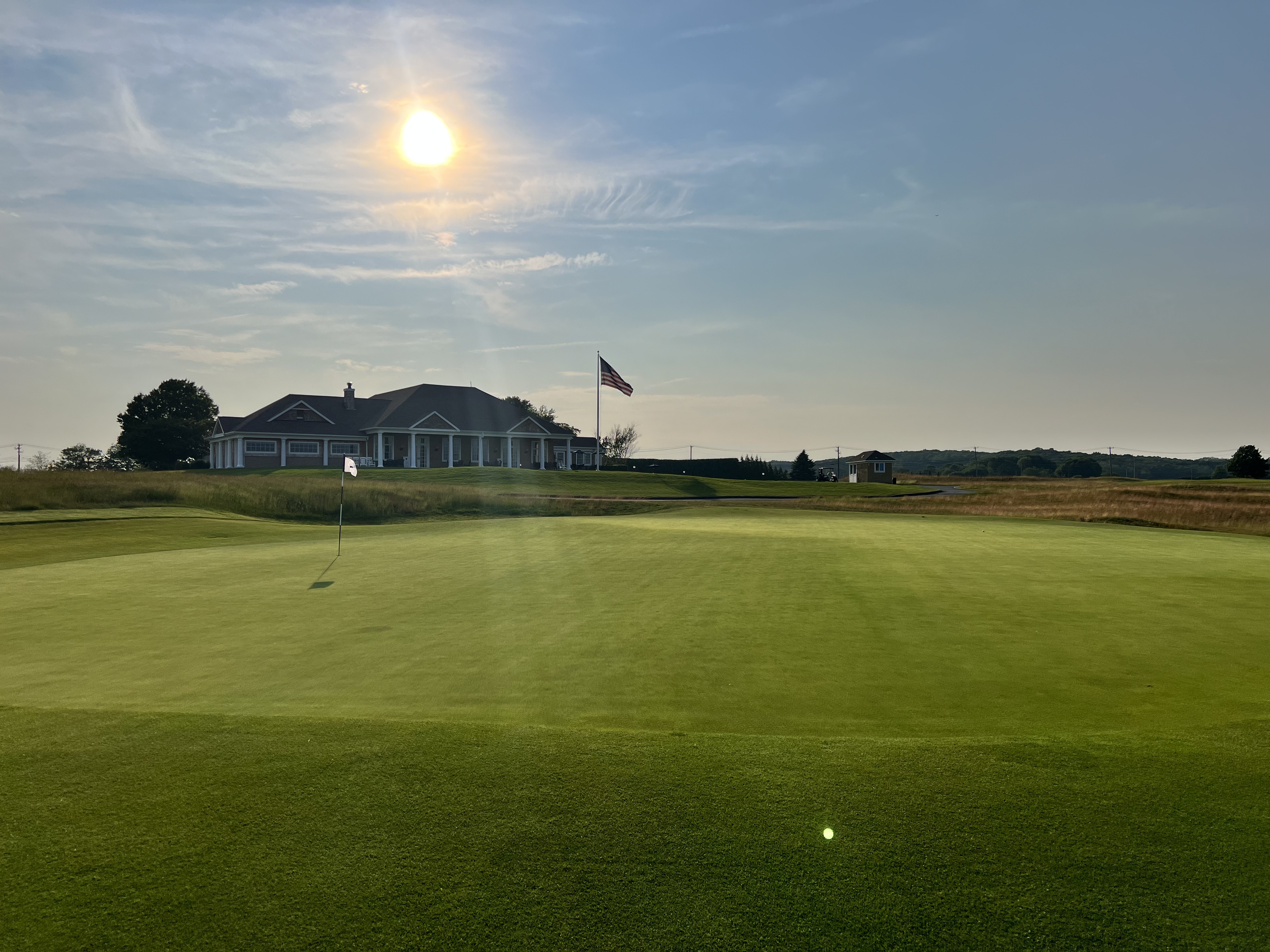
Clubhouse/Pro Shop: The facilities are a strong point and the pro shop is one of the larger one will come across. The structures create an amphitheater at the Eighteenth for the finish while the lodging other structures take advantage of the vast property and stretch out here and there.


Practice area: The driving range is, as expected, fantastic. Double sided with various target area greens. A short game area is off to the side and of course, putting green near the First.




You must be logged in to post a comment.