6,070 yards, 134 Slope from the Black (Paris Singer) tees
Growing up in Southern California and spending a lot of time along her beaches, I have preconceived notions about coastal living. My standards are high and judgment unforgiving. I have written before about some of my misgivings of the Jersey Shore mania that takes over in the Summer and with Florida, I have always remained skeptical. It really comes down to geography. In California, the coastline gets downright mountainous at times, which allows a natural majesty to prevail. On the Atlantic seaboard, the coastline is rather flat which means it is left to each community how to deal with that flatness to enhance the beautiful surrounds. Each community has a bit more discretion in creating a feel. This is important when it comes to Palm Beach and the Everglades Club. Palm Beach exudes a historical relaxed dignity that favors a charming quietness for all to enjoy in their own space. Congregations are selective and carefully planned. Hence the Everglades Club, which started as and very much today is a social club. Its members come here to socialize and among that there is golf. The golf here has always included a central social component and that has transposed into its design evolution. The focus remains steadfast on seeking the best course possible for its members to take advantage of within that social context. Is that not what the game is at its core?
The back tees are called the Paris Singer tees. Paris Singer was the twenty-second of twenty-four children of Isaac Singer, who started the famed sewing machine line. Isaac passed when Paris was eight years old and at that point, seemed to be left to his own devices with the sizable inheritance left to him. This eventually led to his involvement in constructing hospitals in England and France during WWI . The Touchstone Convalescent Club in Palm beach was being constructed for such a purpose but the war ended before construction was completed, at which point Singer converted the building into a social club. This social club opened in 1919 on Worth Avenue. Singer thereafter retained Raynor to design nine holes behind the clubhouse, which opened in 1920. Raynor was then hired for a second nine holes in 1925 but was never able to complete them due to his passing at the opening of the North Palm Beach County Club in 1926, another course Singer had hired him to design. Charles Banks completed the second nine holes in 1927, re-working a couple of the original holes to properly situate all eighteen. New ownership eventually purchased the club in 1936, which was in arrears once Singer relocated to London amidst real estate fraud charges, which he always disputed. The new ownership retained William Langford to work on the course, much of what he did was purposefully consistent with Raynor’s design style. Brian Silva was then brought in decades later in the early 2000’s. Most recently, Steve Smyers performed renovations with a main focus on upgrades and playability, which touched on turf, drainage, bunker enhancement, reduction and elimination, stabilizing the lake edges, tee work and green expansions. A lot of the recent changes to the course are in the hole descriptions as well. Water features such as the ponds and lakes have been added between 1927 and 1985 and the nines were flipped in the early 2000’s. This design history shows a club in pursuit of fashioning the best course possible for its members as the main priority, shifting and adjusting as time wears on and requires.
Everglades is on a smaller piece of land but plays firm and fast. Water that seems like it isn’t in play off in the distance very quickly jumps out at you and I stopped paying attention to distance and instead, focused on where I thought each of my shots would stop. This is one of the telltale signs of an effective firm and fast structure. Greens are noteworthy as are the recent expansions. Their size helps counteract the compactness, allowing the freedom of pin position and variety. There are some templates, with the Punchbowl, Biarritz and Road Hole standing out. At its core, the Everglades Club is a cool rendition of Raynor in a Florida setting with limited space. The ground game is lively and penal elements jump up and bite you quicker than the logo gator would. It exudes a fun strategic in a spirited leisurely kind of way.
It had already been a long winter when I arrived in Florida in February. It was cold by Florida’s standards but felt warm to me compared to Philadelphia, where I had essentially been on ice since early December. The ocean in the harbor smiled at me as I gazed out in the direction of the sun, harnessing its energy and storing it for much later. For those times I would be shoveling snow or waking up then falling asleep to constant sheer gray. Those times, the concept of Spring and Summer feel like far fetched fiction yet that is when I’d tap into that dormant vibrancy, staying warm beneath the surface, lying in wait for those better days, bound to slowly make their way back, ever so unrushed.
The First is a 543 yard par 5 (from the Black (Paris Singer) tees). “Away.” The water on the left is menacing and sandy waste area interspersed with palm trees is on the right. A tough opening shot. Just after the water, the bunkers crink the fairway to the left, but then it straightens out before starting to dog leg to the left around the approach shot territory. Yes, navigating each shot while accounting for the bounce and roll gets the golfer in fighting shape from the get go. The green is lined on each side by a bunker but the entry point is nice and open.


The Second is a 425 yard par 4. “Waterloo.” I’ve seen enough holes named Waterloo that I had to figure out what was going on. Is it some kind of template? The answer is no, not a template but I believe it signifies a hole that can ruin a round. It sure did a number on Napoleon. Here, the left side is out of bounds and the left side fairway bunker encroaches just about in the middle of the hole, leaving the golfer trying to figure out the best place for the tee shot. Water from the right moves in front of the green, leaving a small strand of fairway to the green. The water is along the right side of the green while the left side moves into short grass. So alas, a fairly decisive tee shot needs to be pulled off, then an approach is a forced carry over water to situate on the edge. Easy to see how this hole could indeed be a Waterloo. And so early on in the round.


The Third is a 384 yard par 4. “Intracoastal.” The left side remains rigidly out of bounds but the right does not offer much better refuge. There are bunkers and palms. They may look out of reach at first glance but it’s impressive how quickly they come into play as one sees the ball bounding along. The green is deep and narrow with sand on the left and water on the right. The indoctrination is swift and direct.


The Fourth is a 150 yard par 3. “Redan.” The water runs from right to left, in tune with the green. The front right has a wider gathering area, then runs back to the left. The left side bunker before the water is new. The green movement is quick yet not overly aggressive and is a good rendition for a short to mid iron.


The Fifth is a 325 yard par 4. “Peninsula.” We move back up to the water from the Second. The fairway starts out narrow but widens as it gets closer to the green. The water is not immediately apparent from the tee but with how things move here, it comes up quickly. The green is indeed a peninsula, the left side the entry point which then extends out with water on the far, right and near sides. There’s more room at the entry point than it seems while the further the right one goes with the approach, the more exacting it needs to be. The hole is on the shorter side, so there is some freedom with the tee shot to accommodate the stiffer approach.


The Sixth is a 346 yard par 4. “Lion’s Mouth.” Another shorter par 4 but not as short as the hole prior. This hole underwent some changes with Smyers work and now plays like a Lion’s Mouth with the center line bunker at the green. A fairway bunker on the left may have also been removed, allowing for more tee shot options to set up the approach that must contend with the new center bunker one way or another. The hole works nicely in conjunction with the Fifth, as both require a bit of plotting at the tee to much different green complexes.


The Seventh is a 412 yard par 4. “Alley.” Well within the interior of the course, the fairway is a corridor between rows of palms on either side. Bunkering was changed here as well, which resulted in much more flow from tee to green and selective locations of sand at the green. One is allowed a shot at the approach if the tee shot stays true yet the center line ridge complicates matters as it skews shots down to the front edge on that half while doing the opposite at the rear half. Getting on the correct side of the ridge at the approach is pivotal.


The Eighth is a 135 yard par 3. “Punchbowl.” The age old debate rages on whether the golfer should see the punchbowl or not on approach. Those who believe it should be seen will say that watching the ball roll about is half the fun while those who believe it should be blind will emphasize the suspense and knowledge of the terrain accompanying it make it much more refined. Here, the green is blind to the tee and it works impressively well. The sheer expansiveness of it remains hidden and the movement is graceful yet some what demure at first blush. Probably one of my best shots of the day yet the walk to the green to see just how good it was indeed was a mixture of anticipation and gusto, like a kid on his birthday before opening his presents. A great rendition.


The Ninth is a 322 yard par 4. “Dare.” The front nine closes out with another short par 4 with a pleasantly tough green. The water that starts on the right is yet one of the considerations from the green and whether the golfer wants to back off and settle for a longer approach. The greenside bunker is new and adds some zest to those who move up the left side. The back to front movement of the green should help with most approaches in but always mind the water, which continue to move up the right side through the green.


The front nine is impressive for its economy and variety on the west side of the property. The par 3’s are very good while the short par 4’s make up a lot of the course’s character with its effective firm and fast persona. I would rank them 8, 2, 5, 4, 6, 1, 9, 3, 7.
The back nine starts with the 381 yard par 4 Tenth. “Maiden.” This was designed as the first hole and is a much more user friendly tee shot except for the water off to the left that’s very much in play. A couple bunkers were removed from the recent work, one at the fairway on the right and another short right of the green. The green is pushed up with back to front movement and the rear wings at each corner could be seen as similar to the Maiden template.


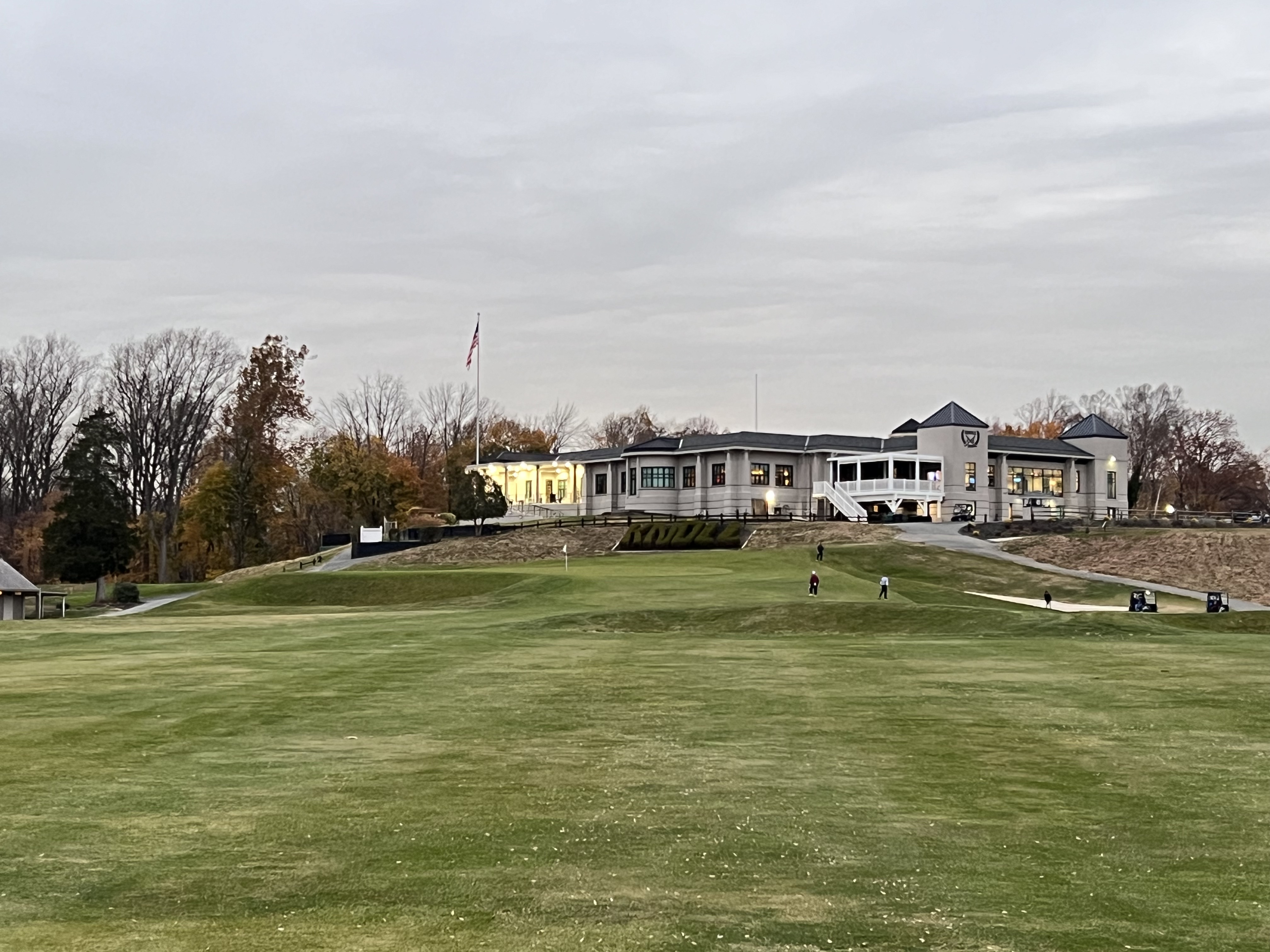
The Eleventh is a 337 yard par 4. “Knoll.” We head back in the direction of the clubhouse and the water is once again a consideration on the left off the tee. The golfer is now tasked with taking on the fairway bunker on the right or moving to the left of it, which brings in those considerations of rolling right in to the lake. The bunker before the green gives the hole that Knoll feel by ensuring most approaches are aerial. The green seems to eschew balls towards the edges, again appropriate for the template. This subtlety of the green will disrupt many approaches focusing on simply carrying the bunker and landing on the green. The closer to the center, the better.


The Twelfth is a 164 yard par 3. “Short.” One of my favorite greens of the course. From the tee, it invites the golfer to simply hit a high straight shot and be on your way, yet its movement is deceptive in its complexity. There is also the prominent bunker on the left that demands attention. The bunker on the right is new and then there is the water further right. The golfer may favor one side or the other depending on his tolerance for hazards yet anything considered to be a bail out area is off the rear of the green. The shape of the green is yet another notable aspect, narrowing on the left and widest on the right, closest to the water. A lot of intricacies that distinguish from the standard Short with the wrap around bunker and pitched green make this one of the better Short holes I have come across.


The Thirteenth is a 351 yard par 4. “Cape.” Water is beset on both sides of the fairway and for once, the golfer is almost encouraged to move as far down the fairway as he can off the tee. This is apt considering the decision the golfer must make on his next shot. The green juts out to the left, creating the Cape structure by tempting the golfer to carry all the water in reaching it. The beach bunker between water and green is new, adding another layer of temptation for the golfer to go all in. The right side is inviting in its own right and the right side of the green can even be reached without carrying the water.


The Fourteenth is a 192 yard par 3. “Biarritz.” It’s a deep Biarritz green with the nuance of narrowing at its rear. The bunker configuration at the sides is expansive yet fairly shallow and the short grass spaces between the bunkers provide some nice recovery options for those finding themselves off the green. The swale is substantial and some what gradual. It is not severely steep as can be found elsewhere but certainly asserts its presence on most every shot. The graduality of the swale makes it more relevant on many more putts, as well as challenging. Another well done par 3 with just the right distinct features to set itself apart from the standard template.


The Fifteenth is a 501 yard par 5. “Everglades.” The course stretches its legs with the next two holes, which are back to back par 5’s. A fairway bunker on the right was removed, which allows the golfer to contend with the trees and sandy waste areas if he wants no part of the water on the left. The same decision awaits on the second shot. There are now three fairway bunkers further along on the right side, so the golfer must either confront those or flirt with the water on the other side. The fairway just before the green used to curve around a couple bunkers but now the fairway leads up to the green unimpeded save for the bunker on the left that wraps around the left and front of the green. This is likewise new, replacing a large expansive bunker that covered the entire left side before. The current bunker configuration ensures the golfer will need to confront bunkers at some point before the green. If he moves up the left side, he will face the greenside bunker. If he moves up the right, he faces the trio of bunkers on the right yet has a clear look at the green. It’s a horizontal dance from tee to green if you will.


The Sixteenth is a 488 yard par 5. “County Road.” Now at the easternmost side of the property, I feel like this is becoming a common refrain. Mind the water on the left off the tee. One of my bored golfer during winter purchases was a mini driver. It came in handy here, as I bought mine so it would essentially stay straight and low for a good amount of run out. I leaned on it more and more to avoid the hazards awaiting those who opt for full blown driver, where either sideways or roll out brings a lot more trouble into play. In other words, I allowed myself much more margin of error. I need all the margin I can get when it comes to this game. A fairway bunker on the right that came into play off the tee was removed, thereby encouraging my approach to use the ground game to roll around the prominent hazards such as the ponds and lakes. The second shot needs to navigate a few larger bunkers on either side to set up the approach. I believe the center line bunker is new, moved from the right side. The green now arches around that bunker and encourages the golfer to approach it from one side or the other. Very good variety on these par 5’s, especially considering the flat terrain and straightway structure.


The Seventeenth is a 178 yard par 3. “Westward Ho.” The hole used to be bunkerless but now there is one front right and back left. A forced carry over water, there is some bail out room short left but really the golfer is hemmed in with relatively little choice but to hit the green with his tee shot. The interior contours here are interesting and reveal themselves slowly over time. As in, after you hit your putt. A nice penultimate hole that assumes the golfer is up to the challenge of precision presented here.


The Eighteenth is a 436 yard par 4. “Homeward Bound.” The longest par 4 at the last. The closest right fairway bunker was removed yet the two on the left near the water remain, once again providing options and ground game considerations into every shot. The green is pushed up with long bunkers on either side with a slight tilt to the left. Able to accommodate longer approaches as well as most pitches out of either bunker with its size.


The back nine encompasses the east side of the property and its par 3’s are very solid, followed closely by the rest. There was a bit more strategy here while the front featured a bit more challenged precision yet there’s a nice balance as these dominant components are within the other nine as well. I would rank them 11, 12, 13, 14, 16, 15, 18, 10, 17.
Everglades is impressive for how exciting the design remains throughout in the face of limited acreage, flat terrain and the necessity of mostly switchback holes. Relying on superb hazard placement, wind considerations and an overall emphasis on green complex sophistication, the course is lively and engaging. There is very little to no rough as well, which emphasizes the wild randomness of the firm and fast conditions. The recent work by Smyers reinforces the strategic dance of the firm and fast, mostly allowing more fairway and short grass off the tee and greens within which to work, which scales back on more forced carries and definite corridors of play. It may be true that there is little of Raynor’s original work remaining but Raynor’s design character is still present. The golfer must negotiate with omniscient bunkers that cover much more ground than it seems while understanding greens that range in temperament from bold to reserved-yet-cunning. Water is more functional here than most places, as it’s used as something to avoid and/or consider against other hazards as opposed to something that simply must be carried. Then there is the wind, which Raynor always accounted for and comes into play frequently. It’s a substantially fun round with very real doses of challenge, all of it amounting to a substantially invigorating time. Indeed, the course promotes the social virtues borne from the establishment of the club with its thrill, fun and downright provocations the golfers will be able to explore in the grill after the round.
Clubhouse/Pro Shop: The clubhouse is a historical marvel and consists of a few structures. Singer’s good friend, Addison Mizner, was his partner in building the Touchstone Convalescent as well as the Everglades. Mizner had architectural experience and his design of the clubhouse was an early introduction of the Mediterranean style that now dominates Palm Beach. Mizner went on to become one of the more influential architects of the era. It should also be known that Mizner was involved in overseeing construction of the course. The pro shop is a separate low lying building near the putting green. The club logo is one of the best in the game.

Practice area: There is a driving range, putting green and small short game area, further demonstrating the perfection in utilization of space.


You must be logged in to post a comment.