6,412 yards, 133 slope from the Blues
The shuttle lifted off on the live feed, rising higher and higher into orbit as we cheered with champagne in hand. There was some lingering conversation afterwards, then back to work. I walked by myself down stairs and out of the West Wing. John Glenn was off into space by now, bless him. Walking back into the office, the phone rang. “Hey, it’s Wolf.” “Hi Wolf.” “Is he in? “No we were at the launch party, he’ll be back in a few minutes.” “Is he going to comment on (stuff)?” “No idea, he’ll let you know.” “Ok see you.” I now could focus on the computer for a few minutes before going to the law library. I think I can literally type in, “photos of San Francisco” and being online means a bunch of photos of San Francisco just shows up on the screen. (This was literally an interaction I had with the computer back then, the early days of the internet.) The phone rang again. “This is Helen Thomas, is he in?” “Hi Helen, he isn’t in right now.” “Well, when do you expect him?” “I’m not sure, could be within the next half hour.” “Can’t you find out any more specifics? I need to speak with him.” “I’m sorry, but will let him you called.” “Tell him to call me as soon as he gets in.” Enough of the phone, I headed to the law library, still used books back then for research. Need to get an answer on whatever it was before drinks at Old Ebbitt with some nursing students from Georgetown. It’s fancy night.
The life of a White House intern was intoxicating for someone from California who more specifically had spent the last few years in leisurely Santa Barbara. I would come home each night, turn on the television and they would be talking about what I worked on that day. My room mate and I would spend late nights at the Tombs and wander home who knows when for a couple hours of sleep and a shower before doing it all over again. Adams Morgan on the weekends. Most people were transient so it was like vacation in a way, everyone in the same boat. Secret service would transport me to the Hill with sensitive documents and such. I had to go to hotel rooms at all times of the night for deliveries so people testifying the next day had what they needed. I took the LSAT at some point and managed to pull off some decent score. Watching judges from all over come by for their interviews to determine if they would get appointed. Talking law and politics every where. I could have become used to that full time. It turns out I lived twenty minutes away from Columbia Country Club way back when, for about a month. The housing arrangement with the school ended before my internship was up so I moved in with a girl from our program who decided to stay full time. In the northern reaches of Georgetown, I continued those long nights at the Tombs. It snowed a couple times. I applied to a shit ton of law schools. The holiday decorations started. I kept on. Having arrived in the Summer, it felt like I was there for years. I flew back a few days before Christmas, the day Clinton was impeached.
Tried as I might to get back, the forces that be had other plans. I applied to various law schools in D.C. in a furious attempt to return but they would not have me. I stayed in touch with those I met for a while but eventually, the pull of Santa Barbara prevailed in the way it does. Still, the formality of the East Coast remained in some ways on this coastal Californian. And that time directly led me to believe moving out East for law school might be a good idea. I embraced the collared shirt and would listen to classical music in my fancy robe. Night caps. And of course, this is when I first became intrigued with golf. I had no idea what I was doing but my friends and I would go to this course and that for a round. I started watching it on television relentlessly. I didn’t know if I could afford golf lessons but thought I could just figure it out, eventually. This would be the first wave of the game for me that would leave an impression. Then law school and being even more broke happened. Yet that impression remained. Ten years later, golf would come calling in earnest again. And fourteen years after that, I found myself at Columbia Country Club. A large, strange trip of a loop from all those years ago when I was sure I had everything worked out. Standing on the range swinging like a complete dumpster fire, my mind wandered. I always like to think back, it’s been a while thinking about that time in D.C. I finally came to and had what’s likely one of the best ideas I had come up with in a while.
We’re only twenty minutes from the Tombs.
Columbia Country Club opened in 1916 with design attribution to Walter Travis. Herbert Barker, the head professional at Garden City Golf Club at the time, along with Dr. Walter S. Harban, a founding member of the club, laid out the routing (although at least one newspaper article mentions Donald Ross involved in the lay out with Barker) while Travis contributed after the initial lay out in consultation with Robert White. This included making changes to the course ahead of its hosting of the 1921 U.S. Open (won by “Long Jim” Barnes), primarily with the bunkers and greens. Barker appeared earlier this year in the review of Springhaven, having early involvement in that course as well. Harban and Travis would collaborate once more in the construction of East Potomac Golf Links, residing half an hour from here. William Flynn performed work on the Second in the mid 1920’s, installing a new green. Much later on, George Fazio and Tom Fazio worked on the course, instilling an assortment of modern touches, then in 2000, Brian Ault and Tom Clark modernized even further with bunker work, mounding and tree planting. 2007 saw the formation of a master plan in an effort to move towards restorative efforts, which Bob Walton began and included bunker work. Joel Weiman with McDonald Construction performed the most recent work to the course, creating a renovative master plan in 2017. This consisted of routing changes based on the recent light rail project, which impacted the Second and Fourteenth green, installed a new irrigation system, performed bunker work and regrassing, which was completed in 2022. On a hilly piece of property, the holes mostly confront the elevation changes head on which results in plenty of climbing and plummeting while the greens spread out on assorted plateaus and knobs and hillsides. There is a good deal of terrain movement to consider although the considerable rough off the fairways curtails this somewhat. The greens move swiftly, in tune with the incorporated hills. And oh is that movement fun to ride throughout the round.
As mentioned above, Columbia hosted the 1921 U.S. Open, whereas a few months before, Harry Vardon and Ted Ray visited as part of their tour and declared it, “one of the very best in America.” U.S. Presidents and five-star generals have been among its membership. In more recent times, it hosted the 2021 U.S. Girls’ Junior Championship and is scheduled to host the 2027 U.S. Senior Women’s Amateur and the 2035 U.S. Senior Amateur.
The course has its high points, which start with the greens that exhibit a good deal of Travis character and are among what has not been touched over the years. In conjunction with the hills and approach scenarios, they bring a good deal of intriguing thrill. Many of the tee shots are of that same ilk. There is, however, an influx of modern character that has made its way into the structure of play. The tree plantings of Auld and Clark continue to interfere in various spots, the rough comes in much more than it should, mostly in working against the movement of the hills that’s much more in tune with the terrain near the greens, and the closing stretch occasionally felt like maneuvering around and over a dizzying confluence of cart paths. The history, terrain, greens and routing are all first rate classic architecture-worthy but Weiman has proven thus far his strong suit lies more in functionality and logistics than in artful, respectful design that enhances or restores classic character. In this way, I found the structure of play calling upon more modern game traits than classic for the most part. On the other hand, the re-grassing has been a success and the course plays much more consistent because of it. The greens and short game demands were where the course shined, mainly because of the bottomless assortment of decisions and plays available to the golfer all while considering the slickness of the greens. Additional tree clearing would go a long way in elevating the driving and second shot game to the same level as around the greens while short grass in place of rough in several areas would add several dimensions to its playing structure and recovery character. In other words, the terrain and routing are best served for challenge, strategy and complexity on a path back towards its remarkable classic iteration as opposed to the modernization attempts. The esteemed and gregarious membership deserves as much.
All that said, Columbia has a lot going for it. Besides its relative proximity to the Tombs, the membership and its history, Greg Lecker is the “matchmaker” who sets the matches for each tee time. With everyone’s indexes, Greg hands you the scorecard for the day along with the pairings, which shows any stroke holes as well. It’s a great playing tradition and Greg certainly knows what he is doing, as I believe our match came down to Seventeenth or Eighteenth.
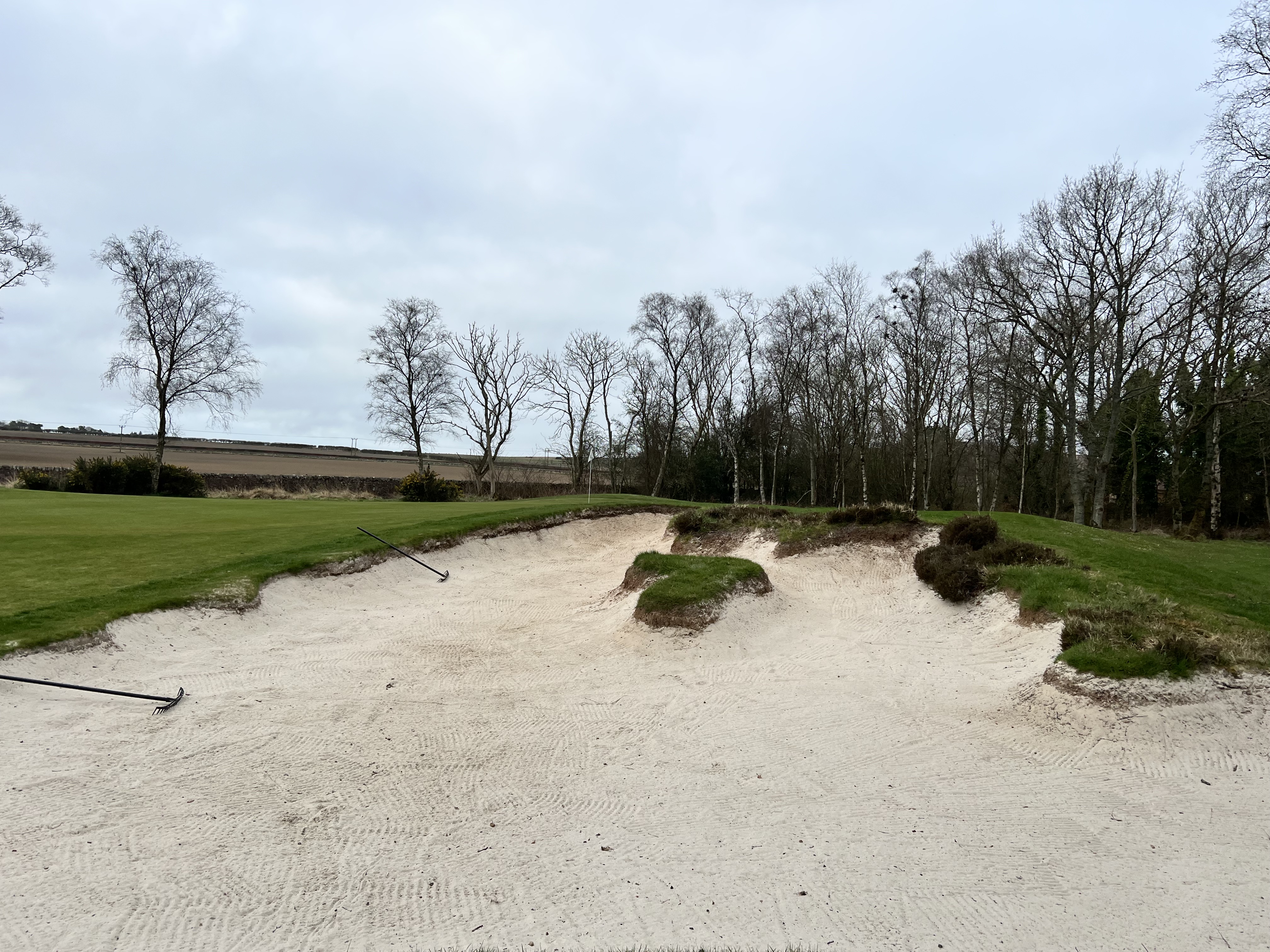
The First is a 375 yard par 4 (from the Blues). “Red’s Roost.” A dog leg right with the trees on the right obscuring the green, the opening tee shot needs to clear the turn and trees for the approach while avoiding the bunkers on either side. The hole continues uphill to the green after the turn, a large bunker at the front right and a short grass run off at the left. The green has some devious left to right movement, which brings the run off into play more than one may believe at first blush.


The Second is a 401 yard par 4. “Valley Brook.” Moving under the light rail to reach the tee, the tracks move parallel to the hole on the right, the tees right next to it. There’s a left to right cant to the fairway as it eventually moves sharper downhill and out of view from the tee. There’s a widening to the left near the right fairway bunker that then narrows as it moves downhill to the creek. The green is on the other side of the creek, on the hillside and moving back to front with a bunker on either side. It’s a precarious approach with a lot of speed at the green, making the tee shot all the more important to keep things manageable. Recoveries off the green will be much tougher above and to the left of the pin.


The Third is a 348 yard par 4. “The Bridges.” A large bender to the left that heads uphill to the green. The fairway bunker is once again a good indicator of a change to the fairway width, widening once past it all the way to the green. The green has very strong left to right movement, which brings the short grass into play on the left and those who know will make sure any miss is on the right side instead. This hole grabbed my attention for how it was set on the hillside and the green speed is used strategically with the arrangement of short grass and bunker near the green.


The Fourth is a 212 yard par 3. “Fooler.” A long par 3 slightly uphill to a smaller green with some depth. There’s a good amount of room before the green to use for the inevitable roll from the tee shot as those ending up at the rear of the green needing to get back to the front will be in for a challenging roll. That right side bunker might actually be a good place to miss should the need arise.


The Fifth is a 545 yard par 5. “Lost Bunkers.” The name of the hole comes from a cross bunker that spanned 100 yards that was part of its original design, thought up by Harban. The bunker was considered as part of the restoration in the early 2000’s but ultimately decided against so hence, the name. The tree line on the left is rigid through the green and no good at all. The right side isn’t all that much better but at least there’s more of a chance of an opening for a shot towards the green. Moving up then down with a few rising slopes on either side towards the green, the second or third shot needs to maneuver over the collection of bunkers residing in front of the green. The green is on the larger side, moving at a prevalent diagonal. There’s not a terrible amount of width to work with on this lengthy hole but the space around the green certainly helps with a lot of recovery scenarios from missed tee or second shots.


The Sixth is a 445 yard par 4. “Road Runner.” Still moving along the perimeter of the property, the left side remains rigid as the tee shot is to the downhill fairway. The fairway bunkers on the left again signify the narrowest part of the hole. The fairway lists to the left, towards those fairway bunkers, while the green is uphill and a click to the left. Its rear to front and left to right movement means those coming in from the air will want to favor the left rear on the approach while other shots are free to roll on with the generous entry point. It’s a cool approach but again, the tee shot needs to be rather flawless to take advantage and avoid a costly longer recovery shot.


The Seventh is a 322 yard par 4. “Let Up.” Listen to the hole name here, as the downhill leads to bunkers short of the green, which all comes into play off the tee if one isn’t careful. Those looking for length with the tee shot need to favor the left side while those letting up have more leeway horizontally. Like the tee shot, the approach is obscured, mainly by a large bunker at the right front center. The green has some shallowness and with almost all approaches in being aerial, it’s time for a controlling short shot to temper the hot back to front movement of the green. A nice short par 4 that provides respective advantages depending on the selected tee shot.


The Eighth is a 178 yard par 3. “Interlude.” The green shares a lot of characteristics with a Redan with its strong right to let movement, uphill at the entry point and utter death at the high right of the green. Of course, that’s where my tee shot ended up, above and to the right of the bunker on that side in the rough. One of the better shots of last season, I managed a high flop that floated and stopped near the pin. It’s a shot I don’t believe I could pull off again if asked, or at least not right away. With that pin position on the left side, one is better in the bunker than he is on the green above it.


The Ninth is a 416 yard par 4. “Let Out.” All uphill to the green, we once again look to the hole name for our cues off the tee. It’s time to belt one out while avoiding the fairway bunkers on either side. The approach should come in from the right, which is just as well with the expansive bunker lurking on the left.


The front nine has a few pretty good holes and a great collection of greens. The good holes engage at the tee as well as at the greens. There is variety with the sequencing as well for a rather steady challenge throughout. I would rank them 3, 7, 8, 6, 4, 9, 5, 1, 2.
The back nine starts with the 424 yard par 4 Tenth. “Split Level.” This hole name has to be referring to the green but could just as well refer to the fairway, which drops sharply from left to right. The tee shot needs to strive for the high left side, yet there’s an odd tree line on the left side that curtails moving in that direction, so perhaps it is set up to force a right to left flight. A high shot to the left will likely avoid the trees but why not give the golfer the freedom to try for as much of a sweep as they wish to dare? There are buildings on that left side so perhaps there are safety issues but still. At any rate, the tee shot will move down to the left and then the approach is to a much more level green, although those too far to the right will need to carry an elaborate bunker complex to reach the green. The terrain movement and green are very good but once again, the tee shot structure stifles.


The Eleventh is a 425 yard par 4. “The Queen.” The contours of the fairway shine here as the starting swath has a hogback feel to it. Moving past it off the tee seems the most wise move while the green is above the fairway with a bunker on either side. Almost reverse of the hole prior, the tee shot here has a good amount of intrigue while the approach is fine.


The Twelfth is a 517 yard par 5. “The Spring.” A blind tee shot as the fairway drops downhill and turns left, a bushel of trees on either side of the fairway ushering the way. The trees make it mandatory to hug the right side off the tee, which is tough since a lot of the cant moves to the left. This means more shots than necessary are blocked out on the second shot, demonstrating the left side trees should take a hike. The fairway leading to the green has great hilly movement so there’s no need for any kind of tree line interference. The second fairway teeters to the right in similar fashion to the Tenth but there are trees on the lower right. This might lead to favoring the higher left but there are trees there too. So roll the dice and try for the left without going too far left, or too far right as the case may be. The green is wide and shallow, a short grass drop off on the left. The disjointed feel and confusion if there’s actually any advantage of placement at the second shot made for a lot of head scratching here.


The Thirteenth is a 178 yard par 3. “McLeod’s Ravine.” The ravine is substantial and must be carried to reach the hilltop on the other side, guarded at the front corner posts by bunkers. I’m on a roll here but the trees on the right detract from the marvelous, severe terrain surrounding the green. Without them, the green would stand in prominence, a simple, fast back to front green perplexing the golfer more than he ever imagined stepping to the tee.


The Fourteenth is a 396 yard par 4. “Round the Bend.” There are dog legs and then there are candy canes. This is a candy cane left. The tee shot carries the ravine once again and stays straight for a moment before it begins turning to the right. I’d prefer a miss to the right if given the option, the fairway sweeps down before a crook to the right where the green is. The fairway dropping on both sides off of it works very well, especially to the left of the green, which is one of the closest things to golf purgatory out there. Also, no trees, allowing the terrain and movement to thrive. A very cool hole.


The Fifteenth is a 367 yard par 4. “Overlook.” A spectacular tee shot unfettered by trees, once again allowing the rollicking hills to do their thing. It’s best to favor the right side, which remains high and level while the left eventually drops well down to the green. The approach will likely be from the higher ground to the green down below, bunkers on the sides.


The Sixteenth is a 159 yard par 3. “Oh, No!” The final par 3 enjoys some myth that Bobby Jones derived inspiration for the Twelfth at Augusta National here but this configuration of the hole, a little familiar to the Golden Bell, did not appear until 1937, four years after Augusta National opened. This hole was actually modeled after the Twelfth at Garden City Golf Club and while the tee angles into the green with the water and bunkers are situated nicely, the barrage of cart paths take any of the naturalism away from the hole. Imagine grass in place of these paths in the photos below and the change in aesthetics does wonders.


The Seventeenth is a 292 yard par 4. “Plateau.” The tee shot must hit the strand of fairway behind the cart path and water while longer hitters might try for the green, which sits high above where we were at the Fifteenth tee. The climb to the green is abrupt and the approach is blind. Be sure the approach is healthy into the middle of the green with the bunkers down below short of the green. Some are very fond this hole and the last but I found them contrived and convoluted.


The Eighteenth is a 412 yard par 4. “Oasis.” The tee shot starts out narrow but grows wider with each step to the green. The pair of bunkers at the fairway and again at the green are smartly placed while the green is immense, matching the splendor of the clubhouse beyond.


The back nine is not without its idiosyncrasies and in my humble opinion, there are a few holes that can be improved upon with minor changes. Yet there were some really good holes too and the terrain really showed off on this side of the course. I would rank them 14, 15, 10, 18, 13, 11, 16, 17, 12.
Generally, Columbia is full of character and its course has a lot going for it. The greens, terrain and a good amount of the routing make for an engaging round with exciting roll abounding. There is room for improvement, however, especially with the tee shots and rearranging cart paths and clearing trees. It’s all there and if the terrain was used even more in thrilling fashion as it currently is at holes like the Fourteenth and Fifteenth, the stature of play would vastly benefit. With that said, it’s a course worthy of playing and does a respectable job harnessing a good amount of speed within a classic set of greens and fairways. It’s hard not to have fun here and enjoy the day.
Clubhouse/Pro Shop: Overlooking the Eighteenth, it strikes a nice balance of stateliness and casual formality.
Practice area: A range to the right of the Eighteenth, a short game area near the First tee and a putting green in the same area.


You must be logged in to post a comment.