Golf is an amazing game. It teaches you so many things and teaches you so much humility and discipline and absolute hard work. Because nothing is ever given in this game no matter what level you’re playing, no matter what course you’re playing on; so I think it teaches so many amazing life skills.
– Aaron Rai
It’s not everyday there’s a major in your backyard. It has been thirteen years, actually. And when it is in our backyard, it is only fitting that we comment on its significance within the game and course architecture. While there were many I knew who were going to skip attending because of crowds, traffic and the convenience of watching it on television, I always like to go. Four times each season, all of the best golfers of our generation prepare as much as they can for these exams on the grandest stage of the time. I want to hear the discussions they have with the caddies, watch their mannerisms and see the shots unfurl in person. Sentimentally, this is also the only local major both my kids will be around for. In 2013, we only had our oldest at the time and she was too young to attend and in 2030 when Merion hosts the U.S. Open again, she will be in college. I remember my wife and I coming to the AT&T at Aronimink in 2010 when she was pregnant with our daughter. We walked a good deal of the course but it was hot so my wife rested under a tree off to the right at the Eleventh. I got a kick of showing my daughter the tree, telling her she had been there before. There are reasons to watch just about every tournament but the majors are where the players are vying for history. Stature and memorability are largely based on major wins, for better or worse. And they are milestones in more ways than one.


At any rate, I wanted to take full advantage. Aronimink is a Donald Ross design that has been restored on a couple occasions. I regard it for its very good approach scenarios that are the result of excellent greens. A lot of my thoughts on the course are here https://golfadelphia.com/2023/06/10/aronimink-golf-club/ Their size and the shorter length of the course had many pundits expecting a winning score of -20. One important point worth emphasizing is I never worry about score in relation to par. What truly matters is if the golf is interesting to watch. Are the golfers able to utilize their distinct style and shots upon it. Are they able to think and plot so that they are rewarded for that process. Can they impart creativity and inventiveness to their game when needed. These are the things that make for moving golf. You can have dull golf at 20 under or 5 over. Knowing what I did about Aronimink, I believed it had the potential to showcase very interesting golf. There is strategy to be had within the holes and those approach shots would be varied. With how the greens would be running, I expected contours and angles to matter a great deal. My expectation runs some what counter to the stats and data out there, however. This data has shown that the bomb and gouge gives the player the best chance at success. Get as close to the hole as possible with every shot and figure it out from there. With the movement and undulations of these greens, however, I wasn’t so sure there were other ways to go about it that might be better.
I was a marshal for one of the holes. My first shift was early Monday morning. The golfers could not start teeing off until 7:30 a.m. It was rather empty yet sure enough at 7:30 a.m. sharp, a tee shot came bouncing up the fairway. It was Martin Kaymer, by himself. He would end up near the top of the leaderboard the first couple days. Apparently, he was extra fired up when someone at the Champions dinner was surprised he was actually playing. “I didn’t fly all the way out here just to have a New York strip with you guys.” That was his quote after the first round. That determination was there even before the dinner as he was first one up. It was cold that morning. Then the wind made it downright freezing. As I looked at the weather forecast to see if there would be any relief, I realized the wind was going to be around all week. The wind with these greens seemed like it would pose an even stiffer challenge. When I finally settled on my picks for the pool I am in, I had to decide on the winning score as a tie breaker. I went with -12.

The course was sporting firm and fast conditions that not even some Wednesday night rain could dampen. The knee high rough I was in on Monday while marshaling had been cut to a few inches but was very dense. It should be pointed out that the pin positions all four days are all positions members encounter during their member-member tournament. While the PGA controlled those pin positions, they did not create any new ones. Their only request on course conditions was that the Tenth and Eleventh should run slower than they normally do. Pete Dye always remarked he knew he was doing a good job when the players complained and the same applies to Aronimink. While some players groused about pin positions and the speed of the Eleventh, the course was simply playing as it was intended. The greens with their contours and undulations demanded a unique respect for angles as well as nuances and idiosyncrasies of each hole. A bomb and gouge strategy would only get you so far, as the player’s options become much more final the closer their ball was to the hole. Those who appreciated the subtle yet critical strategy of the tee shots were able to set up their approaches correctly and properly minimize their misses. Those who simply tried to get as close to the green as possible ran the risk of not fully accounting for the consequences of their misses.
I suppose a better way to say it there was much more to the course than some of the players cared to understand. One example is Bryson DeChambeau. I came upon his tee shot at the Second on Thursday, which was resting on the steps of one of the structures. He was able to get a one club relief, then spent a few minutes removing mulch pieces from below his ball that are likely seen as loose impediments. He then hit a nice shot into the green. This was one of this only 18 greens in regulation for a 50% rate. He hit 19 of 28 fairways from the tee for a 68% rate. When he missed the green he only was able to get up and down 8 of 18 times for a 44% rate. He was also abysmal from the bunkers, managing only one up and down from his four shots out of them for a 25% rate. My son saw one of his wedge misses at the Seventh on Friday. On the high right side, he needed to clear the bunker on that side and have his ball hit short and roll out to the pin. Instead, he flubbed it into the bunker. Rickie Fowler was no better. He was on the lower left side and likewise needed to pitch it over the bunker to the green. He flubbed his shot as well. This was a theme seen throughout the tournament. Players would find themselves near greens with imposing, difficult and some times exasperating shots. My daughter and I saw this over and over again at the Thirteenth on Sunday. A short par 4 that most if not all of the field could reach the green from the tee, most missed off to the right, which was well below the hole that was sitting up on a contour at the left rear. The number of players that flubbed their chip shots from that lower right side was staggering. They needed to impart just the right amount of touch to get it up to the contour without moving past it, which would mean it would fall off the green altogether and leave them short sided. From what we saw, not one player got it any where close to the pin on his first recovery. This included Rory and Rose. Someone in the crowd said out loud what I was thinking, “Why couldn’t they miss like that at the Ryder Cup?” Juxtapose that to those shots that either ended up in one of the front bunkers or short of the green and those recovered much better. We only saw one successful birdie of a drive to the green and two putt, which was from Maverick McNealy. The Thirteenth became pivotal on Sunday for both the eventual champion and those who were close in chase. Yes the green was reachable for those accurate enough but were there other shots off the tee that would allow the golfer a better chance to score well here? A resounding yes. Not properly accounting for how costly misses closer to the pin were seems like leaving a lot of money on the table.


I followed who my kids wanted to see. The two they both mentioned in unison were Scottie and Rory. My son also wanted to see Spieth while my daughter wanted to see Min Woo Lee (because he was staying at her friend’s house for the week). At any rate, I saw a good deal of Rory throughout the week. His driving distance ranked second for the tournament yet his driving accuracy was 41%, which ranked 75th. His greens in regulation, however, were 75% (ranked 6th) and he ranked 8th in putting. Where Rory fell short were the proximity of his approach shots to the pin and any shot he took within 30 yards of the green, where he ranked 52nd and 50th, respectively. His putting saved him from the approaches that left him a long ways to the hole and as he got closer to the green, his scoring went down. This was the key difference for Rory in this tournament compared to his win at the Masters. He was even less accurate off the tee at the Masters but was able to recover exceptionally well and followed that up with excellent putting. In short, he knew the course well, knew how to handle misses and where to end up on the greens. At Aronimink, he paid for his misses more and didn’t recover as well. He still finished 7th but one wonders what may have been if he understood the course as well as he did Augusta.


“I thought I worked hard on my game, and then I saw Aaron. Man…that guy is a machine. His ability to put in the hours is just off the charts.”
– Sahith Theegala (of Aaron Rai)
A few weeks before the tournament, Rai showed up at Aronimink and went out on the course with the club’s caddies. He spent about 3.5 hours on the front nine the first day, then returned the next day and spent 3.5 hours on the back nine. He went over each green with the caddies in detail. No other player paid such a visit. This preparation showed in spades, as he ranked 1st in strokes gained, approach, showing his approach shots either ended up closest to the pins or in the area of the green giving him the best putts. Following this backwards, he ranked 4th in driving accuracy, hitting 68% of fairways. His shots 30 yards and in ranked 34th but he was in those types of situations less than anyone else in the field. And he ranked 5th in putting. His driving distance on the other hand, ranked 66th, showing the irrelevance of sheer length off the tee. Rai was hitting the right portions of the fairways and getting closer to the pins on the approach than anyone else. His preparation and performance culminated in a masterful back nine on Sunday, cementing his win beyond all doubt. He did not hold on or fall in to this win. He went out and grasped it. The right guy certainly won. Rai’s preparation, planning and of course execution allowed him to handle the intricacies of the course in exemplary fashion. It was one of the best performances on the back nine of a major on a Sunday, ever. Rai went six under through his final 10 holes, which amounted to a 31 on the back nine. He matched the entire 3 day baseline of scoring in that stretch of 10 holes. This included his bunker shot at the Thirteenth, which he managed to get closer than any other shot I saw that day. Then the knockout blow 68 foot birdie putt at the Seventeenth. Rai’s face after that putt went in said it all. The surprise along with sudden realization he was going to win was drama at its finest. Some may have been disappointed that one of the big name players didn’t win yet that is the power of the majors. Some times, they create the big names. Rai’s preparation, perspective of the game and overall character are all worthy of any champion following. He highlights the more altruistic and finer points of our game. Hopefully, we hear much more of him moving forward.

There are a lot of courses that have been flattening their greens as part of their restoration or renovation projects so that they can increase their speed, which has been touted as the best way to challenge the game’s best. Aronimink showed that undulation has the capacity to vex players as well as stifle a sheer bomb and gouge strategy that is not completely planned out. This also led to a fully engaging putting display. It was challenging for the players to even lag the ball close so how they selected their speed and path to the hole was always interesting. This was refreshing, as television coverage consists of an overwhelming majority of putting, many of them mindless three to four footers. Those putts at this course all had much more interest and made putting the game within the game it is supposed to be. There is some critique about pin positioning but in general that is all fair game in ensuring the player plays the green properly, which only comes from planning and preparation. As mentioned, the pins were the same membership sees in competition as well. I write this during the CJ Cup Byron Nelson tourney that followed the week after the PGA. Many of the Sunday pin positions were near the center of the green. The winning score was also -30. Tournaments are set up in all different types of manners and for a major that is intended to be an ultimate examination of sorts, more sophisticated placements are certainly in order. It is not about hitting good shots, but more about hitting the correct ones. The pin positions were thoughtful and allowed scoring if they were approached in consideration of the undulations within the configuration of fairway to green. The players that respected these nuances and carefully plotted their approach scenarios were rewarded accordingly. In all, it was an entertaining tournament to watch, especially in person. The tree clearing provided some panoramic views of the course from the hill points while spectators were able to follow the golfers fairly well the entire round. The architectural issue of bunkering and whether it was Ross or McGovern who separated out the bunkers into several individual ones as opposed to larger and few seemed to help with the randomness of recovery character, which again enhanced play and spectating. There were a number of instances, especially at the Eleventh, where missed approaches would stay within the strands of fairway between the bunkers or fall all the way into the sand, giving such misses an amusing fickleness as the player and crowd had to wait to see where the miss would end up. While early in the week there was a prevalent narrative that the tournament would be about who could garner the most of many birdies out there, Aronimink showed that there is a lot more to remaining challenging than length and trees. The course commanded respect for its intricacies and required thought, planning as well as exquisite touch. The player who likely abided by these tenets the most won the tournament in fitting fashion. And that is a narrative all majors strive for.
In four years time, Philadelphia will get another major and do it all over again. I will breach the 50’s by then and have a kid in college. 2036 is the next available slot for a PGA Championship and it is feasible Aronimink could get the call once again, perhaps in the twelve to fifteen year time frame. God only knows who will be where at that point. Time marches on for the game and for all of us. As Aronimink showed us, however, meaningful and thoughtful challenge in our game lies within features and an embrace of terrain that are timeless.
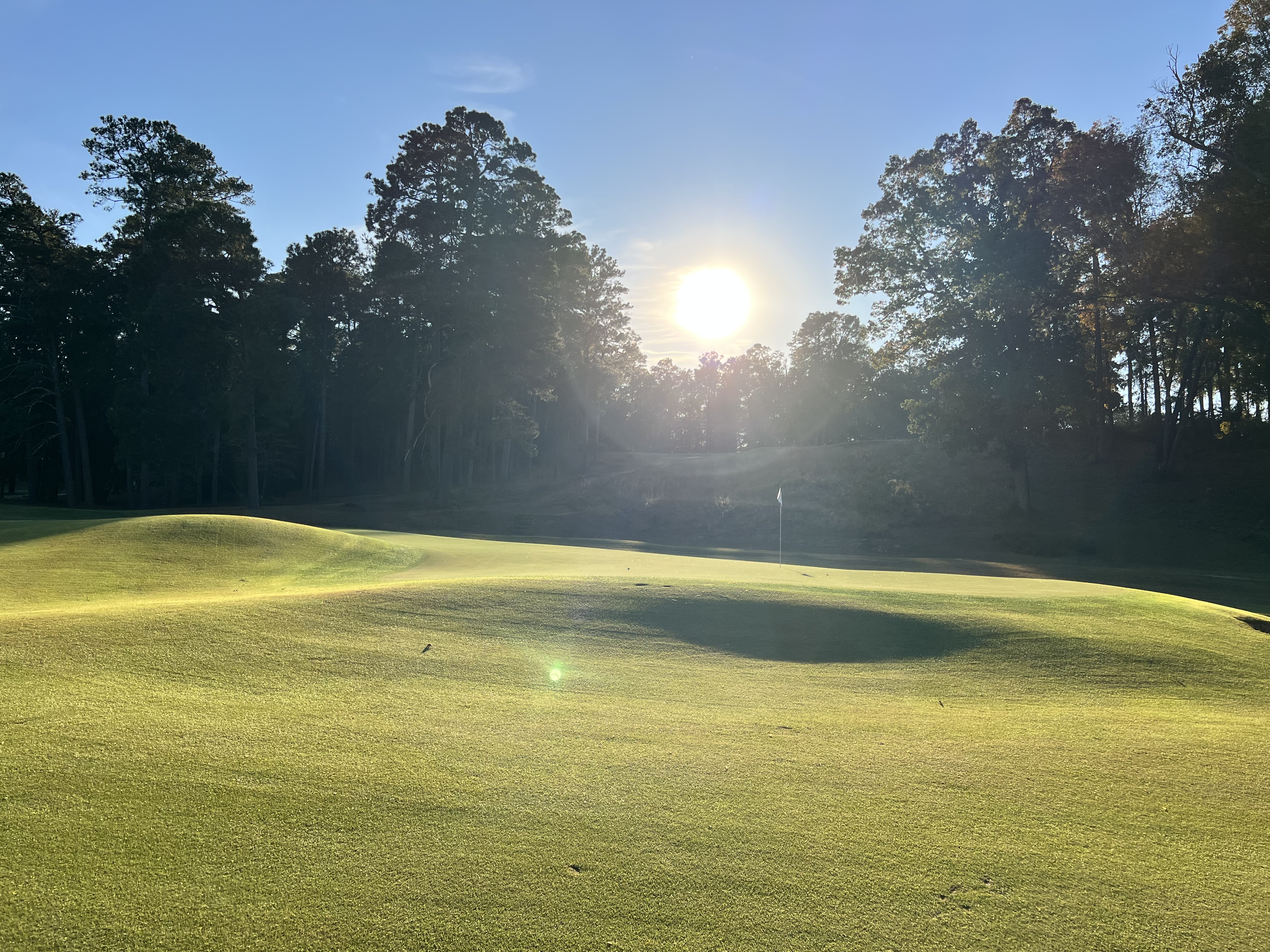
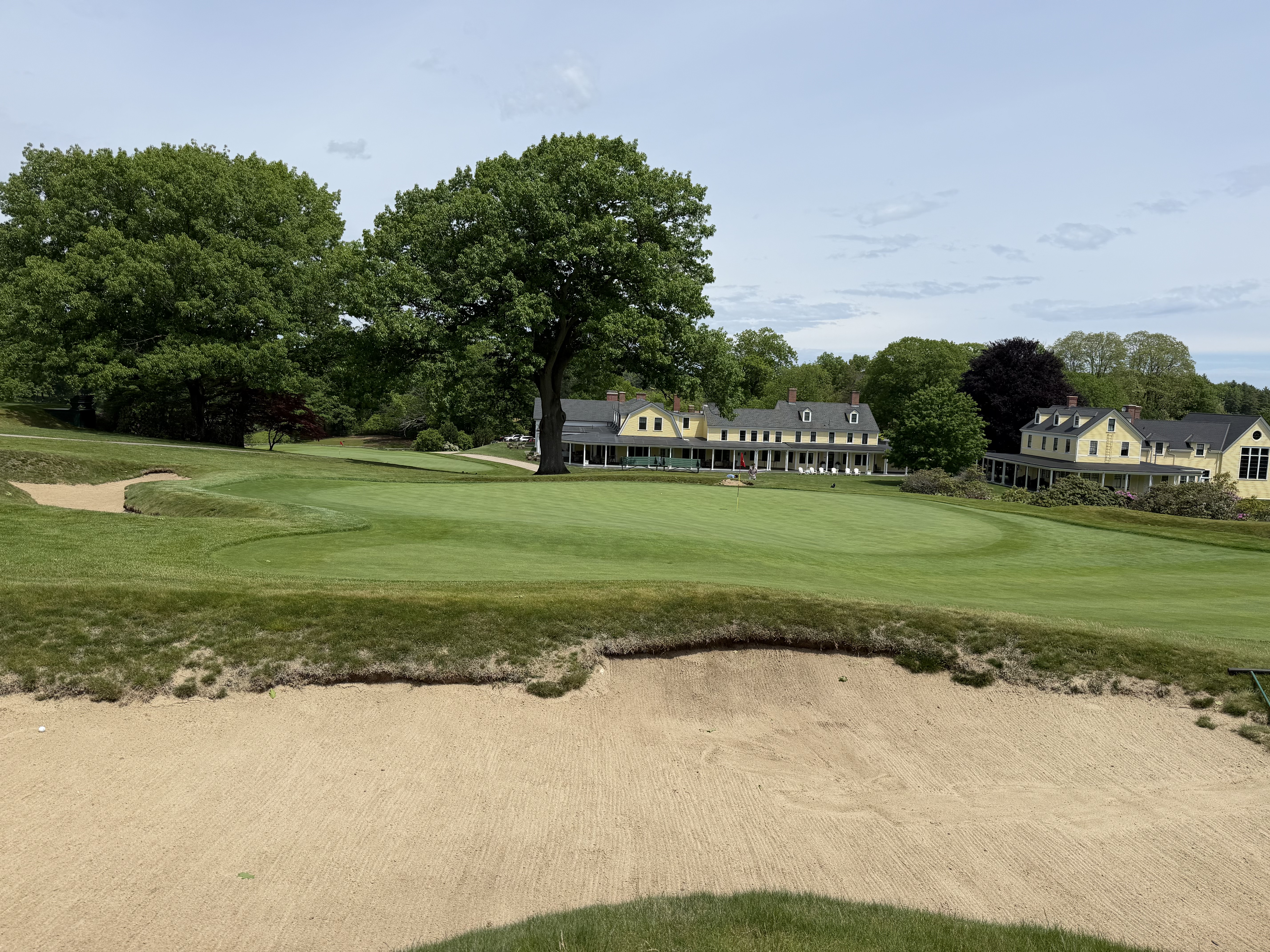
An assortment of photos taken on the grounds:

Several of action from the First


Saturday


Sunday




You must be logged in to post a comment.