6,160 yards, 125 slope from the Black tees
I’ve been on a crusade of sorts since my round here six years ago. Golf is a game of tradition and history where the past is celebrated and indeed, followed. It is also a game of trends and emulation. Success breeds several others with the same model expecting the same. That ultimately turns into a trend, then an era. At some point, there is saturation and fatigue, then a breaking point. The era is turned on to spur change and usher in the whole cycle to start anew. Never to worry; that past immediate era now frowned upon with disdain will be back after a while once there is something else to turn on. And so it goes.
David McLay Kidd identified a firmly rooted design concept around for hundreds of years and after much reflection, changed it completely. Golf course design has almost exclusively focused on putting the golfer on the defensive. The schools of course design are different ways in which to challenge the golfer. This even includes the strategic school, which at least provides the most lively, timeless engagement of thinking through the structure of play but defensive all the same. Kidd now emphasizes what can be characterized as player emboldenment. His design philosophy is to make the player the best golfer possible. This doesn’t mean just make the course easy. Easy golf courses in a vacuum become boring very quickly. No, Kidd seeks to build the confidence of the golfer. Instead of emphasizing where not to hit and avoid the penalties, he focuses on showing the golfer where to hit away. This whole concept is delved into much deeper in Kidd’s at the Craps Table https://golfadelphia.com/2020/09/20/kidds-at-the-craps-table/; instilling confidence in the golfer intrinsically leads to a more spirited and engaging game. While the game teases us with brief windows of playing well, there is much toil and resolve in between. If course design is able to help conjure the best out of the player and he plays at his higher levels more often, this simply leads to more happiness and enjoyability across the boards. Playing with no fear. Going for par 5’s in two shots, lining up ridiculously long and curvy putts to make them, trying to pull off wild shots because the golfer can see where missing would leave the shot; that inevitable dread of the game dissipates. Instead, the degrees of joy manifest much more often and become more dominant.
“My approach to golf today is very much what I had early in my career and I’ve rediscovered it and understand it much better now and I don’t intend to change that.” – Kidd
This approach to golf course design has the potential to completely heighten the game. Alas, my crusade. In this age of restoration and a lot of new courses anchored to time honored design tenets mainly from the Golden Age, this path is new, exciting, and with the type of sophistication whereas it can be studied, molded and set off in several different directions for decades and decades. That is why I always mention Rolling Hills as one of the most significant contemporary modern designs no one really talks about. Those from out of town play the well known courses that are closer to the airport and to each other. Most have never heard of the South Bay and wouldn’t make it here unless they really had the specific intention. Yet for those with an interest in a compelling era of course design with the potential to shift the perspective of most everyday golfers, it is an important visit.
My return visit amplified these concepts and expanded on them in unexpected yet welcome tones. The confidence and joy of that round was still with me even all those years later. I sighed with exhilaration as I hit my opening tee shot on to the course, the world my oyster. Perhaps the grin was too much but I couldn’t help myself as I stood over my approach. I was attacking pins and this one was in plain sight, with plenty of green surrounds to absorb any miss (no matter how inconceivable that was to me). I swung away and the ball launched loyally towards the pin. It landed close but I couldn’t see where it ended up but no matter. A pat on the back and a stroll to the green, everything was turning up for me.
Then I saw where my ball ended up.
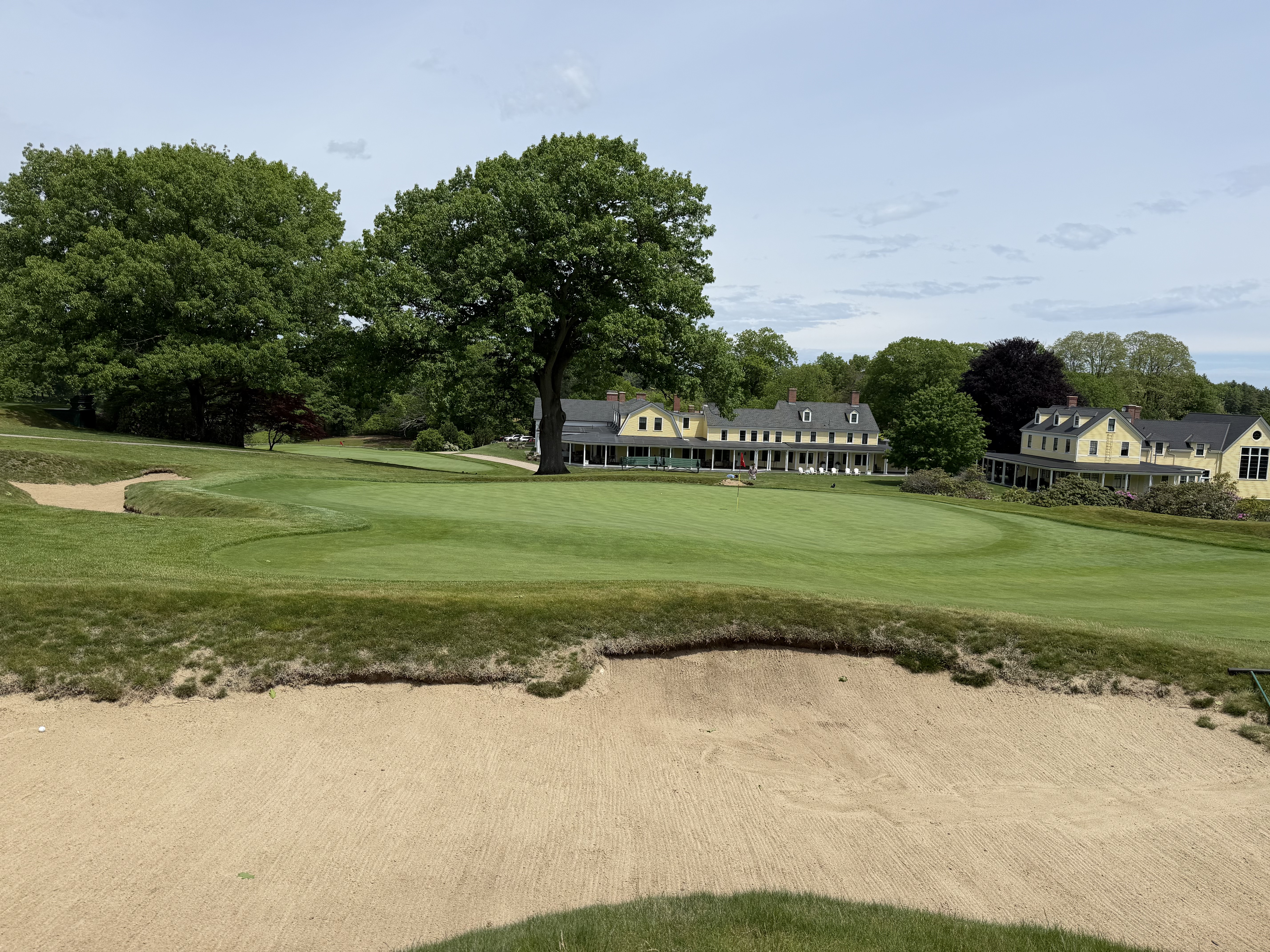
No where near the pin and teetering on the edge of the green, ready at any moment to roll off down a bank, I now had my work cut out for me as I went about the arduous journey back to the pin on the waves of green. Approaches from the right move to the left upon landing on the green, making left side approaches ideal for those wanting to get close to the pin while those from the right really need to assuage the contours for the ball to roll and settle close. This was the first of many lessons that day. The course showed its multi-dimensional versatility that day. For those searching for birdies and get close to the pin, they need to understand the terrain movement and angles, then execute rather well. For those content with landing on the green and navigating the contours, they are more than welcome to do so and allows for alternate scoring paths. The recovery character is ample and complex, providing the opportunity for creativity on almost any miss, but the course defends itself well within Kidd’s, “player emboldenment” design frame work. I was able to see that firsthand as I took aim hole after hole, realizing early on that a familiarity with the terrain movement and her intricacies is a significant boon. Alas, the challenge is there for those seeking it yet never places the golfer in a defensive frame of mind. Instead, the golfer is tasked with figuring out how best to attack.
I learned a lot about the course on this return visit, enough to realize there’s a lot more to learn. It’s a complex and subtle course, filled with strategy and engaging challenge for those looking for it. While there has been a focus on Kidd’s use of width as perhaps a Mendoza line of sorts, what is more important, influential and potent is his implementation of this player emboldment design philosophy. This is a path in course architecture full of new and exciting possibilities which would break from some traditional tenets and potentially shift the perspective of the game to much more invigorating, healthy and positive tones.
The crusade continues.




You must be logged in to post a comment.