6,247 yards, 136 slope from the Gold tees
Dedham lies southwest of Boston in a hillier region that exudes a lot of the history outsiders expect to stumble upon when visiting New England. The first public school was established here, so is the oldest timber frame house still in existence. The Wilson Mountain Reservation is within its limits, the beauty of the mountainous woods accessible to anyone. Its namesake country and polo club is similar in character with the history and terrain of the town. The club was officially formed in 1887 as the Dedham Polo Club, then merged with the Norfolk Country Club in 1910. Like many clubs at the time, the rise of popularity of golf had them add a golf course to their offerings so in 1915, Donald Ross was retained to design 9 holes. In 1925, Seth Raynor came in and rounded out the design to eighteenth holes, re-designing those from Ross in large part. It is the only Raynor design in Massachusetts. In 2017, the club updated their irrigation, as well as performed bunker work, reconstructed greens to USGA specification and underwent restorative work throughout the course based off a master plan by Brian Silva.
Dedham might be the prime example of the stark difference between the stated yardage and realistically how long a course plays. This is due to the jutty hills throughout than are best characterized as giant mounds that rise about the terrain. The golfer climbs all of them, moving his ball up and down the hills as if he were riding a rollercoaster. Indeed, the hills are prevalent in any discussion of Dedham’s character. They lengthen and shorten shots, trigger pangs of intimidation and inspiration either alternatively or simultaneously, and impart lots of roll scenarios that liven the round. The effects of the 2017 project are also evident, especially with the conditioning and how the greens move within their template structures and among the abrupt hills. It’s a fun round with some strategic effort required about the hills and terrain movement, rightly marrying its character to the topography. That character is also enjoyably vintage in how it confronts the terrain as well, which gives it a nice classic feel. There were a couple holes that stood out as pretty good while those that enjoy the templates will have enough to be pleased with.
Father Time decided to remind me of his presence. The night before this round, I played in a parent-player soccer game, running around like I used to eons ago trying to pretend I hadn’t skipped a beat. The next morning, my muscles made me pay and showing up to the First tee, I realized leaning down to put a tee in the ground or getting my ball out of the hole would be a chore. This turned into a blessing in disguise some how, as I was forced to stay much more stable and balanced during the swing, which I should be anyways. Golf is all about adjusting and by the next day I was able to shout from the cliffs of Eastward Ho!, “screw you, Father Time, screw you.”
The First is a 417 yard par 4 (from the Golds). “Strategy.” The opening tee shot starts from above as the entire hole is laid out before the golfer. Rock Meadow Brook crosses through the fairway about 200 yards below, so the golfer needs to decide whether to carry or lay up short. Maybe even more relevant are the three bunkers that spread themselves out diagonally further ahead. Indeed, tee shot placement is much more of a ponder than one may think at first sight. Either way, left into the trees is not an option. After the tee shot, the golfer must climb back out of the valley with a decidedly uphill approach to a small green, one greenside bunker at the front left.


The Second is a 392 yard par 4. “Plateau.” We immediately cross back over the valley and the brook is again a consideration off the tee. This time, it’s about 230 yards out so this may have a lot more laying up short of it. The fairway on the other side dog legs hard right around an irrigation pond, doing all of its climbing after the turn. The green is wide yet shallow and perpendicular to the fairway. This means the approach must account for the uphill and be able to stop rather abruptly in order to hold the green. Two holes in and the golfer is already accustomed to the dramatic ups and downs that comprise the course.


The Third is a 203 yard par 3. “Redan.” The hole straddles the hillside with a natural right to left movement and the tees favor the left side. The entry point is the widest area of the hole and the invitation to hedge off to the right is strong but just know the second shot down the hill and left will be fraught with speed, the hillside growing in steepness by the second. The fall off the left side is into a bunker and well below the hole. There are some Redans where a recovery from the lower left side isn’t the worst thing in the world. Shinnecock comes to mind and I would place Dedham in that as well. There are others, like my Llanerch, where the recovery from the left side of the Redan sees the ball inexplicably run up the high right side, betraying the safety of a backboard the golfer thinks he has. Just one idiosyncrasy of Redans comprising its character important to note. Here of course, a miss to the left off the tee may not be recoverable in the first instance, as the severity of the hillside is sudden.


The Fourth is a 441 yard par 4. “Cape.” One more hole making use of this valley as we now run parallel to the First. Our friend, Rock Meadow Brook, once again graces us with its presence and is about 200 yards out very similar to the First. Unlike the First, the right side moves out further and allows more room before the creek, yet trees on that side block out an approach. Yes, the golfer must favor the left side to clear those trees for the approach to open up. The green is uphill with a left to right tilt. Bunkers are on the right side but are a blessing there to prevent the ball from rolling down the hole and on to the road.


The Fifth is a 133 yard par 3. “Short.” We stay on top of the hills where the left to right movement remains and the green is just a tough visible above the bunker walls that are scattered about the front. Lest we forget the rear where two longer bunkers frame that entire side. The green is on the smaller side yet we’re using one of our shorter clubs off the tee anyways.


The Sixth is a 486 yard par 5. “Prize Dogleg.” We cross the road and get to some of the more lower lying lands of the course. Rock Meadow Brook moves well off to the right in the wetlands and it’s no where to be off the tee here. A crescent shaped trio of bunkers are within our center line and are of immediate concern, as we focus on clearing the trees on the right to clear up our path to the green. Some may decide to lay up short of the center bunkers, then use the second shot to traverse most of the hole while other may try to use the tee shot to get in a position for the second shot on the green. It’s possible and there’s enough room near the green for a longer shot in, it really depends on how the tee shot turns out. The fairway widens and straightens out about 100 yards before the green so any third shot from any where in that area is in good shape while the green sits at a slight angle at about 2:00 with bunkers running along each side.


The Seventh is a 376 yard par 4. “Knoll.” The wetlands start encroaching a bit more from the right and must be carried off the tee. The fairway isn’t really in view from the tee but there’s lots of room out there. A quadrant of bunkers are about the front of the fairway yet the tee shot has a chance to clear them all and my own thought is to favor the left side more than anything else. The fairway then straightens out for the approach to the pushed up green, which moves from left to right. Water is off to the right of the green, so a favoring of the left side continues through the green.


The Eighth is a 382 yard par 4. “Maiden.” The wetlands now wants its point of flesh as it moves into the course and the tee shot must carry water altogether to reach the fairway. One will want to favor the left side once again but there are a trio of staggered bunkers on that side, waiting. After those bunkers, however, the fairway is nice and wide and runs right to the green, which is nice and wide itself. The green is indeed in the Maiden template; two humps at the rear with a valley between them. The tee is also set at an angle to the green, another trait of the Maiden hole, well believed to originate from Royal St. George’s.


The Ninth is a 330 yard par 4. “Alps.” This might be the best template of the course and definitely the best on the front nine, demonstrating just how effective the alps before the green can be at suspense and mystery. The tree line runs pretty rigid on the right while a couple bunkers mark the end of the fairway on either side. Straight out is the best here, perhaps a touch to the left. The left bunker signifies when the fairway starts to rumple and the mounds consisting of the alps aren’t considerably intimidating but it’s the total lack of green awareness that is fascinating. A rock outcropping is our only guide for the approach. Otherwise, the golfer must take complete trust of his swing and swing into the unknown. The green is below the mounds and there’s a right to left movement of it towards the wetlands we came across in holes prior. Worth the price of admission alone.


The front nine starts off with that valley before making use of the lower wetlands area with a nice collection of par 4’s, crescendoing with the very good Alps Ninth. I would rank them 9, 8, 7, 2, 3, 1, 6, 4, 5.
The back nine starts with the 549 yard par 5 Tenth. “Long.” Indeed it’s a par 5, the woods running alongside the right side and the early part of the left side arching up, which veils most of the fairway from the tee. After all the arching, the fairway narrows some what as it marches straight to the green, a couple bunkers on the left side and a brief rough interruption just before the green. The green is fronted by a couple bunkers and is pushed up, slightly above the fairway. In all, the hole is relatively direct so long as the golfer is able to pull off the tee shot and even then, there is plenty of opportunity to get back on position.


The Eleventh is a 404 yard par 4. “Valley.” Another hole I enjoyed a lot, the tee shot is blind with the ridge directly in front of the tee that must be carried. The other side of the ridge moves downhill, then makes a sharp left, which makes it possible to drive through the fairway and end up behind a well placed tree. The green is then on top of one of those jutty hills and a two-club difference could be in order if the wind is up. It can’t be seen for the most part but there is plenty of room up there and mind the left to right movement.


The Twelfth is a 179 yard par 3. “Eden.” It’s a fairly good Eden with some of the bunkering and the fall off the rear but I’d quibble with some of the placement, size and depth of the bunkers. The concept is there and for the golfer, the left or short are the preferable misses while those hitting the green need to at least acknowledge the right to left movement.


The Thirteenth is a 373 yard par 4. “Lion’s Mouth.” Another stand out. The hole is straight on even if it doesn’t feel like it and the fairway is obscured by a knob just before it. Most of the fairway runs downhill to the green and the width ensures that the lion’s mouth is free from any distraction. The right to left of the hillside is evident and the golfer must decide how to take on the center line bunker to reach the green, always accounting for the movement. The green was among my favorites of the course, large with a lot of interior contours that played with the hillside. A very good hole indeed.


The Fourteenth is a 221 yard par 3. “Biarritz.” A massively long green with a substantial swale, it reminded me of the Biarritz at Fox Chapel a bit except the swale here isn’t as assertive. Of course, this makes putting from one end to another much more manageable yet not as adventurous. It’s a good hole and fun to play.


The Fifteenth is a 399 yard par 4. “Road.” We’re playing downhill alongside the road before we cross back over the same place we came from. There is a road bisecting the fairway but I don’t think it’s the reason for the namesake. Heading downhill to the green, it sits at an angle to the fairway, has the pot bunker at the front left and of course the road bunker. The approach from the left isn’t as pronounced or necessary as at the Old Course but those coming in from the right will need to watch their speed from front to back.


The Sixteenth is a 367 yard par 4. “Bottle.” Back across the road, the tee shot is downhill to an unseen fairway. Favoring the right side will account for the right to left movement while the further the tee shot, the more likely flatter terrain will be struck. The bottleneck so to speak is at the left turn, a bunker at either side narrowing the fairway which opens back up just before the green, which then spills over to the next tee. Any approach should focus on some where on this short grass. The right to left movement continues through the green while water is off to the hard left for those well hooked approaches. You really have to try to hit that water though.


The Seventeenth is a 189 yard par 3. “Reverse Redan.” We get two Redans, this one moving left to right towards the water. We don’t get the wide birth we saw at the Redan Third but still need to favor the high side off the tee and any miss to the lower right side becomes automatically borderline lost. Better to hedge off to the left and at least remain in play, albeit the next shot will be with the green running away from you. It’s a well defended par 3, hitting the green is almost mandatory.


The Eighteenth is a 406 yard par 4. “Home.” Some may have something to say about walking back through the woods to reach the tee, which is adjacent to the Seventeenth tee, but I didn’t mind it. The woods are nice to look at for those few moments so it’s a walk unspoiled, one last pause before closing out the round. And the round doesn’t die down without a lot of fuss. This is also one hole I wouldn’t even look at the stated yardage. The tee shot is uphill and we can tell from the tee it turns to the left while climbing uphill. Driver is fine and most won’t have an issue with going through the fairway but the more immediate concern is keeping the tee shot at the right center and not too close to the left, as the contours on that side have a proclivity for thrusting tee shots further left behind the tree line, blocking out the approach. The approach is uphill, literally directly next to the opening tee where the golfer started off hours before. Overly aggressive approaches will runs off the rear into a hollow, which then creates a nervy chip back to the green that needs to avoid rolling back down the hill. And then there are the bunkers at the front, collecting underwhelming approaches as well as overambitious putts.


The back nine is gets a bit more adventurous with the terrain, which results in some pretty good par 4’s. I would rank them 13, 11, 18, 16, 14, 17, 12, 10, 15.
Generally, Dedham brings some interesting character to the Raynor template style. The promontories throughout the course are used in a variety of ways, which brings classic tones in how it’s confronted. If a green is placed on top, it is incumbent on the golfer to get on top, regardless of what he can see or how steep the climb may be. Blind shots abound and the ball may move haphazardly before we can see it but the golfer is better prepared for such whims the more he plays the course and gets to know it. The classic nature is also in the walk, which is just as much a part of the playing structure back then and here, the climbs are spirited without being soul crushing. The greens were a pleasant set, much more subtle than expected, mainly because they don’t need to do all that much considering the topography. There are some strong holes and there are some that were fine. The golfer may not find the magnificence of Fisher’s or Shoreacres but those looking for that here are missing the point. It’s a nice member’s course with some solid traits and some compromises but every time the golfer tees it up, he’ll be able to find some engaging golf among the high hilltops and low wetlands.
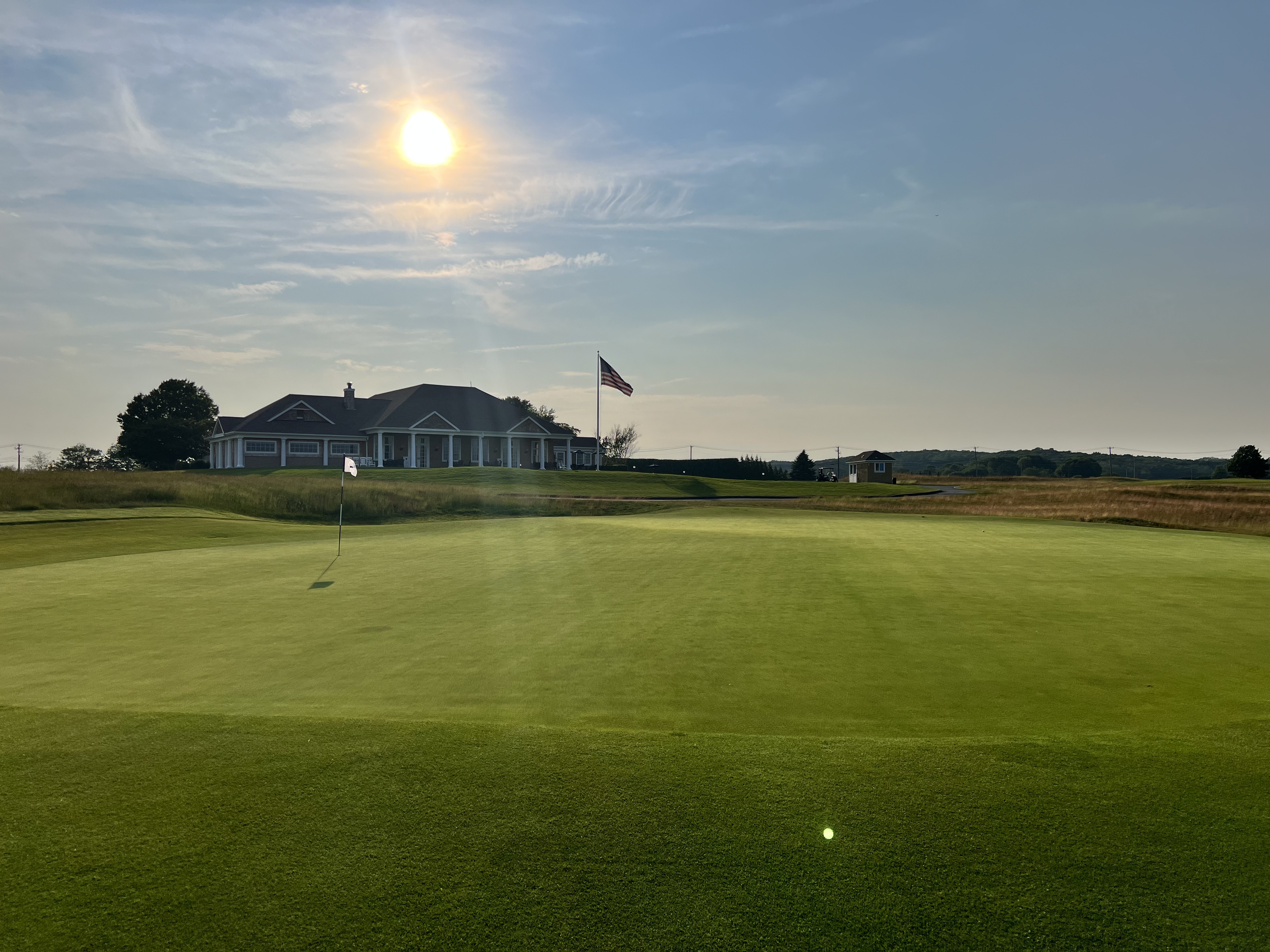
Clubhouse/Pro Shop: They were in the middle of some work when I visited but there’s an emphasis on the racquet sports and a nice location on top of the hill. A nod to the club logo as well.
Practice area: There’s a range and a short game area.



You must be logged in to post a comment.