5006 yards, 100 slope from the White tees
We continue with a series of public courses to highlight their historical and architectural importance, as well as to emphasize that any golfer can immerse himself in interesting design if he looks for it in earnest and is willing to pilgrimage. Plainfield West is another such example. The original Plainfield Country Club course was designed by Tom Bendelow and opened for play in 1898. That course was set on the site of Plainfield West. In 1916, the club purchased an additional 60 acres of land on the site and asked Donald Ross to incorporate such land into the existing course, but Ross proposed building an entirely new eighteen holes instead. Plainfield became a 27 hole club in such fashion until 1932, when Plainfield West became a semi-private course in and of itself. In fact, if you walked to the driving range at Plainfield Country Club and just kept walking in that direction, you would find yourself at Plainfield West in a couple minutes. The existing 38 acres are comprised of nine holes and are what remains of that original Bendelow course. The Plainfield Country Club greens crew maintains it and the West remains a semi-private course, available for public play. It also hosts the First Tee programs and indeed, a large group of kids were gathered for what looked like a summer day camp when I was there.
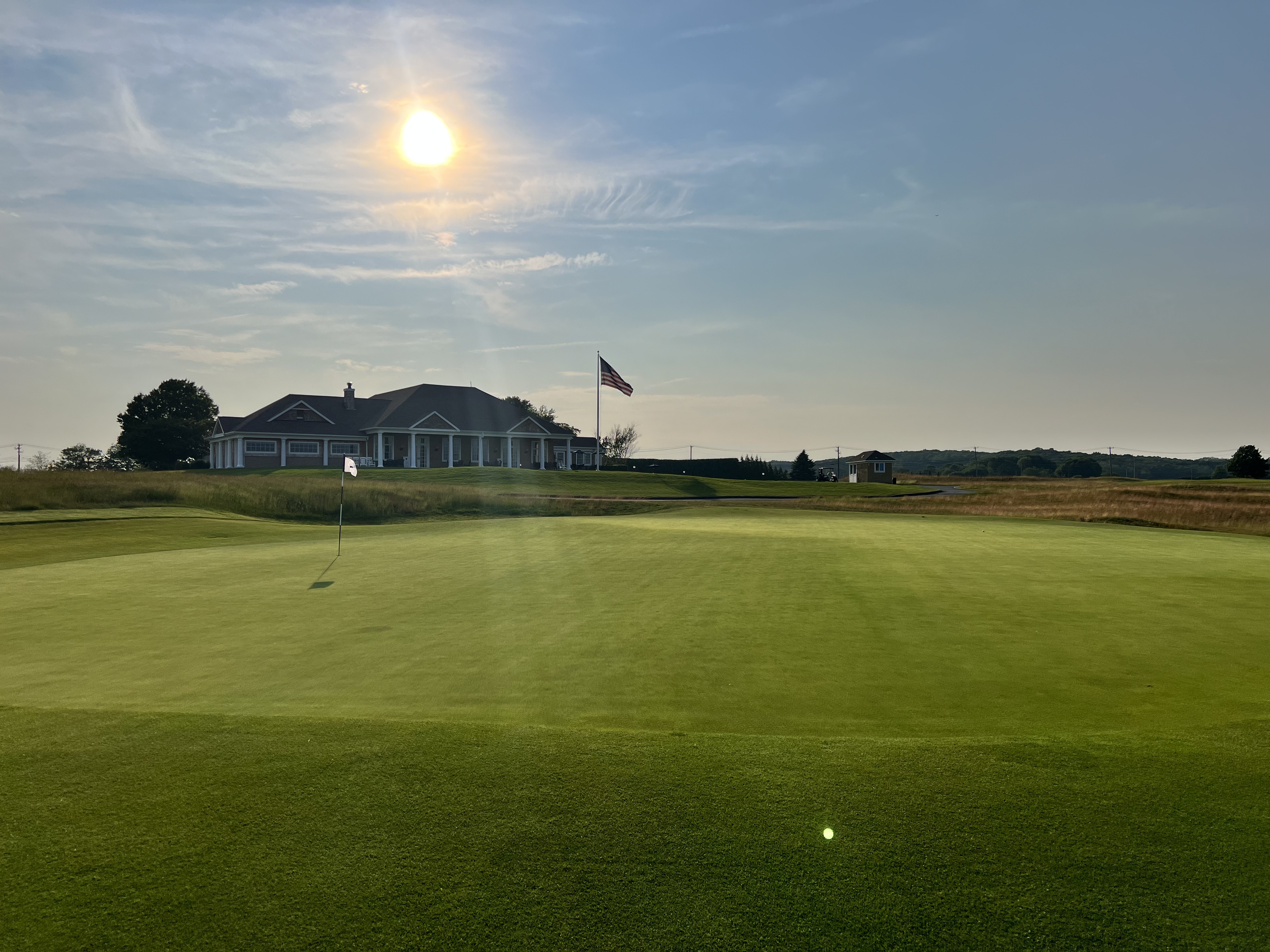
The green sites are worthy of mention, which seem to drive the routing and the terrain is such that it can’t help but get in the way in really interesting ways. The First tee is the lowest point and the routing works up the side of a foothill before coming down a little to finish. There is nice variety and general movement imparted by the hills. While the photos show the fairways in rather rough condition, last summer was particularly wet and many courses struggled as the season wore on. The greens were very nice and I can’t remember one shot I had where conditioning was a factor. In all, Plainfield West is a historically interesting nine holes that I would be happy to go twice around for eighteen. Its use of the terrain and intriguing green site placements make for a lively, engaging round of an early Bendelow classic.
The game works in mysterious ways. I showed up to the First tee that day with a confident swing and ready to take on the world. I played fine, even finishing with a birdie if memory serves. We then had a round scheduled at Plainfield Country Club. I was looking forward to playing it again after six years, especially with a much better swing than before. I was only able to make amends at the First, at which point the lightning siren sounded and we were unable to get out the rest of the day. So started a slow decline of my golf swing, which bottomed out some time in August before I started doing something about it. In fact, most of the off season has been essentially shoring up loose ends with the swing, that journey of which started as soon as that siren went off. Mysterious ways I tell you but the magic of the off season is the sense of promise one can build. Let’s just say this winter I have been busy building something like the Superman Fortress of Solitude, every inch of it comprised of promise.
The First is a 409 yard par 4. The green is positioned to the left of the more fairway more than this is a dog leg but the golfer would do well to favor the right side off the tee all the same. The green moves from right to left so that should be taken into consideration. There is some mild mounding around the green but the hole is without a bunker.


The Second is a 413 yard par 4. One of the longer holes of the course, just bear in mind we are heading back towards the clubhouse. The Eighth green is askew to the left and then the Ninth green is to the left so staying on point to the correct green is key. A slight dog leg right with the fairway now canting left to right. Negotiating the trees on either side from the tee and then contours about the smaller green are the challenge here as the course continues to ease us into what’s ahead.


The Third is a 151 yard par 3. We now head to higher ground, moving past the Ninth green to an uphill site that falls off on the sides and a bunker guards the front right. The size of the green and its subtleties are most of the challenge here and one would be well advised to note the overall terrain layout to figure out movement.


The Fourth is a 241 yard par 4. The first of two short par 4’s, many will need to decide if going for the green off the tee is advantageous or not. The ground leading up to the green leans left to right. Near the green, the ground dips down, a subtle bump that will push the ball forward and off the green on the other side if one isn’t careful. A bunker is on either side of the green while the ball will roll off and down the hillside every where else. This is where the course starts to assert its character between how it presents against how it plays. It disarms then disrupts.


The Fifth is a 179 yard par 3. The green is below the tee with a grove of trees snug on the right and a few paces behind. There is some play short and left of the green, towards the rear behind the bunker. Otherwise, hit the green. There are some subtle hollows on the green surface that complicate putts across it, not evident at first blush.


The Sixth is a 339 yard par 4. The course now gets a lot more direct. We straddle the ridge with the tee shot climbing up to the high point before coming down abruptly to the green. The tee shot should favor the right side but the tree line and a lone tree sticking further out warn against going over too far, yet shots on the left will very likely move down and to the left into a sort of purgatory for the approach. There’s more room on the ridge than one may think and committing to the right center is a good play. Most approaches will be blind, as the green is almost hiding at the bottom of the hill. But there are plenty of ways to go about getting the ball on to the green, many of which using the hill leading down to it in various ways.


The Seventh is a 189 yard par 3. Still heading downhill to the far corner of the property, the green takes on a similar configuration with the hill that we saw on the hole prior. The hill conceals a full view of the green and one is able to use the contours to bounce and roll their ball on if they hit in the right place. There’s a bit of a back to front movement at the green as well, so those wanting to go for the green outright are able to do so without worrying too much about the hill. Going long is not really an option. When there’s all the reason to stay short and even use that to your advantage, anyone going long deserves what comes to them.


The Eighth is a 274 yard par 4. The second short par 4 starts our journey from that far corner back to the clubhouse. Trees are spaced out on either side and signal the path to the green while four bunkers present themselves in succession on the way to the green. The left center is a nice line off the tee even though further right is more direct. The golfer has freedom to set up their second shot as he sees fit. Whether that’s laying up or trying to go for the green and taking any penance with the miss, the hole allows a good deal of discretion.


The Ninth is a 308 yard par 4. Parallel with the Fourth and heading straight out to the green, mind the left to right tilt of the fairway. There’s a generous short grass run up to the green, which moves strongly left to right. Any approach will need to account for the movement and favor the left side. This could also be considered a short par 4 and drivable for some but the Fourth and Eighth are much more malleable whereas here, those going for the green almost need to roll their ball on at the apron and let it fall towards the hole. Anything stronger than that risks moving on to Old Raritan Road behind the green.


The Plainfield West 9 uses a compact site tremendously well a good variety of par 3’s and 4’s. I would rank them 6, 9, 7, 8, 1, 4, 3, 2, 5.
The course was designed and built in the late Nineteenth century, when manual labor, rudimentary equipment and horses would do much of the work in crafting the canvas upon which the game would be played. Relying on the terrain was more a necessity than anything else but the deceptive visuals and array of options available to the golfer built into the holes with such scant resources is impressive. Many of the holes appear simplistic but only when the golfer tries to get the ball in the hole does he start to notice the subtle complexities beneath the surface. As mentioned, it starts with the green sites and how the ball reacts with each respective approach angle and the distance control imparted. Recoveries vary wildly depending on the side of the green the golfer is on and where the pin is. And some positions are simply too far gone that the golfer doesn’t realize it until they come upon their ball. The course is sitting there, waiting for any of us to come for a gander. Anyone interested in Bendelow and early classic design should come for a visit.
Clubhouse/Pro Shop: I actually picked up a pair of Asics here, the deal was pretty good.
Practice area: The putting green near the First tee.


You must be logged in to post a comment.