6,525 yards, 137 slope from the Blues
There are questions. Why don’t I write more about my game. Why don’t I write less about it. Where did the hot dog list go. More publics. Youtube, podcasts, team up with the guys from X. What’s the website called again? What’s your favorite course? Which ones do you hate? Why don’t I focus on the famous courses. Why do you bother with courses no one has ever heard of? Who are you again? Never heard of the website, will have to check it out. Golfawhat? I also get a good amount of requests for me to give golf lessons to people’s children for some reason, spam I suspect. Someone reached out about a video game once?
The courses no one has ever heard of. Does one exist? There are courses under discussed or those one may not have heard of before but does that change their significance? Only in the sense of the number of people who may be invited to play it or try to visit. Perhaps some are local favorites of little architectural merit but beloved all the same. Some might stay lesser known on purpose for one reason or another, to preserve the peace and quiet or simply ensure there is a corner of the world for its members to take refuge. And some are truly very good courses most won’t bother with. The more famous course is nearby, the rankings pass it by, it hasn’t undergone some trendy restoration lately. Yet it’s good nevertheless. That’s why you play them all and that’s why we don’t discriminate in what is reviewed. Course design shows itself at every hole, some one has to go beyond the namesake courses and see what’s what.
Suburban was established in 1896, making it one of the older clubs in the U.S. It then maneuvered about locations and plot retentions, finally building a nine hole course at the current location at some point thereafter. With the growth of the club came the need to construct a new clubhouse, as well as expand to eighteen holes. A.W. Tillinghast was retained in 1920, who convinced the membership the existing nine holes needed to be completely re-designed so that the full eighteen holes was cohesive and of championship caliber. The Tillinghast designed course opened in 1922. The site sits on one of the higher parts of Union County and very much relies on the hills and hummocks while the low lying land twists and turns amongst hardwoods, sand and pushed up greens. Ron Prichard restored green sizes and bunkering in 1999, as well as installed selective new bunkering and teeing grounds. The club enjoys a small membership and is less than twenty miles from Manhattan. A strong local reputation, an original Tillinghast design and rompulating terrain. Like so many, Suburban has been some where I have wanted to visit for years so that when the day arrived, a monsoon wouldn’t even deter us from the round. You may have never heard of Suburban, especially if you’re beyond the Mid-Atlantic region, but for those keen on Tillinghast, learning as much about his design style as possible and courses of architectural merit, it is worthy of discussion and certainly ceasing upon the fortune of accepting any invitation to play.
The First is a 390 yard par 4 (from thew Blues). Six holes either begin or end at the clubhouse and the First is right in the middle of them, moving out then dog legging left to the green. In true Tilly manner, the fairway narrows after the turn. The green is pushed up and Prichard’s work to the bunkers shines, below grade to the green on both sides. One can tell the greens will be delightful with back to front cascading movement.


The Second is a 385 yard par 4. A much more drastic dog leg right moving uphill. The landing area is evident just before the turn, as bunkers and of course a narrower fairway are after it, with a grove of trees blocking any attempt to cut the turn from the tee. The green is above the fairway, feeding right in while a left to right movement prevails. The high left bunker contrasts with the lower right but the green is large enough to handle a good deal of approaches.


The Third is a 210 yard par 3. The tee shot is elevated and water is long to the left with a good amount of room short, shifted just a little bit right of the green. The green moves front to back and towards the water. Ready to receive longer elevated shots and if one feels the need to miss, be sure it is short or right.


The Fourth is a 430 yard par 4. Moving back uphill and a slight dog leg to the left. Thus far the course is showing a remarkable symbiosis between trees and width. Trees define the holes well yet do not confine or suppress playing corridors. The fairway mostly climbs just before the green while a bunker at either side are at the front corners.


The Fifth is a 472 yard par 5. The frolic of the hills and turns continues here at the first par 5 as the tee shot moves down from the hill then turns right around the water we first saw at the Third. The water presents an interesting conundrum for the second shot as the golfer needs to decide where to set up his approach, or if there is an opportunity to go for the green. A trio of bunkers guard the green fiercely, which is also pushed up. There’s a general cant towards the water on all shots the golfer would do well to recognize as he considers the ideal angles into the green.


The Sixth is a 372 yard par 4. Still moving in the same direction as the hole prior, the right side is tree-lined and no good beyond but the fairway tilts away from it and there are no fairway bunkers to speak of. The golfer simply needs to negotiate the trees and contours off the tee, then heave the approach uphill to the green while avoiding the deep set bunkers on either side, albeit those on the left are above the green while those on the right are below.


The Seventh is a 388 yard par 4. The trees finally decide to close in a bit and the lines off the tee become more demanding as a result. The fairway is about 260 yards and well downhill from the tee, so the golfer should get to the fairway or perhaps whale away with driver and take what comes on the second shot. Those opting for the fairway will be left with a short approach in, the green expanding after the entry point and bunkers extending along either side. It seems like a short par 4 but is deceptive in how long it plays and how challenging the tee shot actually can be.


The Eighth is a 341 yard par 4. While technically back at the clubhouse, we must go out and back once again to return and complete the front nine. The tee shot moves significantly uphill and likely lands in the blind. Beyond what can be seen at the tee, the fairway dips down before climbing back up to the green. The bunkering on the right hillside is impressively terraced while the left side has a depression that acts like a whirlpool, pulling just about any shot into it within its vicinity. A wily part of the terrain used magnificently near the green.


The Ninth is a 374 yard par 4. Moving back towards the clubhouse and downhill, the tee shot landing is once again blind as it disappears behind the ridge. Those that get beyond the ridge should be rewarded with a favorable kick towards the green; just avoid the bunker on the left. The approach will also be downhill, the green almost like a triangle with the top at the front and bunkers starting on either side, extending along.


The front nine moves about the hills nicely and shows very good variety hole to hole. I would rank them 8, 2, 7, 9, 5, 1, 3, 6, 4.
The back nine starts with the 314 yard par 4 Tenth. Now on the side opposite of the Seventh, the tee shot is at the clubhouse level hitting down to the uphill fairway. The approach is uphill and needs to avoid the greenside bunkers that crowd the front. An anomaly since there just isn’t much room for missed shots and on the narrower side.


The Eleventh is a 172 yard par 3. A return to width on this par 3, only the second of the round. Bunkers surround the green, set up almost like a template Short hole, with short grass before the green allowing a lay up should the mood strike.


The Twelfth is a 540 yard par 5. Still moving along the right side of the property, the fairway is of modest width and tree lined with a single bunker down on the left. The green has the bunker on either side of the entry point and front that we’re starting to see regularly.


The Thirteenth is a 405 yard par 4. Crossing Colonial Avenue for the next three holes, the left side is now the out of bounds and with the tee on the left side, it seems like a slight dog leg left to the green. Trees on either side define the playing corridor yet provide more width than we’ve seen thus far on the back and a bunker short of the green varies the greenside configuration, at last.


The Fourteenth is a 393 yard par 4. A dog leg left with the fairway bunkers on the right appearing to be on the newer side, the green is pushed up above the fairway while the bunkering is large and set into the sides of the green. There will be right to left movement at the green and approaches to the center and rear clear the greenside bunkering altogether, just make sure the tee shot clears the trees for a clear shot in.


The Fifteenth is a 382 yard par 4. The width continues as we now move along Colonial and need to avoid the two fairway bunkers off the tee. The trio of bunkers at the green, along with the left side of the green set against the side of Colonial liven up the approach, which essentially needs to hit the green or manage to land in between the reaches of the bunkers off the green. Some may lay up before the bunkers for a more controlled chip to the pin and they would not be wrong.


The Sixteenth is a 160 yard par 3. Back across Colonial for the final par 3, where the road is to our immediate right. Bunkers surround the green, which moves towards the road and back to front. This is all that is needed for its character as the golfer needs to strive for the left side of the larger green.


The Seventeenth is a 388 yard par 4. The march to the clubhouse starts here as we head straight out towards it. Width continues yet mind the fairway bunker on the right. The green is surrounded save for a small entry point on the left, small mounding bordering the green from the bunkers used well to define the larger putting surface.


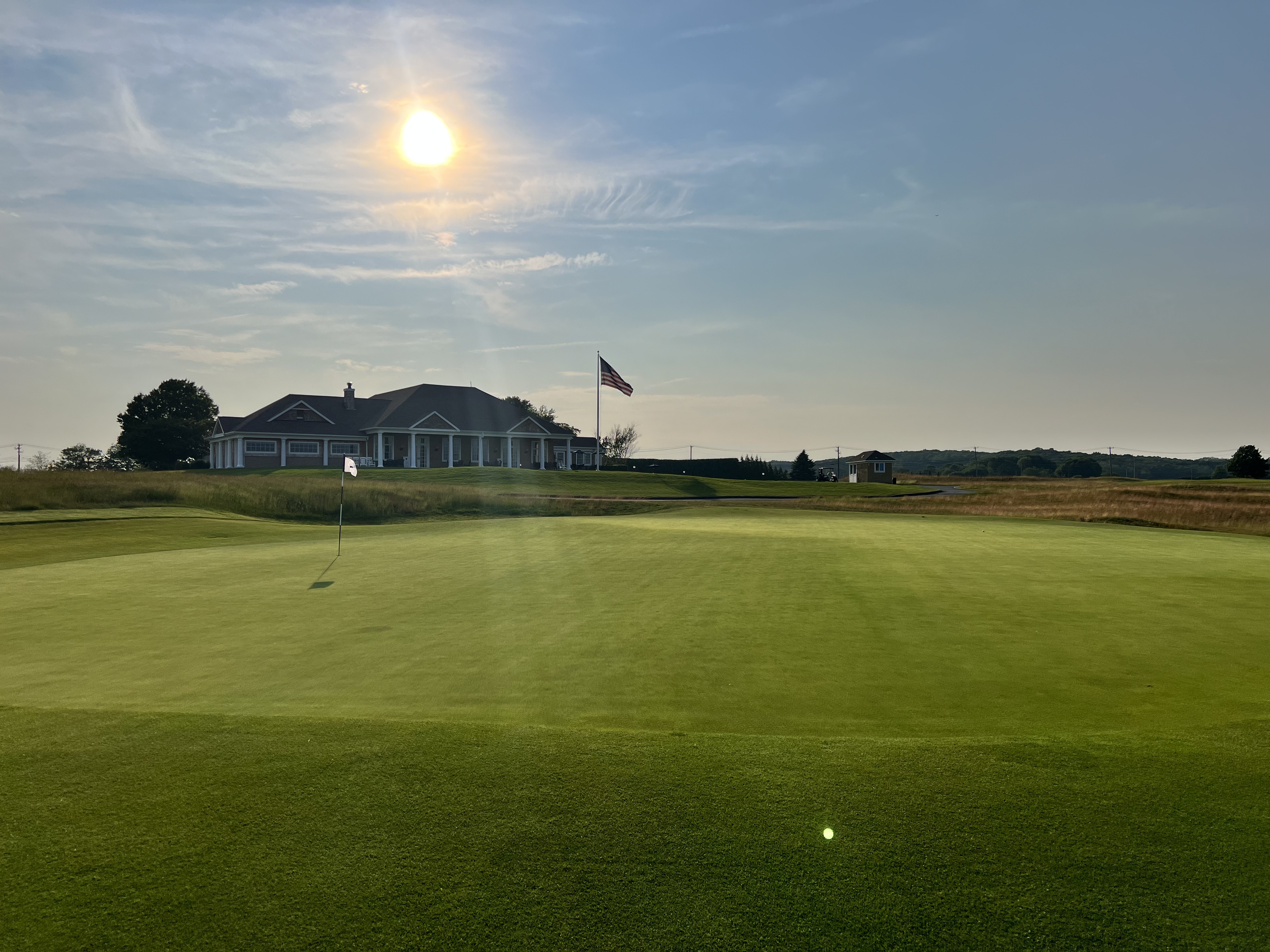
The Eighteenth is a 409 yard par 4. Like we saw at the Ninth, the landing of the tee shot is blind due to a ridge blocking the view of the fairway on the other side. The ridge can be used off the tee to move the ball closer to the green. The approach will be downhill while most of the front is ensconced lengthwise with the two bunkers, leaving the center and rear of the green enough room to clear the sand. The ball will lurch forward from coming up the hill, so prepare for the roll out with everything else. The clubhouse welcomes a few steps off the green.


The back nine did not have the benefit of the front using much more undulating land and fell victim to some repeated greenside bunker configurations but the tail end ramps up in interest and finishes in the right way. I would rank them 18, 17, 15, 11, 10, 16, 14, 13, 12.
Generally, Suburban shows the acumen of Tillinghast using hilly landing the front nine is a wonderful, exciting example of the type of golf he was capable of producing, even finding width on a more compact site. The back nine doesn’t measure up to the front yet has its higher points at the later stages. The use of scale here is notable, as large features and the width give the course a grander feel by using the land in full while spacing tree lines well. The Tillinghast character is evident and the defenses of the large bunkers and greens amidst the hills and dog legs makes for an admirably pleasant challenge of a round.
Clubhouse/Pro Shop: Overlooking the holes that move out and in from its steps, it’s in a nice aesthetic position and the history about its walls is worth a look.


Practice area: The driving range is between the First and Eighteenth and the practice green is in front of the clubhouse.


You must be logged in to post a comment.