6,416 yards, 136 slope from the Black tees
It really doesn’t take much in the Philadelphia area to find a quiet yet confident, well pedigreed golf course most don’t know much about. Kennett Square sits at the southeast corner of the state just above Delaware and Maryland. Mushroom country in Chester County. Longwood Gardens is nearby and some may find themselves walking around the main drag every now and then but otherwise, it’s a nice, relaxing place that you need to find on purpose. I have known about Kennett Square almost as long as I have moved out here for a variety of reasons. Yes, most of it is tied to the golf one can find hiding about.
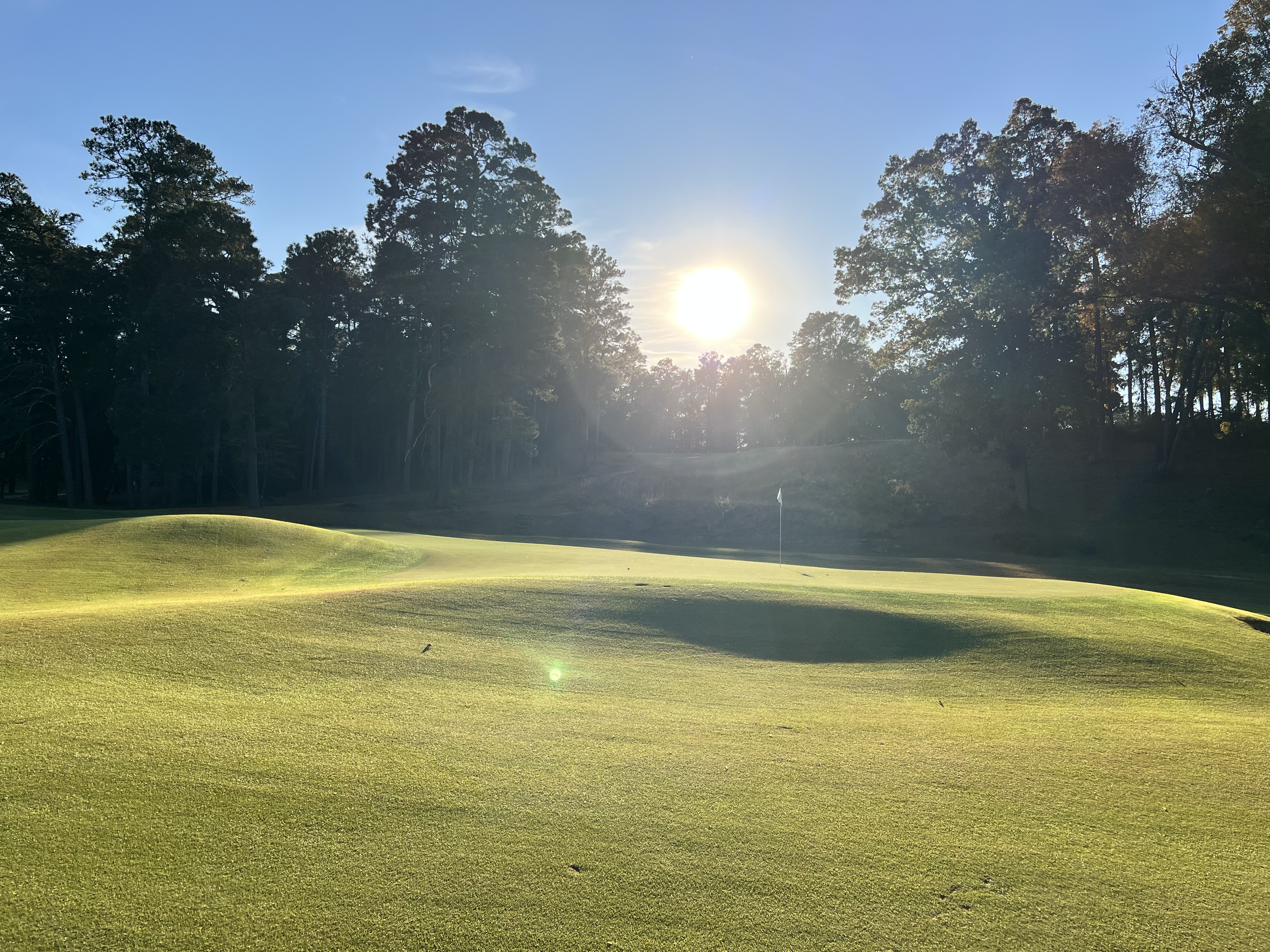
Kennett Square Golf and Country Club was established in 1922 when the town essentially voted for its development. Donald Ross was hired in 1923 to design its first nine holes while the second nine was designed by William Gordon in 1931. In the 2000’s, the club retained Bradley Klein and Paul Albanese to develop a master restoration and bunker plan towards a unified Ross style throughout. At the same time, the club underwent much needed stream restoration work along the banks within the course, which revitalized the surrounding ecology. The work and consulting has been continuous but was completed a few years ago. The course now presents about the hills with the design style of Ross prevailing. Perhaps it is just me looking for it, but I could also sense some of Gordon’s traits here and there, mainly with the sweeping short grass slopes transitioning to the greens. It’s a hilly layout that uses bunkering, land movement, trees and streams effectively. It does this without being overbearing about it yet remains steadfast, insisting that the golfer mind the cants and tilt for each shot. There is a lot of fun out there while those looking to score will need to confront the greens, which ensure those trying to go low will need to be serious about it. The bucolic setting completes the scene, a tranquil background to the thrill and adventure of the hillocky fairways and greens. A well designed, very good play rewards those who know about it and seek it out. Who needs Longwood Gardens.
Looking back on this fall round from a while ago, it marked the solidification of a new chapter in my golfing career. A few months in to dropping to a single digit index, the round here and a few others at the time assured me it was no fluke and to wit, I could score well even when the swing or shots were not exceptional. I vividly remember the course in splendid condition even though the season was getting long in the tooth and it seemed fairly absolute warm weather was a thing of the past. Such fall rounds are a gift of the east coast.
The First is a 388 yard par 4 (from the Black tees). We begin behind the clubhouse on a hillside up against Locust Road on the left. There is no question the tee shots will move left to right, instead the question is by how much. There is a left bunker at the tee landing area to further challenge the opening shot. A bit further up, there is another on the right. We can already discern that the recent bunker work is effective, with their positioning and large rectangular presence. The fairway runs into the green. which runs front to back and left to right. The tee shot is the main objective and if successful, the approach should take care of itself.


The Second is a 360 yard par 4. A dog leg right where the turn comes into play at the tee shot. Water is on the right and a bunker directly across so the golfer must decide his line to avoid both for the fairway, as the approach is uphill and semi-blind. The green runs off at the rear and right as well, so blasting something up there for the sheer purpose of carrying the hill has its own problems. It is easy for the golfer to be bloodied early on before he realizes what is happening with this opening duo. It seems every hazard and contour must be accounted for before each shot.


The Third is a 174 yard par 3. We now cross Locust Lane where five holes reside. The green runs front to back and right to left, essentially around the front bunker. It gets rather shallow at the middle so it’s entirely possible and more so realistic that tee shots landing in that area will roll off the back side. Indeed, the front left demands attention and allows the most roll out.


The Fourth is a 375 yard par 4. A dog leg left with a tree line along the right moving uphill to the green. A bunker left at the inside of the turn, then a little further up on the right, are well placed but shallow enough for the golfer to have a reasonable opportunity at recovery to the green. The green is pushed up and moves back to front with bunkers at the sides.


The Fifth is a 206 yard par 3. A long par 3 where the short grass apron before it feeds right in. The green moves back to front and left to right with a bunker at the front left. There is certainly enough room to accommodate the longer shot it but most shots need to start towards the front half to account for the roll afterwards.


The Sixth is a 397 yard par 4. The hole bends to the right and dips down all the way to the green. A few bunkers are on the right every now and then while trees are more closely on the left. The left side is preferable for the approach based on its movement while the right side promotes more of a falling off the left or rear sides, especially with the shots coming in from uphill.


The Seventh is a 377 yard par 4. Back up the hill we go with this dog leg left. The tee shot is blind but favoring the right side is ideal. At the turn, the fairway shifts downhill to the green, where a bunker on either side at the front defend the approach. This yet another hole where the tee shot largely dictates the ease of scoring.


The Eighth is a 419 yard par 4. The routing is a prime example of Ross using a central terrain feature again and again yet ensuring variety regardless. The ridge line upon which the tee shot here sits is also the site of three greens and another tee shot. We cross the interior of the course on the clubhouse side of Locust, our tee shots soaring downhill to the fairway. The downhill cants to the right, where a stream appears off fairway to the right. The approach is back uphill with large bunkers on the sides of the green and one just short of it to the left. The right to left movement of the green had me favoring the left side on the approach to leave an uphill shot to the hole but others may want to favor the right and have the shot fall with the terrain.


The Ninth is a 476 yard par 5. Back to the clubhouse, which is all uphill with this long and sinewy hole. The left side is essentially the perimeter of the property, the fairway moving away from it off the tee, as well as uphill. The golfer can challenge the right fairway bunker off the tee or favor the left side. After the bushy tree, the fairway moves downhill and eventually turns left, climbing to the green at that point. The golfer must chart his shots carefully, accounting for the contours, turns and occasional bunker. The green is deep yet narrow and some what on the smaller side. A stiff closer.


The front nine uses the hills well and the variety of green movement brings in all sorts of strategic fun. I would rank them 2, 1, 9, 3, 6, 7, 8, 5, 4.
The back nine starts with the 414 yard par 4 Tenth. Just as the routing uses the high ridge, it likewise uses the banks of East Branch Red Clay Creek. Six greens converge upon it, among them this. The green here is placed a bit higher though and the it’s a straight shot from tee to green, albeit the same left to right cant we faced at the First. A fairway bunker and another at the green are on the high left side, forcing the golfer to use the terrain with a bit of discretion.


The Eleventh is a 181 yard par 3. Now at the creek bank, the tee shot moves over a pond to a slightly raised green that is widest at its front. Three bunkers guard the front while rough prevails at the rear.


The Twelfth is a 380 yard par 4. We move from creek to high ridge, all uphill. The golfer may notice holes on both sides next to him but again, the routing does well in ensuring these holes are not played in succession. We have already played the one on the left as the Eighth while the one on the right is the Sixteenth. All the heft one has is needed here to deal with whatever end and especially the uphill climb. The bunkers allow for a recovery on the tee shot but the hill may be too much for most with a sand shot. The lower right bunker at the green is not entirely disastrous but it’s much better to end up on the high left. There is plenty of room to work with up there, even if it cannot be seen from most of the fairway.


The Thirteenth is a 183 yard par 3. A drop shot down the hill, another green at the creek bank. Short and left center has all the bail out room anyone could hope for while going long most likely means you’re in the creek. There is certain yet subtle movement at the green towards the creek as well.


The Fourteenth is a 352 yard par 4. I believe a good deal of work was performed on this hole, especially in conjunction with the stream restoration. Red Clay runs along the left before ultimately crossing the fairway entirely so the golfer needs to decide whether to stay short of the creek or try and cross it. Crossing it is reserved for the longest of hitter. There is more room right but that means a much longer approach in. Once again, the tee shot mostly dictates all as the green and fairway on the side of the creek is fairly benign. All that defends on that side is the green movement.


The Fifteenth is a 393 yard par 4. A long right turn framed by trees on both sides. The fairway narrows as it nears the green and it’s fairly obvious accuracy is prized much more than length here. Left to right movement dominates close to and at the green.


The Sixteenth is a 448 yard par 5. The yardage may make it seem like a shorter par 5 but the uphill climb assures that it is not. Everything the golfer has off the tee, just don’t go in the left fairway bunker. Then, the golfer has options but the second shot will need to mostly up the hill. The green side bunkers at the front need to be carried to reach, so the third shot should be in position to comfortably do so. The golfer can feel free to go for it in two shots but if the wind is up, it is likely all you have once again.


The Seventeenth is a 438 yard par 4. The tee is next to the Second green and we hit from the high ridge down to the fairway below. The fairway crooks to the left and narrows while there’s a bunker short left and left of the green. Right to left movement from the crook through the green.


The Eighteenth is a 455 yard par 5. An uphill dog leg left that starts off with a fairly level tee shot. Bunkers are at the turn and as we have seen, the course demands good driving above most else on some of the holes, including here. After the turn, the fairway climbs to the green, which is on the smaller side and well defended by bunkers. An ideal approach is on the shorter side to allow the golfer to become fairly accurate with placement on the green.


The back nine uses the clubhouse side of the property and much of the area surrounding Red Clay Creek. The par 5’s stand out. I would rank them 16, 18, 10, 12, 17, 15, 11, 14, 13.
Generally, Kennett Square is a well routed driving course with nicely moving and thought out greens. The contours are used nicely and the bunkering is now effectively placed yet relied on selectively. The Ross character is felt throughout, the strategy is in how the golfer uses the natural surrounds to his advantage. The yardage is deceiving as the uphills here add significantly to the true distance of the shots. It is true there is a little bit of repetition to the approaches but only as a reprieve to the tougher tee shots. Really though, the design lets the land speak and goes the way of restraint in most cases, which benefits the structure of play. It reminded me of Jeffersonville in certain ways, mainly in the topography and manner in which it is confronted. A very good classic play that will surprise just about everyone.
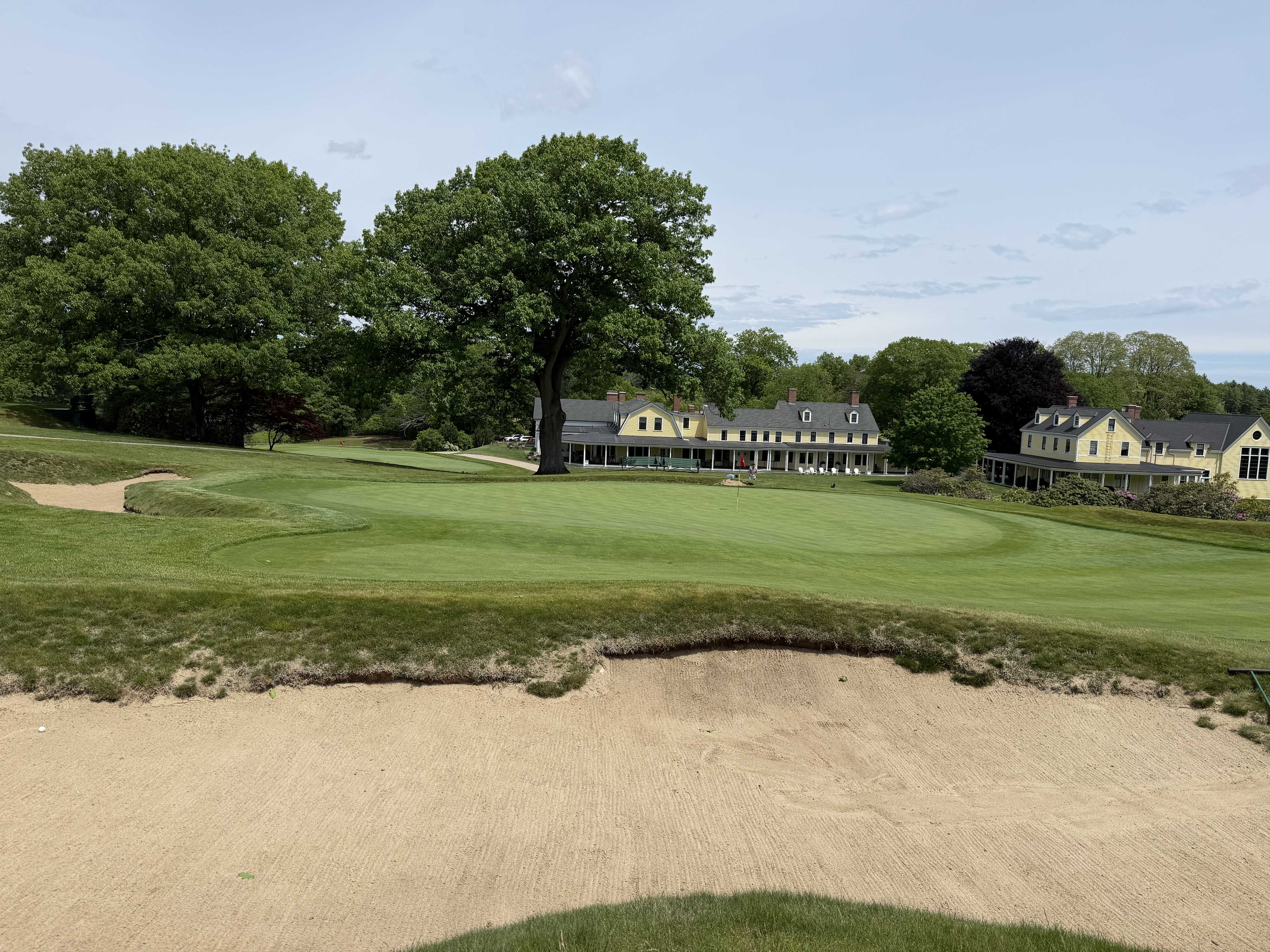
Clubhouse/Pro Shop: Views of the course on top of one of the hills with plenty of options at both the shop and dining.


Practice area: Driving range, short game and putting green, all close to the clubhouse and First/Tenth tees.



You must be logged in to post a comment.