6,451 yards, 137 slope from the Reds
It all starts with the Wilcox. Arriving on a Tuesday night in November, an uncharacteristically warm breeze presided over us, fresh from the colder upper reaches of the east coast. The hotel was bustling. Hotels nowadays. Most are sanitized, generic and essentially soulless contraptions to sleep, shower and spend undisturbed screen time. The nicer ones are likely littered with many not actually staying but to use the bar or restaurant. Yes there’s the conference circuit which is a whole other discussion altogether but with respect to stand alone non resort, non franchised hotels that are actually bustling with actual guests, they are few and far between nowadays. This of course, adds to the character of the Wilcox. People congregate in the lobby not just to meet before heading out wherever but to simply be. There are couches and tables and paired up chairs all over for the purpose, as well as a small bar in the corner with bartenders who know how to converse. The restaurant has one of the better steaks one can remember and rooms with purposeful personality. Yes, one can feel the energy and hospitality brimming at the Wilcox. It had been a while since I had come upon such lodging and it was refreshingly revitalizing.
The Wilcox is a harbinger for the current state of Aiken in general. Like the hotel, the area is bustling with golf. Most of that golf, however, is private. This has tempered the volume of visitors to healthy yet manageable, as the courses at issue need to remain primarily available for its members. The newer clubs, however, have a good amount of national members, which has ramped up the travel components of the area. This has led to what I believe we saw down there last late fall and likely continued through the winter and early Spring. Those in colder parts unable to golf coming down to Aiken and visiting. Kind of like Australia, the golf season focuses on the fall and winter, then ramps down or closes altogether in the Summer. The confluence of the season, newer clubs (Old Barnwell, Tree Farm, Broomsedge, 21 Golf Club and the soon to be open New Holland Golf Club), as well as the more established clubs (Augusta National, Augusta Country Club, Sage Valley, Champions Retreat and too many others to list all of them), puts Aiken in a pleasantly unusual spot in current American golf mores. And the golf courses are all noteworthy, particularly with their design. The courses mostly focus on member play interest. The designs are complex and engaging. The land is sand-based for the most part with lots of interesting assortments of undulations. Aiken is a well established, charming, small yet big enough town. All of this, including the Wilcox, makes Aiken one of the most appealing golf destinations in the U.S. There’s no where quite like it and I’m not sure there ever has been in our day of age.
Aiken, however, has been with us the whole time. It has a storied history nicely rooted in equestrian heritage. It has, in fact, always been a place for those looking for a respite from Winter. Following the Civil War and into the late Nineteenth century, the dry air, temperate climate, and sandy pine terrain were attractive for those looking for respiratory health or recovering from tuberculosis. Its location along the rail line with such pleasant weather made it especially attractive for the Gilded Age wealth, who traveled down and built their elaborate, majestic “cottages,” came to be known as the, “Aiken Winter Colony.” Along with the homes, the accouterment of such society began to take shape, which included horse stables, polo fields, steeplechase tracks and yes, golf courses.
The Palmetto Golf Club is the most well established of the Aiken area clubs and holds itself out as the second oldest eighteen hole golf course in the U.S. after Chicago Golf Club. In 1892, a Long Island gentleman by the name of Thomas Hitchcock as well as William C. Whitney put together four holes in the area that currently houses the Sixteenth through Eighteenth and practice range. Then our good friend H.C. Leeds of Myopia, which was recently reviewed https://golfadelphia.com/2026/09/29/myopia-hunt-club/, expanded the four holes into a nine hole routing. Leeds’ work at Palmetto formed his experience when he set out his work at Myopia shortly thereafter. Here, Leeds built the second nine holes with club professional James Mackerell, which opened in 1895. The course began with sand greens, which remained for approximately forty years. In 1902, famed architect Stanford White designed the clubhouse, which stands today. In 1932, Alistair Mackenzie completed his design of a place called Augusta National. Several members of National were members of Palmetto and they asked Mackenzie to address the greens. Mackenzie re-designed the greens and lengthened the course but passed before seeing his work to completion. His work was completed, however, seen through by Wendell Miller, who managed the project just as he did at Augusta National. Aside from bunkering projects and regrassing in 1995, the course has largely remained intact. In the early 2000’s, the club endeavored to restore Mackenzie features that had faded over time by hiring Tom Doak in 2003. That restorative work was completed in 2005 by Gil Hanse, utilizing 1938 aerial photographs and consisted mainly of bunker restoration and expanding the greens to surrounding mounds and slopes as originally intended.
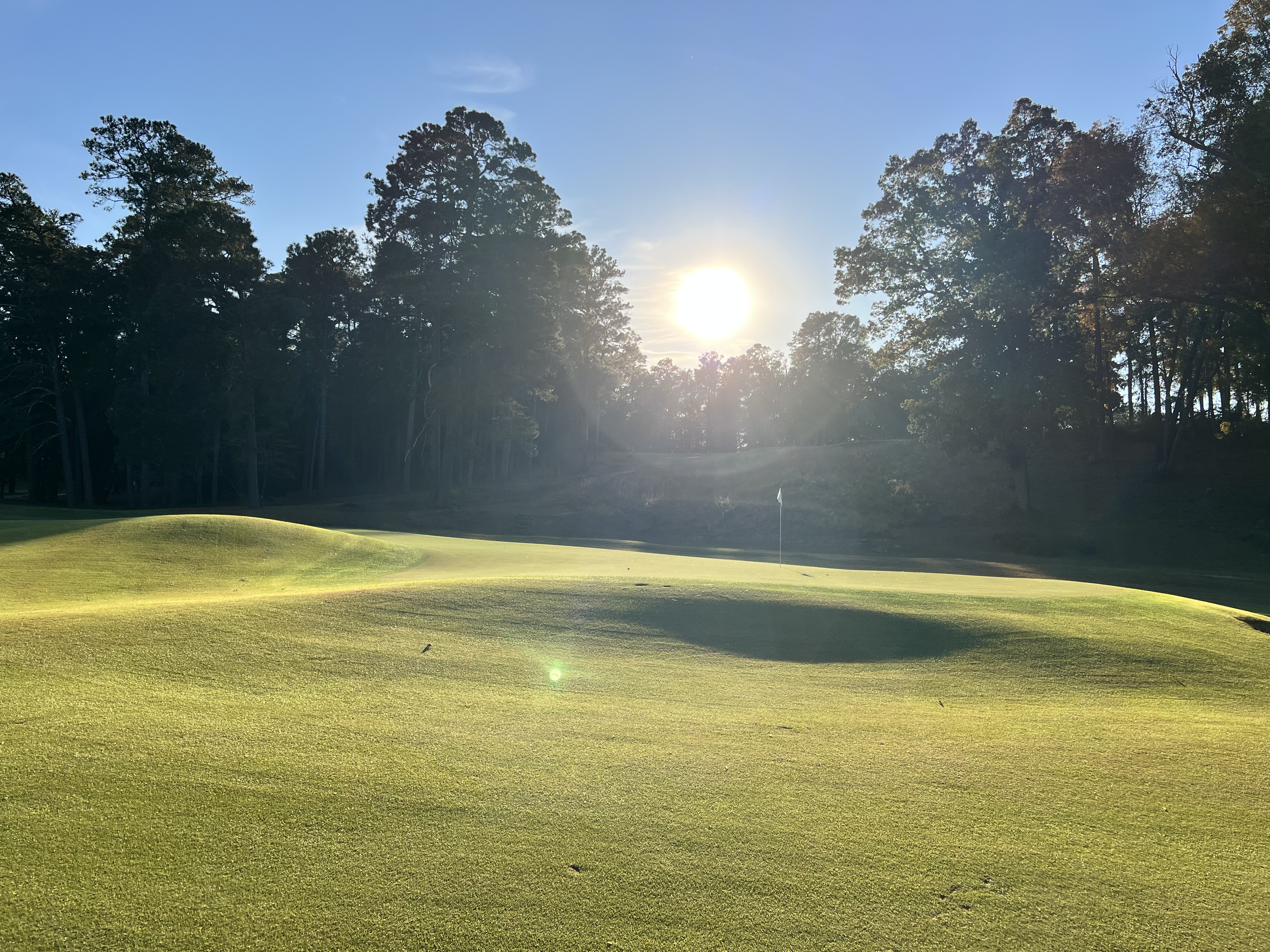
The greens are the soul of the course. The greatness of each hole emanates from them, their undulations and broad movement extending out to the surrounding knobs and mounds that facilitate a bevy of shots. All of these are on tightly mowed short grass. While the golfer is allowed freedom of recovery, the skill, nerve and knowledge of roll out conspire for an unrequited challenge. Yet another course that shows us length can be rendered irrelevant, as the golfer realizes a good measure of time is needed to learn the many moods of the greens and their surrounds. The routing around the hilly site and variety of shots needed lead to a lively round. All of this, of course, is green speed dependent. The design accounted for speeds suitable for that day and age, which ensured each mound, ridge, hollow and knob were prominent strategic considerations. As speeds run faster, it becomes more a matter of resorting to higher shots with softer landings and other shots that ignore the terrain altogether. Indeed, this is a course that plays much more complex and glorious when the temptation to ramp up the green speeds is turned away.
The course drips in classic charm, using the hills early and often. Even with a smile on its face, however, the broad shouldered greens are deviously fast and intolerant of even slight miscues. Shorter in distance, this fleet of movement is its primary defense. It is quite effective. The variety of holes and the classic playing style the course demands are impressive. One needs to know the land and while it can get away with passing knowledge of the idiosyncrasies of the fairways, the greens demand intimate, almost classified knowledge. But it’s the charm here that the course has been able to preserve that made me appreciate just how unique it is, evoking a prevalent pleasantness throughout that has the golfer focusing on all the right things while not letting the four putts affect the mood. Design-wise, that can be attributed to the graceful routing.
Palmetto is an anchor of early American golf that defines its unique heritage. Its charm and relevance have endured in much the same way Myopia has. Both courses use the land as strategic advantage and a hazard. Yet here, the design shows less of an embrace to Victorian design principles of recovery shots than at Myopia. At Myopia, there are missed shots that come with a high measure of difficulty because, well, some times one out of position must pay more of a penance. There is less of this at Palmetto, likely due to the intervention by Mackenzie a few decades after Leeds. The contours and tightly mown areas about the greens are indeed the substantial strategic variance that sets Palmetto apart, which the golfer must face again and again until the shot is finally pulled off appropriately. The one constant at both courses, however, is the imperative need of the golfer understanding the concept of roll out. Where the ball releases and how much it rolls before coming to a rest is almost primary to everything else. While at Myopia the ball will usually run into a bunker or rough eventually with this roll out, at Palmetto the ball will simply continue to roll out until it comes to a rest with no regard for how far from the hole it ended up. It is difficult not to make the comparison to Augusta National in this regard, in that the land there is used similarly with the green complexes and roll out of the ball. Landing on the fairway or green is one thing but where the ball comes to a rest is an entirely different matter. Here, that is dictated by angle, flight and landing area. If those factors are in any way off, the ball will likely move off the green and politely ask you to try again.
The distinct style of the course reflects its region. The club exudes a stately relaxed charm that extends to the style of play of the course. As the late afternoon seemed to quiet the day during our round, the strategic slopes bounded with personality. They are polite and welcoming, even as they invite you to try just one more time to get that ball to finally hold the green.
The First is a 389 yard par 4 (from the Reds). “Lookout.” The golfer is able to survey the land from the elevated opening tee shot. While the fairway bunkers may look out of reach, they are very much in play. This makes one care about tee shot selection from the get go. The green is crowned with large bunkers at each front corner. While avoiding the bunkers is important, negotiating the contours of the greens is paramount. The Fermata Club behind the green looks on.


The Second is a 368 yard par 4. “Whiskey.” The fairway is littered with bunkers that take up positions on either side as well as center line. There’s also a waste area to the right off the tee but shouldn’t come into play unless the tee shot is disastrous. Along with avoiding the bunkers, one needs to consider the approach angle into the green. There are no greenside bunkers to save shots from rolling off as the green sits perched above the fairway. Indeed, the green is a proper introduction as to what the golfer can expect most of the round. Only the most deft shots will climb the slope and stay up on the green level as it sweeps left to right. Everyone in our group saw their shots come back downhill to their feet.


The Third is a 410 yard par 4. “Southern Cross.” The left side is the perimeter of the property, marked by the tree line running all the way down. One can favor the right off the tee but there is a fairway bunker complicating that route. Of course, the most ideal approach into the green means flirting with that tree line and getting the tee shot as close to it as possible. While many will hedge right, that leaves a tougher approach that must carry the greenside bunkers, then slow down and stop before rolling off the other side. The center to left center opens up the entire depth of the green and allows much more run out. Ben Hogan called this hole and the next the best back to back par 4’s he has played.


The Fourth is a 388 yard par 4. “Red.” A hole that takes complete advantage of the blessed contours, the tee shot heads down into a valley while a sole fairway bunker guards the line of charm. As we see on the hole prior, the approach angle into the green is more important here than other courses so one should give serious thought to either laying up short of or carrying the bunker to preserve that line into the green. Otherwise, the tee shot will peel off to the right, which presents the same conundrum as the last hole. From that side, the approach must reach the green, then stop before rolling off the other side. Quite the proposition with how slick the greens can run. From the line of charm, the backstop at the rear of the green is available.


The Fifth is a 439 yard par 4. “Palmetto.” The fairway lets you know is its right to left cant from the tee while trees take up both sides of the corridor. Another bunkerless green awaits, the front banking up in gradually strong fashion. The green narrows as it movs towards the rear, yet one must make sure the approach stays on the green so needs to take on that smaller piece of the green, as rolling off the front is the graver of sins. Approaches that end up on that front bank need to make it up the hill yet stop before moving off the left or back. As we see time and again here, these shots take much more care than what it may seem at first blush.


The Sixth is a 464 yard par 5. “Valley.” We head back in the direction we just came. The shots are much tighter at this par 5 as the tee shot goes to the right of the lone tree. The fairway is mired in bunkers and a waste area on the right, so careful placement of each shot is in order. There are a couple larger bunkers on the right before the green. Striving for the high left side at the green helps get the ball coming back down towards center for those insisting on going for it on the second shot.


The Seventh is a 163 yard par 3. “Ridge.” The green is indeed on a ridge and plays every inch of it. There are so many delightful toils here. The green is largely blind from the tee although the golfer gets the gist that the prevailing movement is left to right. The bunker before the green that can be seen actually wraps around the left side so that those thinking they’ll simply heave their shot high on to that left side are sorely mistaken. Then there’s the right side with its massive hillside and the collection areas at the bottom. If one misses the green, the recoveries are distinct and demand a thoughtful excellence.


The Eighth is a 441 yard par 4. “Blackjack.” Another waste area just off the tee to the right as the fairway widens as it moves closer to the green. The fairway cants a bit right to left and negotiating the bunkers on either side is the primary objective off the tee. The left to right movement continues at the green. Again, a bunker is on the high side, the right front. Hazards on the high side is a frequent occurrence here and at Myopia, possibly showing Leeds’ strategic preference. Those that look to the contours for advantage need to do so with the same modicum of precision as anything else.


The Ninth is a 178 yard par 3. “Half Way.” An uphill par 3 that plays much longer than its stated yardage. Degrees of roll out becomes an important concept here as it is not enough to land on the green, one must account for the roll after landing. The rear falls off into a depression and the latter half of the green starts to nudge the ball in that direction so knowing the landing points and how the ball will react upon landing are all significant advantages here. It should be noted there is no back to front movement as well but it is further down the lower left side.


The front nine slaloms about the hills and leggy contours for a nice varied set that tightens its challenge as one gets closer to the green while always allowing an array of options on how to go about it. I would rank them 4, 3, 2, 5, 7, 8, 1, 9, 6.
The back nine starts with the 482 yard par 5 Tenth. “Turn.” Coming out of the corner of the property, the fairway initially claims a bit uphill. Trees line both sides so staying relatively straight while avoiding the fairway bunkers on the right are really what there is to accomplish the first two shots. Again, accounting for complete roll out of the ball is a big part of this. Sixty to seventy yards before the green is where the interest ramps up and hopefully the golfer has been planning for the entire hole. This is where large waste bunkers start on either side, which narrow the uphill fairway apron leading to the green. Then the mounding starts after the bunkers, enveloping the green. There is nothing on the rear side, however, so shows that are not carefully feathered in could very well keep rolling through the green and off, moving down the steep hill on that side. Much of this around the green tempers those who want to use their second shot in while the more wily player will use his second shot to set up an ideal approach considering the fortifications closer to the hole.


The Eleventh is a 170 yard par 3. “Drop.” Drop shots always run the risk of plopping some where on to the green and staying put as if one were playing lawn darts. This hole ensures the exact opposite, as the golfer will need to figure out how exactly to get his ball to stay on the green. As we have already learned here, landing on the green and staying on the green are two very different countries. The green is wide yet shallow with a right to left cant. Its perimeter slopes down into hollows and short grass or sand that is on either side. Many should simply figure out where they prefer to chip from. Studying the contours and how specific ball flights respond to them puts the golfer at a distinct advantage here.


The Twelfth is a 382 yard par 4. “Pond.” Pond is always good for me. It kind of gives the hole a Cape feel in that one must figure out how much of the water to take on to dictate the approach distance in. All uphill, the green is framed by slender bunkers on either side more towards the front. As we’ve grown accustomed, nothing good comes from going long. The tee shot mostly determines one’s fate here, as the approach needs to help negotiate the vagaries of the green.


The Thirteenth is a 423 yard par 4. “Cabin.” The routing is notable here for how we climb back up from the drop shot a couple holes ago. The gradual ascend takes a couple holes but allows the slopes to be used strategically as opposed to too severely. We continue climbing with the fairway now taking on a left to right cant. A bunker on the left and lone tree encroaching on the right center are in play off the tee but it’s mostly the bunker as the tee shot should focus on the left side to take advantage of the terrain movement. The green is at the top of the hill, set at an angle from the fairway. Mounding swirls about around it. The uphill helps slow down the approach and hold the green more than others yet its subtle contours will likely confound putts more than the golfer expects. Careful study is the best approach.


The Fourteenth is a 550 yard par 5. “Crazy Creek.” Now moving downhill, there’s a dry wash crossing across the entire fairway at an angle approximately 260 yards. Laying up short is perfectly sensible and as we have seen with the other par 5’s, accuracy with each shot is much more important than length. There are a couple bunkers after the wash on the right leading up to the green with a prevailing right to left tilt. The green holds but is on the smaller side and capitulates with the right to left.


The Fifteenth is a 298 yard par 4. “High.” A short par 4 that features the biggest climb of the course. The green can be driven yet the wall of fairway before the green is wide and invites all kinds of shots into it which then leaves a wedge in. Right to left movement continue and the green is blind from the tee. I managed to get my tee shot on the green and relatively close but it runs front to back, which was enough to confound my flat stick with a two putt.


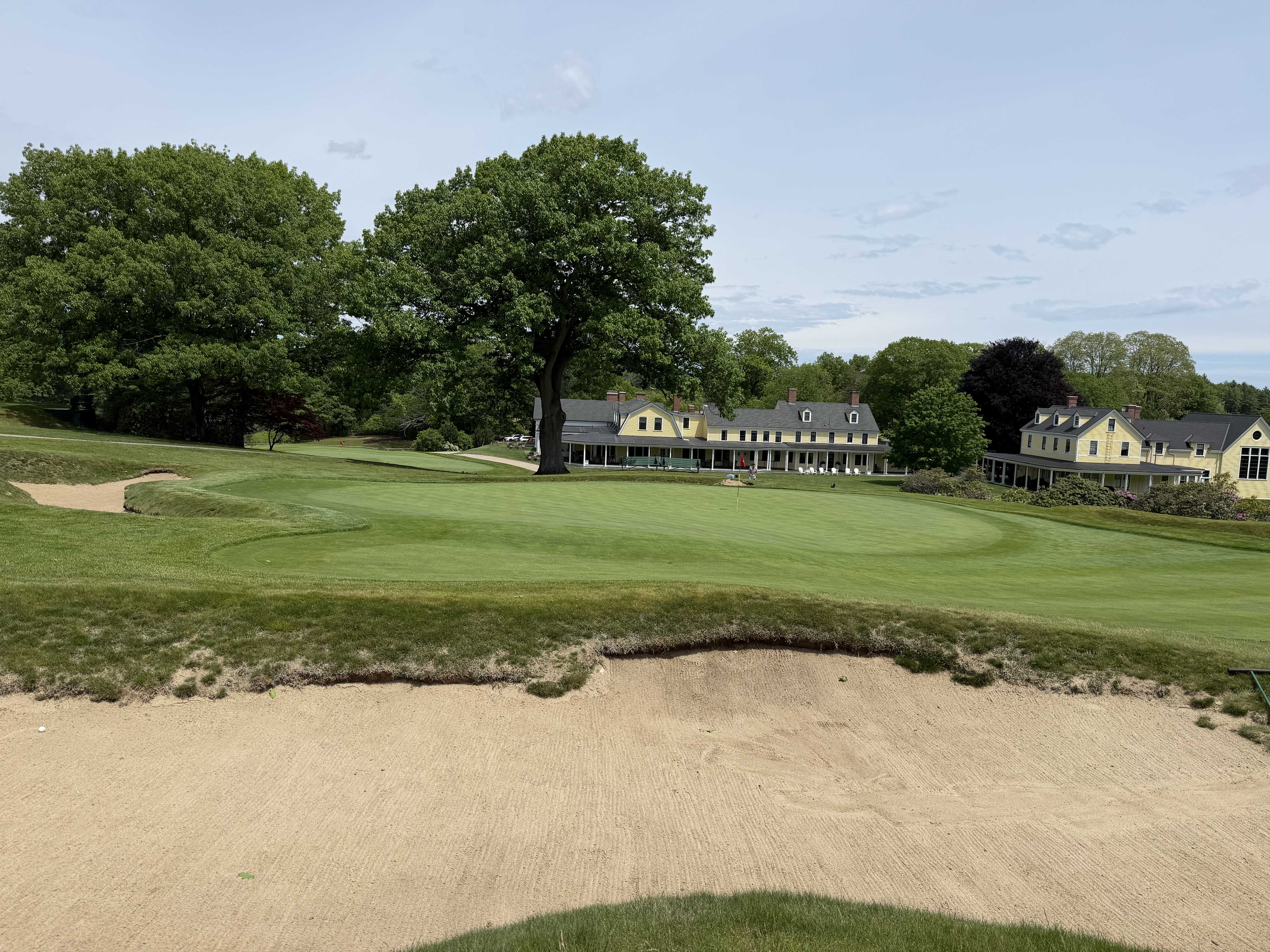
The Sixteenth is a 212 yard par 3. “Berrie.” At the higher level of the First tee and clubhouse, the longer par 3 is to a wide green sitting a bit above the tee. The fall off at the rear is unfavorable while the bunkers on either side can make recoveries to the shallower green unfavorable as well. At this stage of the round, a nice long shot should come off with little effort.


The Seventeenth is a 388 yard par 4. “Brae.” The closing duo moves away from the clubhouse, around the driving range and back again. Here, the right side is rigid out of bounds and a blind tee shot to a downhill fairway that ends into a swale of rough. Some may not mind hitting out of the rough to the green while other will take care the tee shot stays on fairway for the approach. The green is benched on a ridge, widens towards the rear and guarded more near the front with a bunker at either side. It’s yet another green where going long makes for a difficult recovery yet some will do it trying to clear the bunkers. A nice give and take hole off the tee.


The Eighteenth is a 306 yard par 4. “Home.” Another short par 4 that guards the longer tee shot a lot more stringent than the Fifteenth. The tee shot is also blind, as an intricate waste bunker is all that is in view, the fairway presumptively on the other side. Then, there’s the driving range on the left, two bunkers a touch further up on the right and then a couple center line bunkers closer to the green. Trees start on the left near the range, then are on the right near the green. The green is lined with bunkers below on either side. There is some fairway before the center line bunkers that is a good landing area for the short approach. It’s a great green with a dominating movement and a few subtle interior movements as well but the fairway is a bit of a mess and contrived, likely out of necessity with the proximity of the clubhouse and practice area.


The back nine is a little more varied than the front and features the best par 5 on the course with the Fourteenth. I would rank them 15, 17, 13, 14, 10, 12, 16, 11, 18.
Generally, Palmetto is a distinct slice of early American historical golf that has managed to maintain its immensely appealing character befitting of the region. Even the challenge has a relaxed smile, mostly looking inviting yet only those who know it well are able to fully enjoy its hospitality. Well situated upon the land and contours, there is strong movement among its subtlety. A lot of this is attributable to the silent killer of roll out. The golfer must trace the entirety of his shot to figure out where the final rest will be, then make sure it turns out so. While the roll out usually prevails on one side of a green or another, there are some where it occurs from any angle. The routing and variety amplify and deepen these design qualities even more, ensuring the engagement is fresh and sophisticated enough to be multi-dimensional. As mentioned above, green speed is vital to get right to realize the full potential of the contours. If the greens get too fast, then the structure of play moves from strategy to one of nerves and how much spin one is able to impart. The unique course and club inevitably exude fun and charm so that the golfer starts to accept. If he misses this or that shot, a ball gets a little fast and loose on him, no matter. There’s always next time, the course hoping it sees him again soon for yet another dance.
Clubhouse/Pro Shop: The Stanford White clubhouse reflects the laid back charm with the rest of it. Well adorned and in perfect scale, it’s cozy and feels more like a home than anything else. The pro shop takes up a couple small rooms and the logo perfectly signifies the identity. Subtle and strong.


Practice area: A small range, putting green and a couple short game areas, one near the driving range and the other to the left of the Fourteenth.


You must be logged in to post a comment.