6,601 yards, 129 slope from the Blues
Some places encapsulate seasons rather well. La Quinta in December perfects the crispness of the Southern California winter. I’m partial to the Mid-Atlantic in early October for the Fall, which radiates every tone of yellow and auburn one can imagine. I don’t know if I have found some where yet that gets early Spring just right. As for Summer, Northern Michigan is now a favorite. The long days and gold hues upon the coruscating green of the trees and grass as well as the blues of the lakes and sky are without fault. It’s ideal Summer spent incarnate. The few days spent there were a revelation. As for the golf, the range of courses were impressive. From the world class timeless Crystal Downs to the creative modern Kingsley to the historical municipal Elk Rapids, the final round was at the classic gem Belvedere. Just as fitting as the area is for Summer, so it is with Belvedere for charming, sincere golf.
Designed in 1923 by Willie Watson, he used five teams of horses and 150 men to construct the course, which opened in 1927. Even though Watson returned to the area every summer, Belvedere remains the only course he designed in Michigan. Perhaps he was smitten with what he produced here. The club has always been mindful of Watson’s design character and would make in house restorative efforts based on old aerials, that all changed in 2016 with a bit of random fortune. A building was razed in downtown Charlevoix, which led to the to the discovery of Watson’s original design plans for the course. This prompted the retention of Bruce Hepner in 2017 to use the plans and bring back as much of the course as possible. Hepner’s work focused on restoring the green pads, expanding the fairways, collars and chipping areas as well as strategic tree removal. The course now returned to those plans for the most part, Belvedere is the most preserved Watson course in the U.S.
Tom Doak is a fabulous writer and occasionally designs a golf course or two. He described Belvedere as a, “wonderful, pleasant round of golf. It’s exactly the kind of course golf needs more of, but that no one is building.” Doak went on to comment how the course goes with the flow of the land and remarked on the simple and sustainable bunkering. Doak’s comments fall right in line with how I would characterize the course. As I mentioned above, it felt like a very sincere round of golf. There is challenge and strategy and all of it is within the terrain and setting, yet nothing feels contrived despite the notable variety. It has to do with the green complexes, which consists of the short grass surrounds, greenside bunkering and greens themselves. It starts there but then moves back to the fairway and tee, ensuring the golfer receives a rather all encompassing exam. All of this is done without ever over-punishing the golfer. Indeed, one could see that the recovery character ™ is influential in the type of round one will have here. Never out of the hole yet will need to be resourceful and outright miraculous at times. Yet, rarely will the golfer be done for with a missed shot. All of this leads to an unheralded classic that most everyone who knows better knows about. It is a command performance for those in the area that value the finer side of the game.
Belvedere has been semi-public since the 1930’s, allowing the public to play the course at particular days and times. This UK based model is admirable and adds to the club’s charm. The pro shop is one of the better I have come across and will be discussed below. Yes the shop has a nice selection of everything one would want but it was the feel of the place that will leave an impression. The course has hosted the most major champions than any where else in Michigan save for Oakland Hills and has hosted the Michigan Amateur a staggering 40 times, with a return next year during its Centennial celebration.
We stepped to the First tee as the sixty-fourth hole in less than forty-eight hours. But that’s what is done in such ideal weather and such a splendid assortment of courses to play as far as I’m concerned. You play golf until you fall over. We were up to the challenge, a brilliant Willie Watson before us.
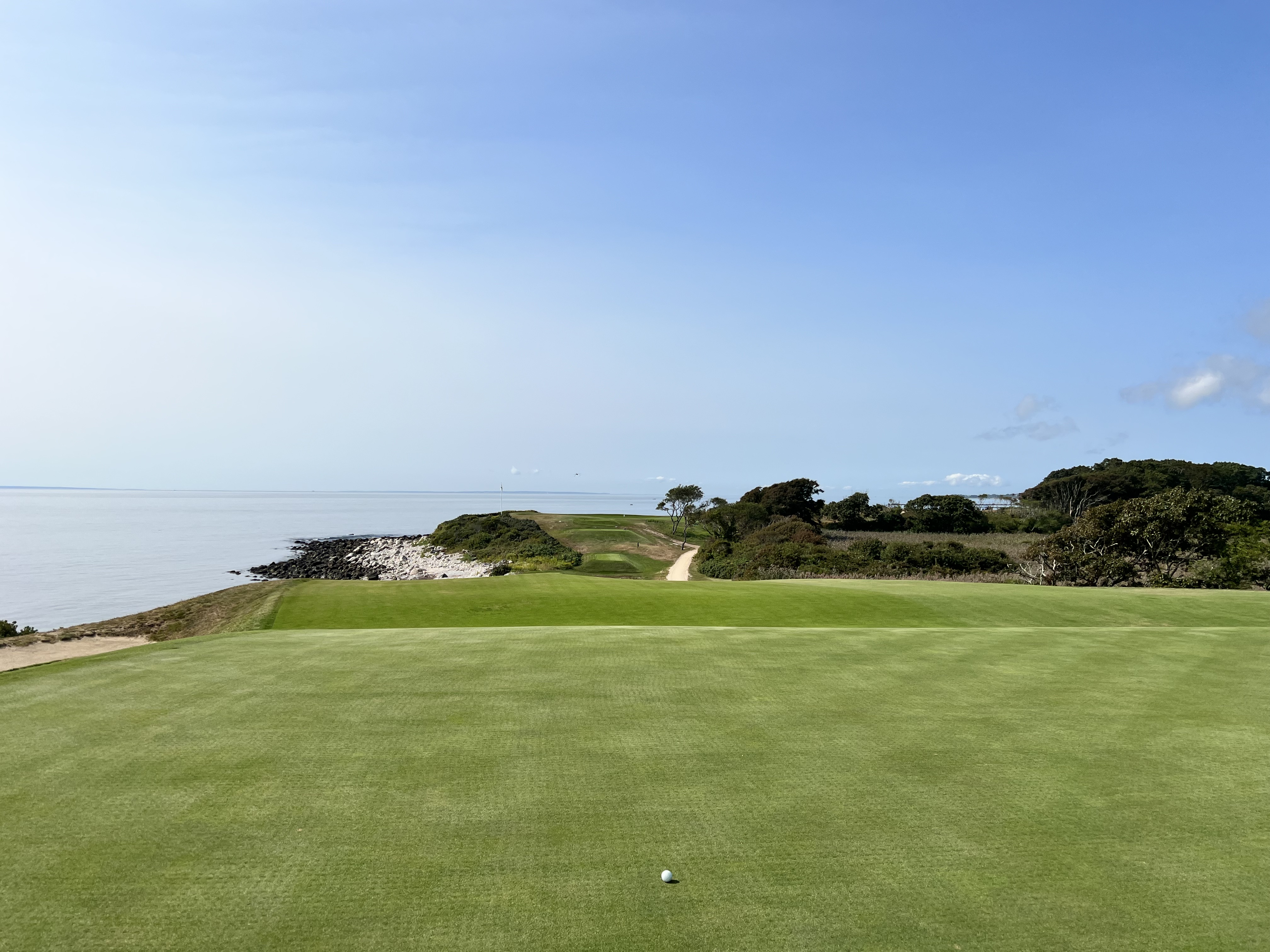
The First is a 368 yard par 4 (from the Blues). The opening tee shot is off the cliff to the land below. There’s a right to left tilt to the fairway, the hillside on the right swaying the land to the tree line on the left. The green is where the hill on the right ends and shoulders down while a bunker is at the left front with more room between it and the green than it may seem from the fairway.


The Second is a 403 yard par 4. The next two holes along with the Fifth are built through a cedar swamp, which makes tree work a constant priority. They densely line the sides of the hole yet there is plenty of width to work with. Stover Creek crosses early on and shouldn’t be too much of an issue to carry off the tee and then the fairway slightly crooks to the right before straightening out to the green. A bunker on either side of the green, shallow, which I always think is more precarious.


The Third is a 388 yard par 4. Moving back towards the Second tee, Stover Creek once again crosses over the fairway but is still early on enough to not be an issue off the tee. The fairway has a constant bend to the left and we get our first fairway bunker, on the right. The bunkering near the green is front left and rear right, which opens up the right side as the receptive entry point and has the potential to change a lot of approach angles in. Just with a slight change in positioning of a couple bunkers.


The Fourth is a 220 yard par 4. Classic design tended to make sure the golfer’s longer clubs were tested, so getting a long par 3 or two should be expected. Here, the green sits just below the opening tee shot cliff. There’s a bunker off to the left but doesn’t have too much utility unless you really mess up the tee shot. The undulations of the green extending into short grass is done very well, allowing the longer shots to roll and rest where fate takes them.


The Fifth is a 518 yard par 5. We head back into the cedar swamp with this long dog leg left. The tee shot must clear the turn while avoiding the right fairway bunker. The second shot must carry the creek and sets up the approach, which will depend on pin position. Mind the trees along the sides and you should be fine reaching the green. There’s a lot of room off to the right but don’t take too much liberty with it or the approach will be longer than necessary.


The Sixth is a 368 yard par 4. Staying along the perimeter, the hole dog legs to the right, hard. This comes into play off the tee, as some will try and cut the turn off the tee for a shorter approach. Either way, the turn needs to be cleared for a direct approach to the green. The green is on the other side of the creek and on top of the hill, bringing a bit more consternation. Similar to the Fourth, there’s a lot of contours to the green and surrounds without any bunkers to muddy the waters. The result of great routing using the land in exciting ways.


The Seventh is a 431 yard par 4. Moving up the hill to the corner of the property where the road is, the tee shot must carry a small ravine while avoiding the bunkers on the right. The fairway narrows after the bunkers, so one needs to decide to settle before it or try to take them on. The left side falls down to the creek so you can favor the left but just know the consequences for those shots too far over. Once again, the simple sloping of the green complex with no bunkers is sublime.


The Eighth is a 152 yard par 3. A short game area is off to the left by the road so we tee off towards the interior of the property up the hill. The bunkering is more elaborate than we’ve seen to this point, with a long left and a deeper on the right. The green is deep, moving back to front. I still say favoring the rear of the green is ideal even though it will be blind.


The Ninth is a 469 yard par 5. Moving on that hillside we saw at the opening tee shot, we move back towards the road and clubhouse. The tee shot smartly uses the hillside, tempting the golfer to take it on to get closer to the green. A misjudgment meant the ball will end up down below, where the First is. The trio of bunkers look like they are in the center but they’re really to the right of the green; that is how far left some should consider going. The fairway seems to level out after the bunkers yet the right side hides its pockets of deepness well. Three more bunkers are close to the green, one to the left and well short of it while the others guard the front corners.


The front nine has a nice flow and the bunker less green complexes show just how well the land is used. I would rank them 9, 6, 4, 3, 7, 1, 2, 8, 5.
The back nine starts with the 521 yard par 5 Tenth. Back to back par 5’s and this nine resides on the other side of Marion Center Road. The tree line on the right is a property boundary and remains rigid up to the green while the trees on the left are more spaced out. Bunkering starts intruding on the fairway close to the green, first right then further down left before one on each side of the green. The bunkering comes into play on that second shot, which golfers will be looking to place for the best approach in. Those wanting to get real close for their third will need to take the bunkers on.


The Eleventh is a 387 yard par 4. We go back up the hill with the left side a few bunkers on the way. The right side is relatively benign except for the hillside which juts up. Those with a shorter tee shot will see their shot move back towards them while the further one is able to move past it, the further their ball will move closer to the green. The green complex is set on a ridge and the front half is just waiting to send the ball back down to the fairway or even the fairway on the front left. The approach should really come in from the high right side and fall to the pin, wherever it may be.


The Twelfth is a 418 yard par 4. The routing is fairly simplistic yet brilliant at the same time. There are a good deal of back and forth holes yet the golfer hardly realizes it. This is because of how the holes are set on the terrain; the various hills and ridges do well in separating the holes from view and play. This can be seen here where the Eighteenth is off to our left yet we moving slight to the right and ultimately down hill to the green. The hill moves almost at 2:00 angle so the golfer must account for it off the tee. Perhaps he wants to stay short of it and take the approach from the above, perhaps he wants to use the hill for a much shorter approach in. Either way, knowledge of the distances and terrain is in order. While the golfer is trying to play the hillside and its movement to the right, the left actually provides the best approach lines in. The green is wide with a nice inviting entry point, bunkers at either corner. They really are only relevant if the golfer hits a furious shot to the sides.


The Thirteenth is a 389 yard par 4. Once again we switch back but now on the lower side of the hill and moving slightly off to the left, the hole prior stays in the rear view mirror. A full on forest is on the left that the holes bends around. The hillside cants in its direction as well, so hedging to the right a bit off the tee is a good idea. Remember that hillside and movement for the approach, as it will move the same way. Bunkers are front left and rear right.


The Fourteenth is a 173 yard par 3. We start an inner loop of the property with this slightly uphill one-shotter. The angling of the front bunkers is of note. They are at a perpendicular angle, covering more area and encouraging shots to the rear center of the green. A bunker is off to the right for good measure while the left has just a smidge of room to miss. Otherwise, rear to rear center is a safe landing area for the flatstick.


The Fifteenth is a 459 yard par 5. This inner loop really moves around the forest, which is now on our left while trees are also on our immediate right off the tee. There are decisions to make. There’s a sole fairway bunker on the right of the upper fairway which about 220 yards is needed to clear yet the golfer can even lay up short of it for the next shot. The golfer may try for the lower fairway if he wants, which sits at about 275 yards and needs to carry the trees on the right. Those who stay on the upper fairway need to at least clear the trees on the right for a line towards the green, down the hill to the lower fairway. The lower fairway also has a fairway bunker on the right, this one perpendicular to the line of play. The shallow bunkers near the green are on either side and are quite expansive but there is lots of green and short grass to work with in the center. Those playing the hole as a par 5 can use their second shot to best place the best short approach position while those who went for the lower fairway off the tee have a relatively good chance at walking away with at least birdie.


The Sixteenth is a 340 yard par 4. This shorter par 4 is one of my favorite holes on the course. Two long fairway bunkers line either side of the fairway and are set at an angle while everything moves uphill to the green. The green is indeed set on the hill, with its sides moving quickly back down the front and to the right. The bunkers come into play for those looking for a shorter shot to set up a short approach, understandably so considering the green. Others will try to go for the green off the tee and to them, good luck. The movement off the hill is delicate then thunderous, almost all at once. Going for the high left side of the green, then staying there, is the challenge of the day. It is a fun one to take on.


The Seventeenth is a 175 yard par 3. The final par 3 starts our path back to the clubhouse as we move with Marion Center Road on our right. The green is up hill, which we have grown accustomed with the hole prior. Like the hole prior, the hill is substantial. High rear right is a good place of intention. There are no bunkers to speak of so the objective is to literally make it up the hill and use the contours to get the ball close to the pin without falling back off of it, which is entirely possible on the front and left sides. A great par 3, even if the golfer never really sees what his ball is up to until he gets up there himself.


The Eighteenth is a 422 yard par 4. While we did most of the climbing on the hole prior, we still move uphill a bit here. The goal of the tee shot is to clear the trees on the left so open up a line to the green, without having the ball following the movement of the fairway too much and falling off the left side. A well hit tee shot should open up a clear approach and there is a lot of green space to work with save for the bunker at the front left. The rumples at the green are notable, a final challenge to negotiate before closing out the day’s round.


The back nine finishes with a bang by using the more exciting terrain at the right time of the round. I would rank them 16, 18, 17, 15, 12, 11, 13, 10, 14.
Generally, Belvedere is indeed a pleasant round of golf, all due to masterful design work that the golfer ever hardly notices is in place. One sets out as if they would had nothing been in place before it. Down into the valley and about there until back up, then the same for the back. It all seems so simple but is in place by studying the land, figuring out how it could best be used and exercising a good amount of restraint. Some times what is done can be appreciated even more by realizing what wasn’t done. Here, some architects and/or some eras might have tried to use the hills and ridges more confrontationally and directly, or opted for more opportunities for views. Such errands would have made for lesser golf. Here, Belvedere uses the land strategically, then follows that up with efficient bunker placement and excellent green sites. It all adds up to a very flowing round with plenty of engagement and thought needed in the right way. A wonderful example that penal tones can be set aside while still requiring worthy play to score well. I envy the members and those who live close by who are able to experience that gratifying round time and time again.
Clubhouse/Pro Shop: We did not try to go in the clubhouse and assume it is reserved for members, rightly so. It sits up the hill overlooking the Ninth. The pro shop, however, became an instant favorite. It’s essentially a house and when one walks in, is in the living room. The history of the course is set about on the walls while the room is stocked head to toe with whatever the golfer might be interest in while the radio croons Sinatra, Sammy, Dino and the like. It takes you back in time and sets you at ease, very much like the golf course you just or are just about to play.


Practice area: They have a range and putting green close to the First and I believe a short game area near the Eighth that I imagine is reserved for members.




You must be logged in to post a comment.