64 players descended upon Wissahickon on Memorial Day and it wasn’t until Wednesday afternoon a triumphant team of two emerged. A mere inch was the difference in victory. The ball continued resting on the edge of the Eighteenth hole as the victors embraced and the surrounding crowd enveloped the final teams in congratulation and conciliation. It was the stuff of theater, the excitement and suspense remaining until the very last moment.

Let’s look at how we got here.
Wissahickon
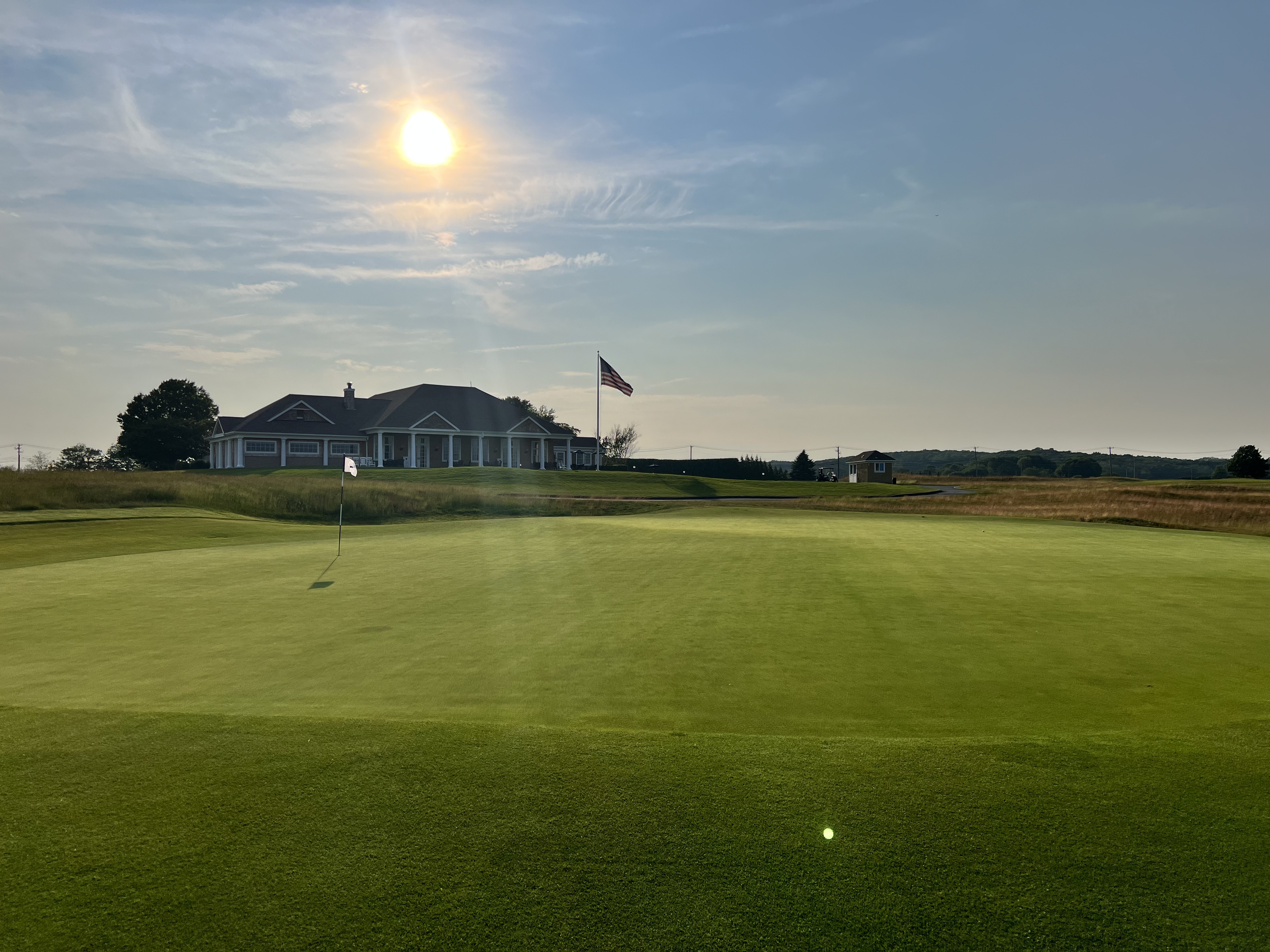
Players were able to attack the course a number of ways but whatever manner in which that was, a plan was in order. Fairway contours pushed the tee shots in a dominant direction, fescue came into play for only the more grievous of misgivings and the greens had a way of sorting out the approach shots for putting to always remain at the forefront of relevance. Par seemed attainable most of the time but some elevated play was required for birdie or better. Weather mainly on Tuesday called for a more raw, grinding tone from the teams. Grit and imagination in recovery shots had a way of rewarding the golfer over perfect execution in the first place some times, which is the stuff of brilliant, maddening match play. Trey Diehl remarked after the semi-finals, “[c]ourse was one of the best I’ve ever played.” Above all else, however, those with thoughtful control and finesse over their shots, along with a persistent recovery game, fared well this week and that is what we saw in the final four teams. And of course, the Eighteenth lived up to its billing.


Semi-Finals
The crisp morning sun presided over the course as the final four teams started out. A course with throngs of players, volunteers and crowds at every turn the last couple days was much more peaceful as the two groups marched along in a drawn out convoy about the holes with the rest of it at ease. Leading the convoy was the match between Brian Blanchard and Sam Engel against Will Davenport and Mike Smith. Blanchard and Engel are the duo from Arizona with jobs in the software industry. Blanchard opted against playing golf in college and for both, this was their first USGA Four Ball. One thing that stuck out to me was Blanchard hailing from Desert Forest. Knowing what I know about that masterpiece by Red Lawrence, a mentee of Flynn, those players always seem to find a way. Blanchard seemed indifferent to good shots or bad; his ball always figured out a way to get in position to score. Engel the left handed and taller of the team, travelled the mini tours until retaining his amateur status in 2020. Stalking the course in his bucket hat and the only one in the semis with sunglasses on, Sam was comfortable at all times and had a penchant for the gut punch shot, which he would deliver aptly. Blades Brown remarked of them, “Looks are deceiving. I’m not saying they don’t look like tour pros. They obviously played really close to tour pros.” On the other side were local favorites Davenport and Smith, who had gained momentum and confidence as the week wore on. Almost a parallel of the Blanchard/Engel team in both looks and playing styles, the match had all the trappings of the type of heroic shots and emotion one should love from the amateur game. Matching birdies at the Ninth resulted in a loud, “Let’s Go!” from one of the teams while the crowd fed off the energy.

The match evened up at the Fifteenth as Blanchard/Engel clawed back from a 2 down deficit. And all square it was as they reached the Eighteenth tee. The drama of match play unfolded as Davenport’s tee shot found him off to the right. His next shot was to the left of the green. Smith was in prime position in the middle of the fairway from the tee. Blanchard and Engel found themselves left of the fairway; Blanchard in the bunker and Engel left of that in the rough. Fairways in regulation mattered little throughout the day to the team, however, and it didn’t matter now. Blanchard some how managed a lower, piercing ball flight from the bunker that settled nicely on the green. Engel’s shot likewise close to the pin. This left Smith up. The approach was lasered right at the pin but some untimely breezes pushed it to the right into the deep set greenside bunker. The game giveth, the game taketh away. Smith left his next shot in the bunker then the next to four feet. Davenport’s pitch from off the green stayed on the high side of the ridge, which left a downhill slider of a putt for par of about ten feet. It was an admirable attempt, rolling just past on the high side. Blanchard and Engel seemed to focus on those approach shots when they knew it mattered most, which seemed to be the difference here as they moved on to the final.


Blanchard/Engel may have went off in their match first but they were the last to win. This was mainly due to the power house of Blades Brown and Jackson Herrington doing what they had been doing all week; amassing a large lead and never letting up. Seventeen years old both and with Brown in the news recently for making the cut at the PGA Tour’s Myrtle Beach Classic, Brown and Herrington carried themselves with a professional demeanor and maturity years beyond their age. Emotion never entered the equation. Herrington’s prodigious length and steady flat stick combined with Brown’s mesmerizing ball striking made this team deadly, whom were able to finish all their matches up to the semis before the Eighteenth. Their semi-final match had the feel of tour pros, as their opponents, Trey Diehl and Mac Scott, matched them with a very habitual professionalism throughout. Indeed, Diehl and Scott are well experienced in the competitive venue, with both currently playing out of Furman University. It wasn’t so much they were losing as it was Brown and Herrington simply played better but they were unable to break out of the 4 down quagmire they found themselves in after the Eleventh and ran out of holes.


The match was much more interesting and seemed closer than the score. Diehl and Scott had an innate ability to match the other’s shots so that they seemed like one player at times. Both found themselves in prime position in the fairway at the Twelfth while Brown and Herrington’s tee shots were off the fairway. Diehl and Scott likewise advanced their second shots to the green and a pivotal opportunity was upon them for an eagle to start the swing of momentum in their favor. Neither could convert and the hole pushed with birdies for each. Likewise, Scott had a birdie opportunity at the Thirteenth for the win yet the ball refused to go in, instead deciding on creeping about the hole, teasingly. The opposing playing styles of the teams were on full display at the Fourteenth. Knowing time was not on their side, Diehl and Scott sent their tee shots well down the fairway, as did Brown and Herrington. On approach, Diehl and Scott made brilliant use of the green contours, both of them coaxing the rear right side of the pin and having the ball fall back to the hole. Contrast that with Brown and Herrington and their remarkably high precise approaches that simply land and take a single hop next to the pin. The teams exchanged given birdies and the match concluded at the Fifteenth with yet another push. Gracious in defeat and bidding them good luck in the finals, Diehl and Scott played fantastic golf all week and simply ran into a teenage juggernaut. Brown and Herrington advanced to the finals.
Finals
Brown and Herrington are promising younger players with the road wide open of possibility in the game. Blanchard and Engel are almost twice as old, with careers outside of golf. There is a meaningful contrast between the teams and their relationship to the game yet as they shook hands at the opening tee, all of that was set aside. Four matches on Wissahickon already under their belts, a bit more course familiarity settled in as they started to go about it, one last time around. First blood was for Blanchard, who knocked his approach at the First to a few feet and made the birdie. Brown squared things up at the Third with a cool nine-foot roll. At the Fifth, Brown was in the left greenside bunker and Herrington in the right. Herrington floated the ball to a few feet while Brown almost birdied with a gorgeous release to the pin from the sand. It was all up to Engel and in true gut punch form, got his birdie as the ball rolled in at the very last moment. Herrington would impose his length on the group occasionally and such was the case at the Seventh, where he throttled an 8-iron 220 yard second for an eagle putt, which he converted. The theme of the match was typified at the Eighth, where all players seemed to know when to lay off the tee based on the tough left to right fairway contour here. Brown was a bit overambitious in using it and ended up in the left rough but hit a perfect approach landing inches from the pin tucked at the front, any to watch it slide uphill. Herrington’s approach was likewise perfect and suffered the same fate as Brown. Blanchard was also inches from using the high contour next to the pin but remained in the fringe a few feet from it. This left Engel, who was in the deep greenside bunker. It had been a few holes but the strike came sudden; Engel sunk the bunker shot for birdie to take the lead once again. A fitting exchange between the opponents and the course. The players adjusting to the whims of the hole and even the most elegant of approaches wouldn’t charm the course. Some times, it was the guile and grit of redemption. Such is the beautiful idiosyncrasies of match play.


The boys did not seem troubled, even after less than ideal tee shots at the Ninth. Walking down the fairway of that hole, the conversation remained loose as Brown mentioned he was watching the Lion King the night before. Just two young men for a day of golf, as it should be. Each player but Blanchard showcased their uncanny ability to extricate themselves from trouble. Blanchard had no need since he was in wonderful position on the fairway. The Ninth is a tough shorter hole with a stingy green and the group seemed to breathe a sigh of relief walking away even. The first show of frustration for Herrington was the Tenth, where he could not believe his putt would not drop. It was the first time the young men were down going into the back nine all week. It was then Blanchard who came on to match Herrington’s birdie at the Eleventh. The tide looked like it might turn at the Twelfth as both Brown and Herrington were on the green for eagles. Herrington was actually a touch off and would only get to six feet. Despite the time and effort in studying the line, his birdie putt touched the right side of the hole before sashaying away. Blanchard has a fairly close look at birdie after the least of the tee shots but it slides to the left of it. This leaves Brown for birdie, his eagle putt coming up short. The arena was clear and he took a nice long look behind it before settling in and making it to even the affair. Blanchard and Engel did not take long to respond as they promptly birdied the Twelfth and Thirteenth to take a stunning 2 up lead deep into the back nine. The next two holes pushed and the air became much heavier as everyone seemed to realize all at once the holes were running out.


It was now or never at the Seventeenth. Herrington delivered with a sheer orbital drive that ended up over 100 yards past everyone else. Waiting for the rest of the players to take their approach, he surgically placed a wedge mere feet from the hole and took hold of the birdie. The match arrived at the Eighteenth with Brown and Herrington 1 down.


Once again, the Eighteenth came calling. Herrington’s parents asked where to walk since they had never seen it before. Those who know the course well were left with mouths agape as Brown and Herrington hit drivers, the fear being the creek would come into play. It did not; Herrington was in the rough just before the creek over to the left while Brown was in position A at the bottom of the hill. Engel and Blanchard, veterans of the Eighteenth with fond memories, hit their approaches and Engel sent a message with his at ten feet from the hole. Brown’s wedge reached sixteen feet of the pin. He would need to make the putt for any chance of the match continuing. With the crowd surrounding the green and storm clouds even gathering above to take watch, Brown let the putt go. It never wavered from its line and from every indication, looked like it was destined to go in. Some may have even started for the Nineteenth. A couple more revolutions and what may have been. Yet it ran out of life just at the edge of the hole and stayed put. With Engel’s putt conceded, the official count was 2 up for Blanchard and Engel, your 2024 U.S. Amateur Four-Ball champions.


Parting Thoughts
The course showed a wonderful balance of ensuring thoughtful play could be facilitated and was rewarded. Instead of imposing itself upon the players with impossible rough or speed that exceeded the meaning of the contours and undulations in some survival test, the degrees of recovery out of position were well measured, allowing extraordinary recoveries that made for thrilling and interesting golf. This was seen at the Eighth with Engel, the Twelfth with Blanchard, the Thirteenth with Brown as he had to come in from the Twelfth fairway – far of left; and at the Eighteenth for both Blanchard and Engel in their semi-final match. There was also advantage for the golfer who felt punchy and went for it at risk-reward propositions. This was seen at the Seventeenth and Eighteenth, as Herrington and Brown needed to force the issue and Blanchard and Engel were to respond in kind. The shots worked backwards from the pin position, which the golfers were able to chart like captains at sea.
The final match was mesmerizing as the styles and backgrounds of the teams clashed. Believe it or not, I may be a better tennis player than golfer. For those who have seen me play, it may not be all that hard to believe. But the match reminded me of a few of the more memorable tennis matches I have seen. The one player has a strong serve and follows that up with throngs of base line forehands that scream through the air, one more powerful than the next while the other player casually returns each one back. The strong player thrashes and thrashes but the casual player relents with the returns until at the opportune time, the casual player overhead volleys for the put away, then goes back to the casual returns once again. Herrington and Brown were impressive golfers and even as Blanchard and Engel pointed out, we will all probably see them playing on television soon. Their play was some of the best of the week but Blanchard and Engel took full advantage of the opportunities presented to them and rose to the occasion in playing a few strokes better. Perhaps it was their familiarity of the Eighteenth that made the difference, or a more weathered keen awareness to seize the day when presented. As for Brown and Herrington, we will certainly see them again and they know. As Brown put it, “Unfortunately, we didn’t get it done this time, but we will be back.”
The Four-Ball was an exemplary display of amateur golf on a course that allowed much of the brilliance and sophistication of the game to flourish.


You must be logged in to post a comment.