6,934 yards, 144 slope from the Blues
Weather isn’t bad. Yesterday was better, but still not all that much wind. Good. Would be great to get two loops in today and can’t do that spending too much time looking for balls. Who am I going out with. Ah, he’s a good member, solid player, should be fine. With three guests though. They’re at the range. Grab a bagel and get going. So far so good with them. The one that talks a lot is asking a bunch of questions. Too early for that. He just hit it into the junk, maybe he should get his swing in order before talking so much about the “width.” Well that’s better. At least he’s on the green now. I can’t get over how great looking he is; just a real sharp looking guy. Ah, he’s growing on me. Swing seems to have settled down. Can’t believe an actual Clippers fan exists. Now he’s going on and on about them. Good putt there. The Celts are winning anyways but who cares about basketball. Starting to warm up, these guys are a lot more low maintenance than I thought. Final hole. Got around quickly, can definitely get out again. Flynn this, Flynn that. They all keep mentioning him all excited about it. We all have our things I guess. Not a bad round. The Philly guys are alright. On to the next. I think I actually get to play tomorrow.
“Oh yeah, don’t listen to the guy who has walked the course thousands of times for years studying the greens. You know better your first time here.” A good friend of mine chirped at me years ago as I was contemplating a putting line and I liked that line so much I stole it from him and use it all the time. A good caddie enhances if not altogether makes the round all that much better while a poor caddie can detract from it a lot. Regardless, there is no denying they’re an integral part of the round. They’re in the group dynamic and yes, know the course better than us almost all of the time. I’d say any given year, I probably meet I don’t know, let’s call it around fifty different caddies. Kids, lifers, sticks, potsies, palugas, you name it. I can count on one hand bad caddie experiences. The overwhelming majority add to the round in some way. They have stories. They’ve seen it all. And no, they really don’t care how you shoot. So bravo to them and all the ones I’ve come across and will come across at some point on the horizon.
As for Kittansett, my caddie was a college kid, I think a pretty good stick. Enjoyable round with him, gave me some great reads. Had a good few hours then as is wont to happen, we all went our separate ways. Those hours were spent in Cape Cod at the point of Buzzard’s Bay, on land exposed to the elements. Kittansett roughy translates to, “near the sea.” William Flynn designed the course, with consulting from Hugh Wilson while construction was overseen by Frederick Hood, who probably had some involvement in design as well. Like County Club of York, this was a site where both Ross and Flynn were considered for the design and both visited the site before it was decided to use Flynn. His design here would be influential later on in being retained to redesign Brookline. Yet unlike the majority of his projects, Flynn would not have his own construction crew doing the work. Hood used his own contractors. As such, Kittansett is a unique Flynn course for two primary reasons; the flatter terrain near the sea as well as the use of an entirely different construction crew being overseen by someone not in the employ of Toomey & Flynn. Hugh Wilson and Hood also provided design input. The course opened in 1923 and Flynn’s design has been relatively well preserved through the years.
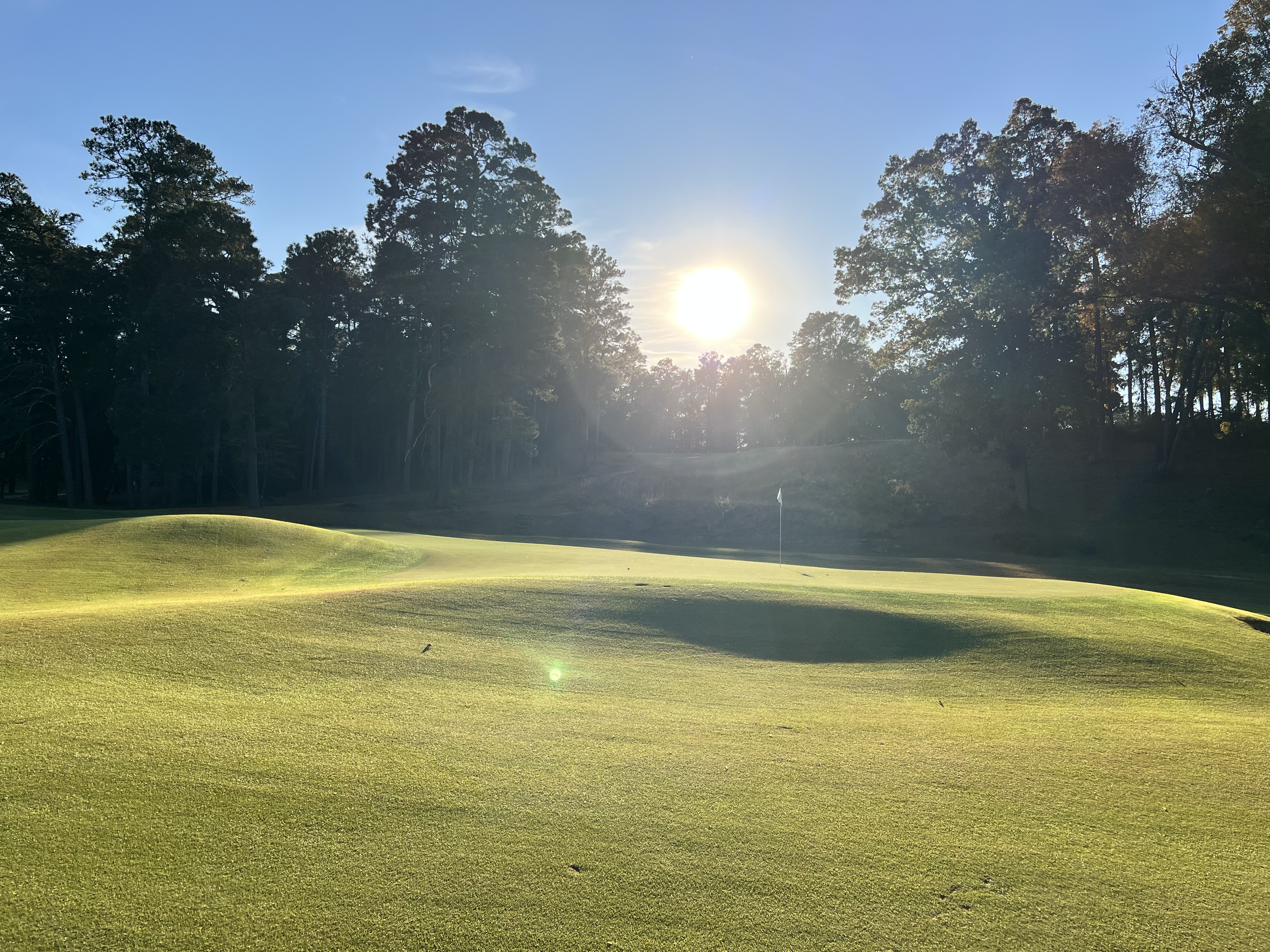
The course is a master class in the use of flatter terrain. Construction of the site revealed an inordinate amount of stones and boulders amidst the sandy soil and with the tree roots ensnared about them, there were many that proved difficult if not impossible to remove. So they were mainly used for mounding, which largely defines the course identity here. That mounding instills strategic merit throughout as well as impacts visuals extremely well. Interrupted fairways are also used liberally, yet another strategic feature available for flat sites. While Flynn used interrupted fairways often, that feature faded out of existence at several of his courses yet here, they have been preserved. Similar to Pine Valley, the interruptions force the golfer to calculate much more, even more so with the barrage of wind frequenting the course. Speaking of the wind, the design certainly incorporates it, with the routing and directions of the holes, as well as how trees are used to fluctuate exposure to it. The golfer might be addressing his ball where the cedars have provided a respite from the wind but if he doesn’t realize his next shot will face it with full fury, his score will surely be blown away. The dog legs and angles into the greens are likewise strategic in nature, once again conspiring with the rest of the natural features and elements for the golfer to think each shot through.
A special acknowledgement goes to, “The Nature Faker” by Wayne Morrison for most of the above design history of the course. It is the definitive book on Flynn and while hard copies are tough to come by nowadays, I believe digital copies are still available.
Indeed, Kittansett plays wonderfully. While most of the Philadelphia Flynn courses use hilly, undulating land to create infinite scenarios once the ball lands and begins to bounce and roll, here the land is used to create a thrilling placement strategy structure of play. There is some roll out but the main consideration is where can the golfer place each shot amidst the design and elements so that he is in an advantageous position for the next. And I’m sure the caddie was tired of hearing me remark of the use of width yet it is used extraordinarily well here. Where the wind comes into play the most intense or a tougher than usual approach is ahead, width is likely to help alleviate and provide a few more options, while it is taken away when the golfer is expecting it most. The course also is a great example of the meaningful difference between views and setting. It would have been easy to cater to views of the seaside likely at the expense of quality of play, yet here, the routing recognizes the unique setting and utilizes it to maximize quality of play, allowing the views to come and go as they may. In this way, the golfer is interacting with the remarkable costal setting much more intimately than simply looking out at it. And that’s where the course distinctly excels, in how it brings the golfer forth into such a setting and provides a unique structure of play, where calm determined calculated cadence must persevere against the windy wild. It was one of the highlights of last year.
There are times during a round where I might make a challenging or significant putt and when that happens, I always try to thank my caddie for the excellent read. And after the round, if I think they did a good job, I tell them they’re a good caddie. I also complain to them, about a missed shot or two, or how one of my playing partners got a lucky break while I did not. And I talk to them, are they in school, where did they grow up. And I tell them if they’re fans of terrible sports teams or should consider a career change, all of course unsolicited. I like to get to know them, and them a little about me. It’s another unique part of this splendid game, where the golfers and caddies head out as a band of troops for a while and then return, all the wiser. You might as well get to know who you’re in battle with, it makes the round all the more profound.
The First is a 450 yard par 4 (from the Blues). We start at the tip of the point and head inwards while the coast runs along to the right. The opening tee shot is inviting enough and eventually crooks to the left. With this wide open space, we are also subject to the whims of the wind. There is a small ditch that runs along the left side and remains hidden from the golfer unless his ball ends up going over in that direction. The first interruption must be carried on approach but is comprised of rough and long grass. That means if your ball ends up in it, you have a chance of recovery to some degree (although there is a bunker on the left side within it). After the interruption, the green lies ahead with a bunker right, then left, both running parallel to the fairway. The fairway runs seamlessly to the slightly pushed up green, with surrounding short grass all with a dominant left to right movement.


The Second is a 447 yard par 4. We turn to the right and head directly to the coast and what is known as Buzzard’s Bay. The right side off the tee is the driving range while the left side is rough, bunkers and then the Seventeenth fairway. The interruption is rough and a trio of bunkers yet isn’t too long. The green awaits afterwards, once again slightly pushed up with a good amount of surrounding short grass. Anything long gets into irreparable trouble very quickly yet trying for the rear half of the green clears the bunkers on either side. Thus far, the demand on the tee shot becomes readily apparent; it must set up a favorable approach, or else the golfer would be wise to take a stroke to do so if the tee shot isn’t ideal.


The Third is a 167 yard par 3. There are countless scenarios where much more would be made of this hole, where it wold be called the “signature” hole, t-shirts would be made up of it, would some how be the crescendo final hole and the like but here, it’s simply a natural progression of the round and while the golfer is pleased with the setting, the hole is pleasantly unassuming. The tee shot moons over the water to the beach where the green presents as a large mound. The green was built up and presents as a large target. Those who miss it, well, they’re in the sand, unless they really missed and could end up in the water or marsh on the left. The green moves from back to front. The golfer by all means should take an extra moment or two soaking in this setting, regardless if they are met with a barrage of wind and whitecaps or a gentle breeze with calm waters at a peaceful stillness.


The Fourth is a 375 yard par 4. Heading back inland, the tee shot must carry the marsh lands and favor the left side, as the substantial dog log to the right will block out approaches from the right side. Bunkers are at each side of the turn. The fairway gets thinner after that turn and bunkers run lengthwise on either side of the green as it runs up to the green, which crests at the center then falls off towards the rear. Flynn planned for mounds and a sand pocket at the rear of the green but today, it is short grass running into the next tee, which still means a touch recovery back to the green running away from the golfer.


The Fifth is a 445 yard par 4. Heading further inland, there are two bunkers placed diagonally in the center of the fairway that must be accounted for off the tee. Likewise, there are a couple ridges about the center that will move tee shots towards the sides that the bunkers help define. In general, hitting to the left of the bunkers means shots will bounce further left and vice versa. Now some could carry the bunkers altogether but then will need to deal with the interruption. The fairway starts gently downhill to the green after the interruption with flanking bunkers just before the green and a lot of sloping surrounding short grass. The green complex and green itself has a lot of surface space, which always seems to be a double edged sword. There is more opportunity to hit the green but then the golfer must navigate the slopes, undulations and movement to manage the ball in the hole.


The Sixth is a 424 yard par 4. We have been in the trees the last hole and a half and that continues here while mounding prevails on strategic calls on each shot. Off the tee, the golfer must consider the trees encroaching from the right along with the mounding, which can be made out on that side as well. To be clear, mounding is on the left side for the sake of completeness. The tee shot must situate so that the mounding is avoided or can be cleared on the approach. Either way, accuracy is at a premium while the green becomes a bit more exposed to the wind, unsuspecting to many golfers still within the trees when they hit their shot in. There’s really not too many places to miss off the green, with short being the exception. It may not feel like it but the green is actually steps away from the coast of Sedge Cove. The sign showing the hurricane water levels reminds us though.


The Seventh is a 545 yard par 5. The tree line on the right signifies out of bounds while bunkers are on either side of the first fairway, ensuring the golfer imparts some modicum of precision to the tee shot. There really are two interruptions here, the first being the swath of rough at the end of the first fairway, then the bunker on the left comes into the fairway so much that it can be considered an interruption as well. The first interruption signifies a general shift to the right of the hole and the progression of bunker placement leading up to the green is notable, allowing places to miss yet ensuring their presence is felt throughout. There is plenty of green to work with but as we have seen a few times, the back of the green ends fairly abruptly. The hole is a shining example of placement strategy.


The Eighth is a 209 yard par 3. The visuals toy with the golfer off the tee, mainly shielding the amount of space there is in front of the green to work with. This is primarily due to the center bunker that is short of the green which does a lot of the obscuring. Then there are the parallel bunkers on either side, running long and deep. In reality, the golfer is able to go for the green that is relatively wide at its center and rear or use the space just before the green to set up a preferred chip to the pin while avoiding the trouble that lies about. Once again, past the green starts to pose more severe issues that the golfer should leave alone.


The Ninth is a 411 yard par 4. The hole plays into the prevailing wind, which can actually make the golfer’s decision making off the tee easier as the first fairway becomes the only option for most save for the longest of hitters. The interruption here has the additional complication of a ditch, making it even more imperative to avoid. Without the wind, the golfer must decide whether to lay up short or carry it. The fairway cants to the right, where bunkers mostly reside. In fact, the parallel lining of the bunkers near the green, along with the wind that normally roars through, suggests a nice low running shot to the green that roll up nicely. The design is certainly made for that kind of satisfying shot.


The front nine is a splendid fulfilling series of strategic plays and thoughtful recoveries within a setting that changes a few times. Every hole is strong. I would rank them 2, 7, 1, 3, 5, 9, 4, 8, 6.
The back nine starts with the 352 yard par 4 Tenth. Heading back in the direction of the Ninth, there is mounding visible coming in from the left. It should be noted that most of the mounding was contemplated to be much taller than constructed as envisioned by Flynn. That would cause more visual issues and make that tough to carry for shots behind them but for their as built size, they accomplish the same design purpose. Right center is the ideal line off the tee. After the mounding, the green is slightly uphill with bunkers along each side for good measure. As now have grown accustomed, beyond the rear of the green is no good.


The Eleventh is a 253 yard par 3. Yes, you read that right. And yes, the hole is as designed by Flynn as I squared up to the tee and surveyed what was before me. As we encountered at the Eighth, visuals are a factor here. There’s a large center line bunker past the tee just before short grass leading up to the green. The green has two distinct tiers and primarily moves left to right with a bunker on the high left and two on the lower right. Anything to the right of the bunkers is in long grass. I licked my chops at the distance and lashed away, of course ending up in the long grass off to the right. A much better play is to the short grass before the green or even just un the direction of the high left, maybe even something shorter of the pin distance to account for some roll out. The longest par 3 on the course and brilliantly situated to created countless scoring scenarios and rewarding those who can solve the puzzle, so to speak.


The Twelfth is a 440 yard par 4. The routing is really an out and back as the back nine runs parallel with the front in the opposite direction. Most of the holes are into the prevailing Summer wind. Here, we move close to the Fifth and Sixth, which are off to the left. There’s a prominent bunker cutting across the left and another further out to the right that need to be accounted for off the tee. Some may steer clear of the first and swipe their tee shot to the right, yet that means a much longer approach in and you still have the right bunker to deal with. The green is slightly uphill and runs back to front in general. Bunkers are on either side just short of it and is as designed by Flynn.


The Thirteenth is a 391 yard par 4. The next two holes take a slight detour out and back to Sippican Harbor before falling in line with the out and back once again. A dog leg right that is as Flynn designed. Playing the outside of the dog leg is favorable to ensure the trees on the right are cleared for the approach, just mind the irrigation pond further left. If the wind is up, then the focus is really getting the tee shot further enough out for a look at the green. The green is a bit uphill from the fairway and it’s a small one at that. Long bunkers lurk on either side. It’s a challenging approach that craves accuracy in the face of a likely stiff left to right wind.


The Fourteenth is a 186 yard par 3. The final par 3 of the round comes early. Once again with the visuals. The bunkers and short grass most visible off the tee are actually a false front, as the green is actually another 20-30 yards ahead. The greenside bunker at the front left was constructed for the 1953 Walker Cup, which of course I ended up finding off the tee. The green seems to slightly boomerang around it. Any shot beyond the frame of the bunkers is in a lot of trouble. Long grass and fescue abound as does the irrigation pond off to the left.


The Fifteenth is a 545 yard par 5. Now running parallel with the Fourth and Fifth, the tee shot is a nice example of a two shot being wide open yet fairly narrower with respect to acceptable shot. The fairway starts out at its narrowest at the start, with bunkers staggeringly placed at the sides, starting with the right. The interruption is emphasized with bunkers just before, at and just past it, forcing the golfer to plot his shots well in advance. The entry point narrows with rough before the green but then opens up to short grass melding into the green with not a single greenside bunker in sight. The par 5’s really allow the strategic vision of the design to play out and this is another great example of that.


The Sixteenth is a 411 yard par 4. We now button up towards Buzzard’s Bay and the Third green. The vista of this entire hole is splendid as the water horizon revitalizes as we come out of the trees once and for all yet this means more wind. The fairway is generous for the tee shot while the bunkers before the green form a gateway to the entry point and short grass. The green is slightly pushed up, so holding the green while fighting the wind will be a challenge yet also one of the joys this course provides.


The Seventeenth is a 392 yard par 4. Like the Second, we now cut back to the opposite side of the course to finish at the point. Much of the fairway isn’t visible from the tee but there’s enough to work with, which crests before leading downhill to the interruption, which is one of the larger ones, with a ditch in the middle to boot. The tee shot will largely depend on what the wind is doing. The fairway after the interruption climbs back up to the green, crooking to the left just so. Like the green prior, the wind will likely be cantankerous, so what seems like a shorter approach will be challenging to navigate and with the slopes of the green just waiting to lead the ball off, contours must be considered so the approach stays on.


The Eighteenth is a 491 yard par 5. We end with a par 5, the First off to the our right, where we began our expedition earlier. There are no bunkers off the tee and with a prevailing right to left wind, out of bounds on the right really shouldn’t be an option, try as I did with my block. There’s an interruption of rough that separates the first and second fairways, the second half entailing a large bunker on the left, then on the right at greenside. The green is as drawn by Flynn and runs back to front with a cornucopia of movement from subtle hollows and undulations. A final strategic treasure to dance with before retiring to the calm respite of the clubhouse and Cape Cod.


The back nine continues the brilliance of the front with two great par 3’s and 5’s while the 4’s are a delightful combination of dog legs in either direction and straight holes. I would rank them 16, 15, 11, 10, 18, 13, 17, 14, 12.
Generally, Kittansett demonstrates that modest terrain can yield excellent golf through design and embracing the other natural elements. The round is a game of placement and accessing greens while navigating wind and making sure their shot holds the green. Recoveries come in all forms, urging the golfer to invent his way out of it, as rarely does the standard bunker or chip shot will do. Strategy and naturalism are strong traits of course design at the moment, mainly because of how places like Kittansett show just how wondrous the game can get when such characteristics are imagined and wrought out the right way. This is sublime challenge at its finest.
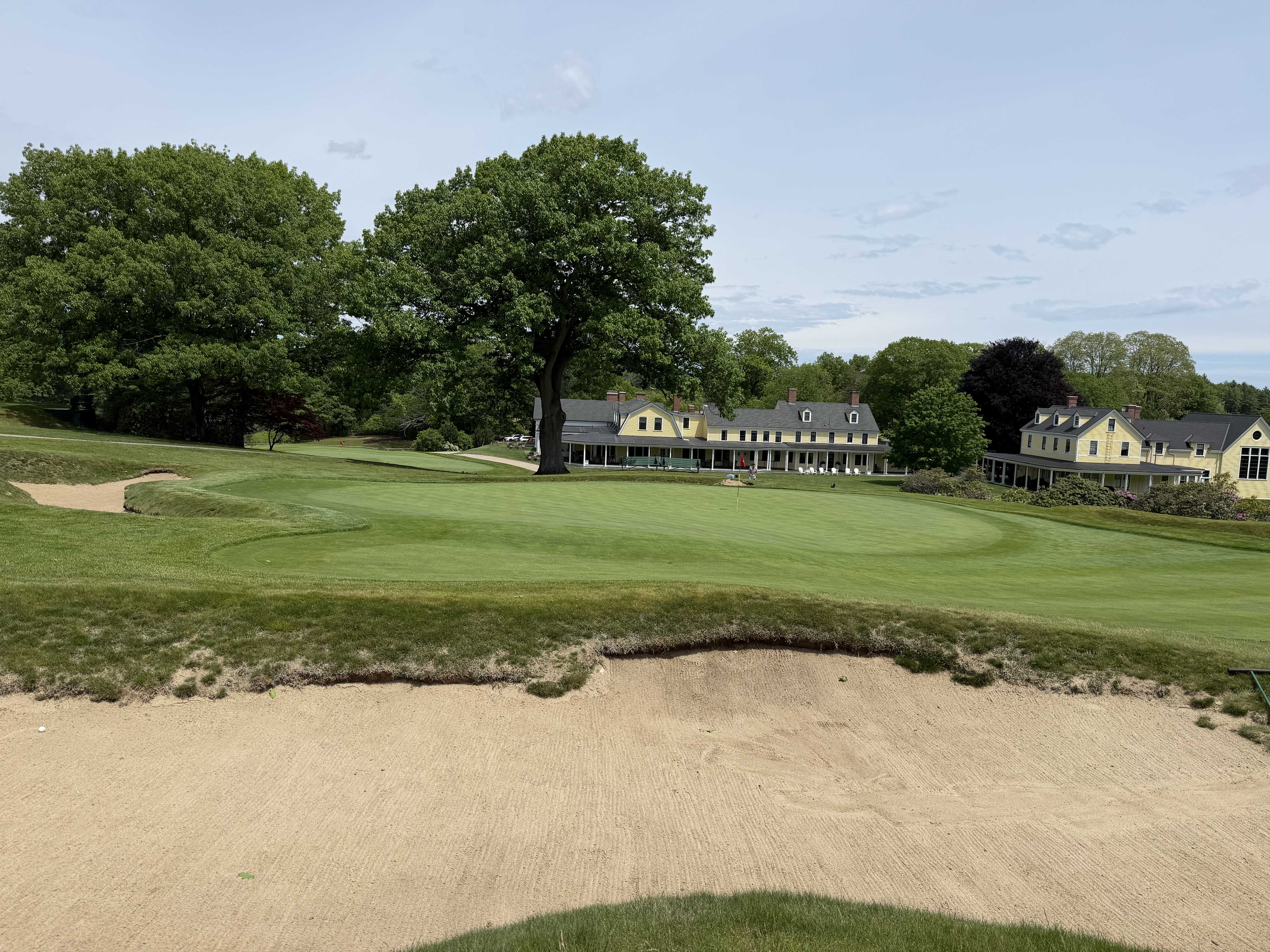
Clubhouse/Pro Shop: The structures allow the setting to remain the star of attention yet there are comfortable indoor and outdoor spaces to enjoy it all. The smaller quaint locker room sets this tone as well.


Practice area: The range and short game area is a short drive down to the First hole while a putting green at the First tee is enough to become acquainted with what to expect out there.



You must be logged in to post a comment.